Yotsumoto Katsumi, Okoshi Yasushi, Shibuya Kazuko, Yamazaki Satoshi, Tahara-Hanaoka Satoko, Honda Shin-Ichiro, Osawa Mitsujiro, Kuroiwa Asato, Matsuda Yoichi, Tenen Daniel G, Iwama Atsushi, Nakauchi Hiromitsu, Shibuya Akira
Laboratory for Immune Receptor, RIKEN Research Center for Allergy and Immunology, 3-1-1 Koyadai, Tsukuba, Ibaraki 305-0074, Japan.
J Exp Med. 2003 Jul 21;198(2):223-33. doi: 10.1084/jem.20021825.
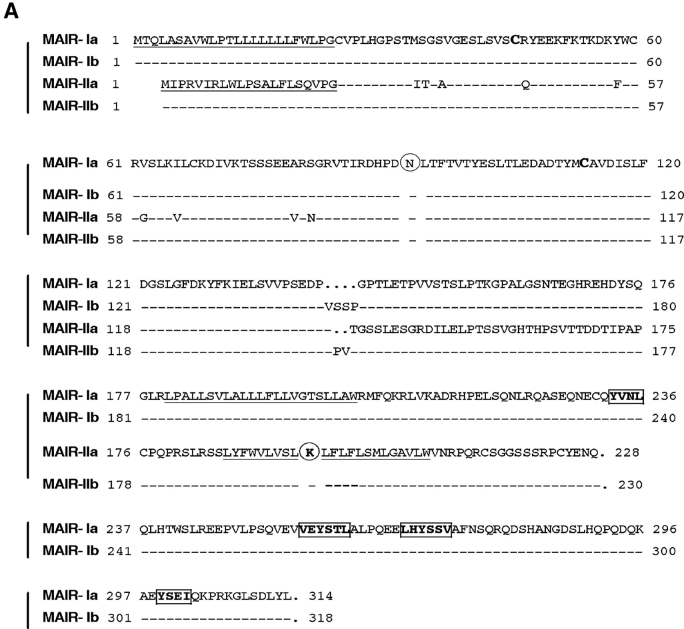
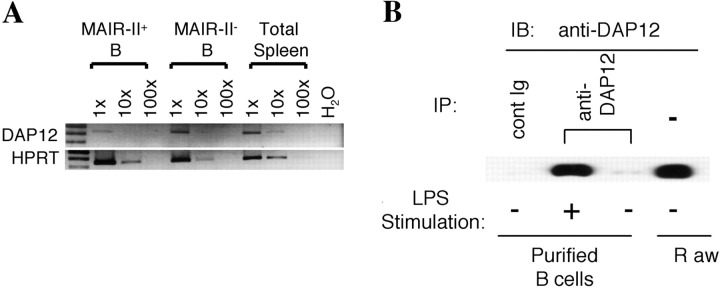
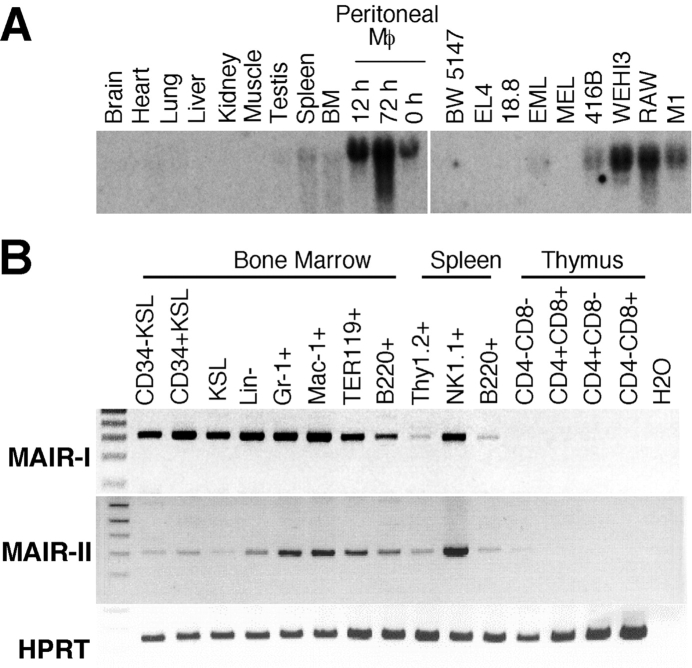
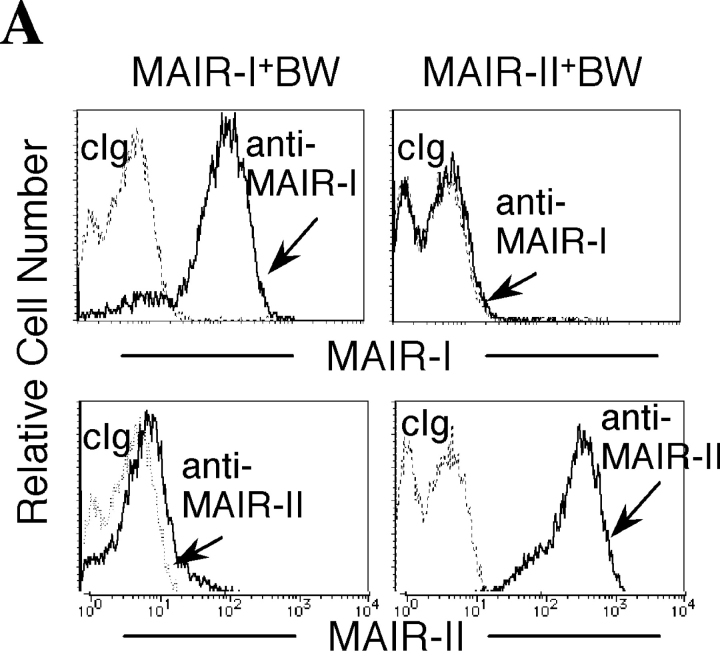
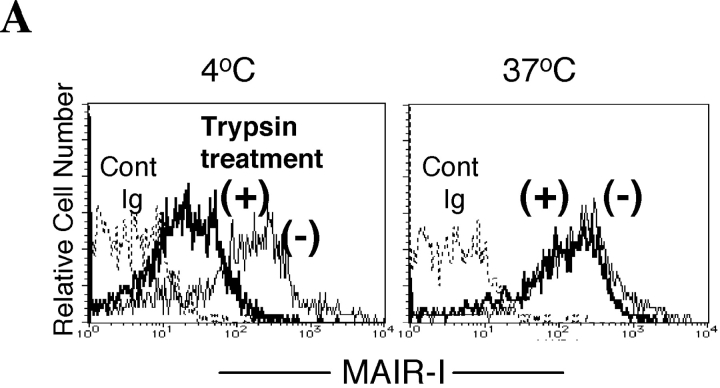
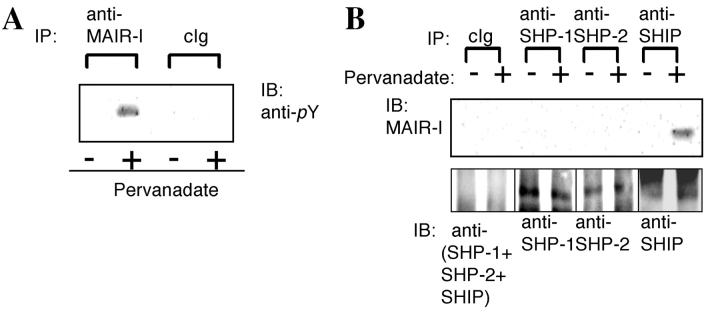
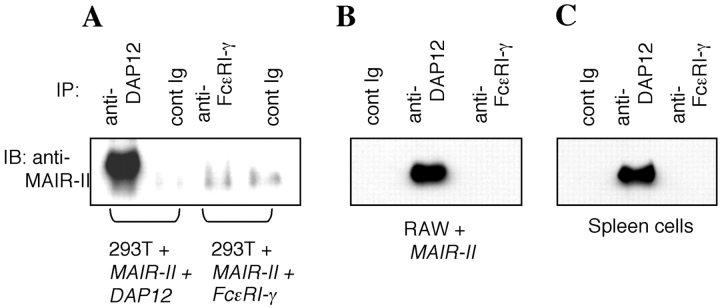
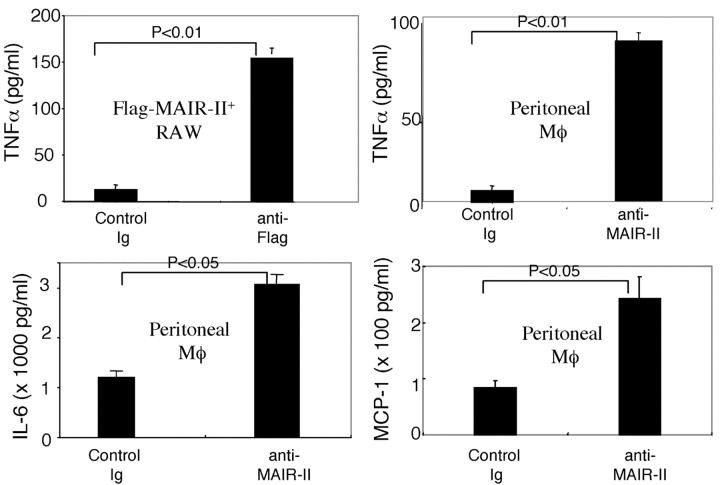
Immune responses are regulated by opposing positive and negative signals triggered by the interaction of activating and inhibitory cell surface receptors with their ligands. Here, we describe novel paired activating and inhibitory immunoglobulin-like receptors, designated myeloid-associated immunoglobulin-like receptor (MAIR) I and MAIR-II, whose extracellular domains are highly conserved by each other. MAIR-I, expressed on the majority of myeloid cells, including macrophages, granulocytes, mast cells, and dendritic cells, contains the tyrosine-based sorting motif and the immunoreceptor tyrosine-based inhibitory motif-like sequences in the cytoplasmic domain and mediates endocytosis of the receptor and inhibition of IgE-mediated degranulation from mast cells. On the other hand, MAIR-II, expressed on subsets of peritoneal macrophages and B cells, associates with the immunoreceptor tyrosine-based activation motif-bearing adaptor DAP12 and stimulates proinflammatory cytokines and chemokine secretions from macrophages. Thus, MAIR-I and MAIR-II play important regulatory roles in cell signaling and immune responses.
免疫反应由激活和抑制性细胞表面受体与其配体相互作用触发的正负信号对立调节。在此,我们描述了一种新型的配对激活和抑制性免疫球蛋白样受体,命名为髓系相关免疫球蛋白样受体(MAIR)I和MAIR-II,其胞外结构域彼此高度保守。MAIR-I表达于大多数髓系细胞,包括巨噬细胞、粒细胞、肥大细胞和树突状细胞,在胞质结构域中含有基于酪氨酸的分选基序和基于免疫受体酪氨酸的抑制性基序样序列,并介导该受体的内吞作用以及抑制肥大细胞中IgE介导的脱颗粒。另一方面,MAIR-II表达于腹膜巨噬细胞和B细胞亚群,与携带基于免疫受体酪氨酸的激活基序的接头蛋白DAP12相关联,并刺激巨噬细胞分泌促炎细胞因子和趋化因子。因此,MAIR-I和MAIR-II在细胞信号传导和免疫反应中发挥重要的调节作用。