Walker Lucy S K, Chodos Anna, Eggena Mark, Dooms Hans, Abbas Abul K
MRC Centre for Immune Regulation, University of Birmingham Medical School, Vincent Drive, Birmingham B15 2TT, United Kingdom.
J Exp Med. 2003 Jul 21;198(2):249-58. doi: 10.1084/jem.20030315.
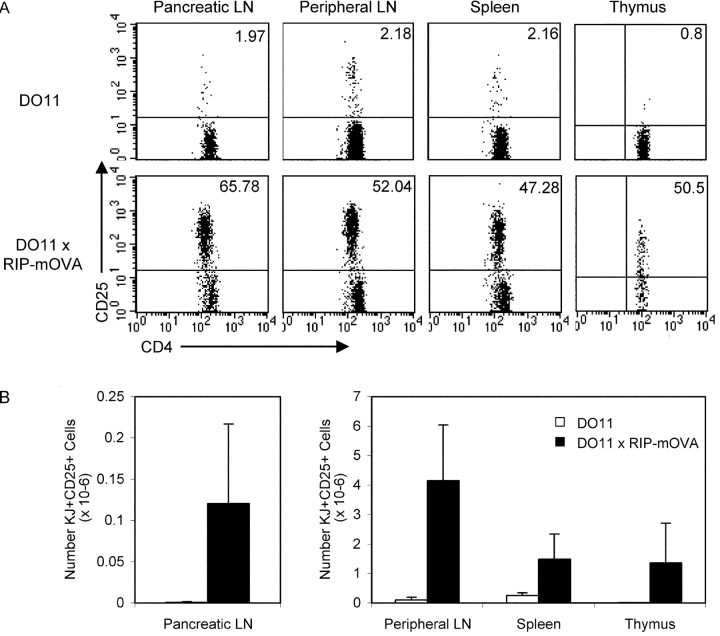
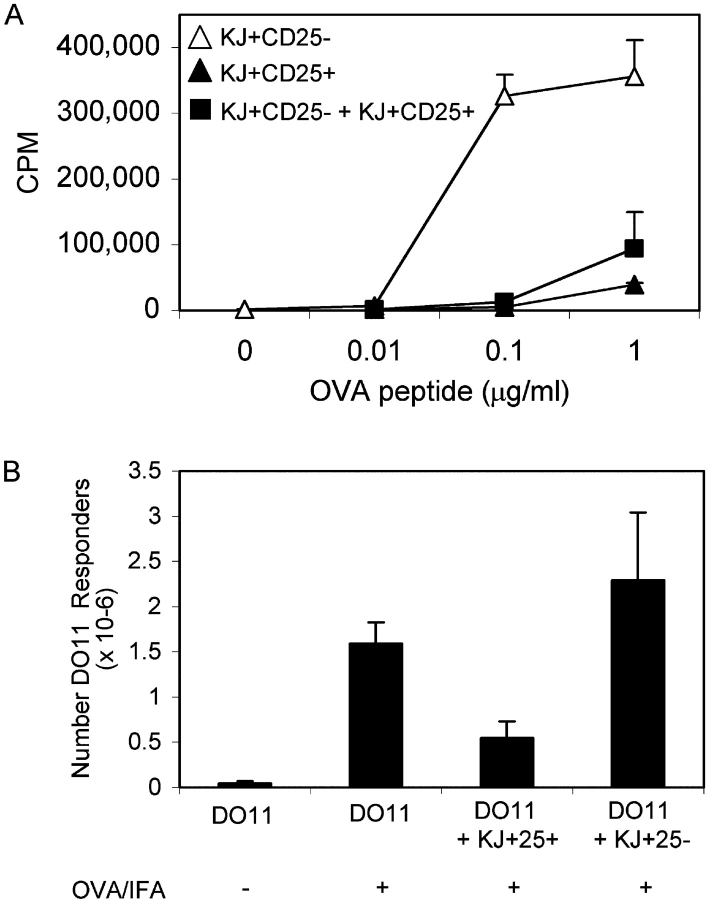
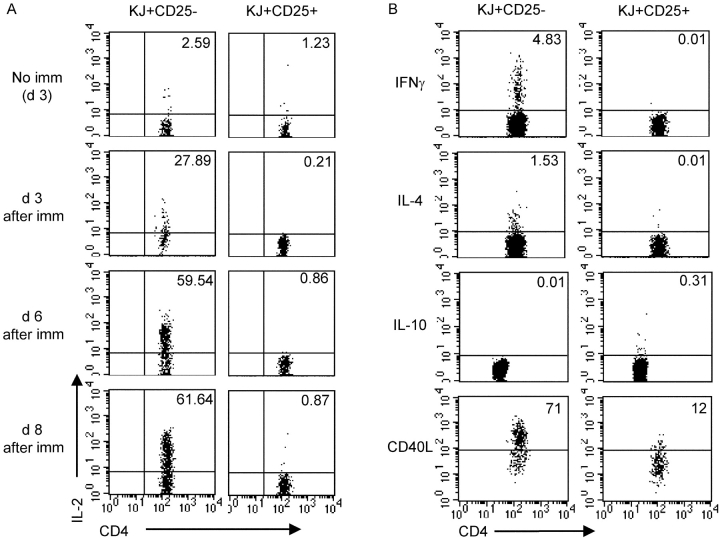
The failure of CD25+ regulatory T cells (Tregs) to proliferate after T cell receptor (TCR) stimulation in vitro has lead to their classification as naturally anergic. Here we use Tregs expressing a transgenic TCR to show that despite anergy in vitro, Tregs proliferate in response to immunization in vivo. Tregs also proliferate and accumulate locally in response to transgenically expressed tissue antigen whereas their CD25- counterparts are depleted at such sites. Collectively, these data suggest that the anergic state that characterizes CD25+ Tregs in vitro may not accurately reflect their responsiveness in vivo. These observations support a model in which Treg population dynamics are shaped by the local antigenic environment.
体外T细胞受体(TCR)刺激后,CD25⁺调节性T细胞(Tregs)无法增殖,这导致它们被归类为天然无反应性细胞。在此,我们使用表达转基因TCR的Tregs来表明,尽管在体外呈无反应性,但Tregs在体内免疫时会增殖。Tregs也会对转基因表达的组织抗原作出反应,在局部增殖并积累,而它们的CD25⁻对应细胞则在这些部位被耗尽。总体而言,这些数据表明,体外表征CD25⁺Tregs的无反应性状态可能无法准确反映它们在体内的反应性。这些观察结果支持了一种模型,即Treg群体动态受局部抗原环境影响。