van der Kraan P M, Vitters E L, van Beuningen H M, van den Berg W B
Department of Rheumatology, University Hospital Nijmegen, The Netherlands.
Int J Exp Pathol. 1992 Jun;73(3):335-50.
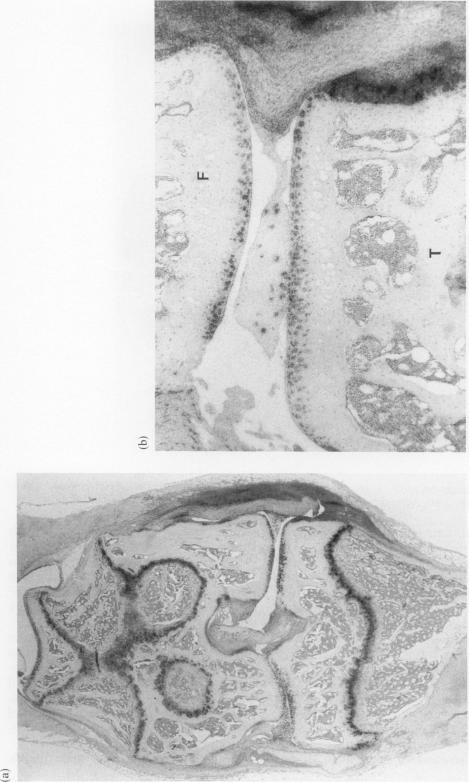
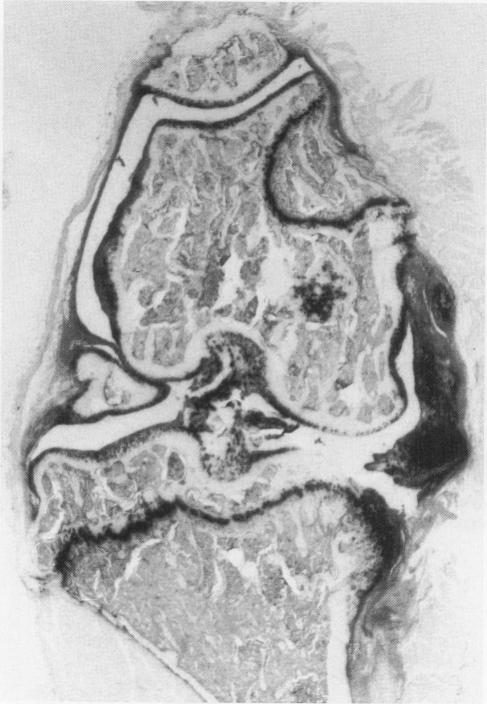
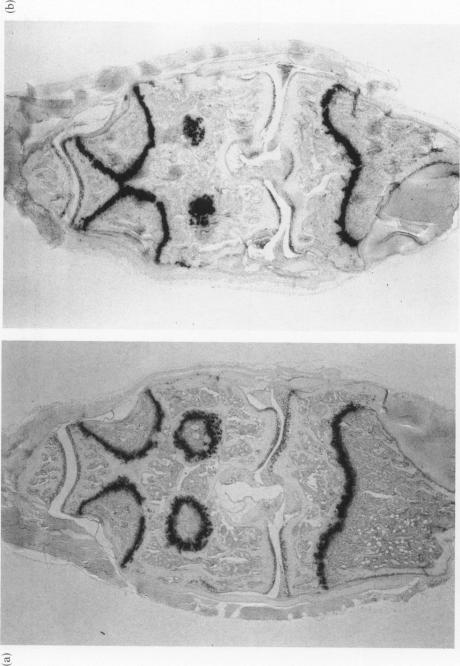
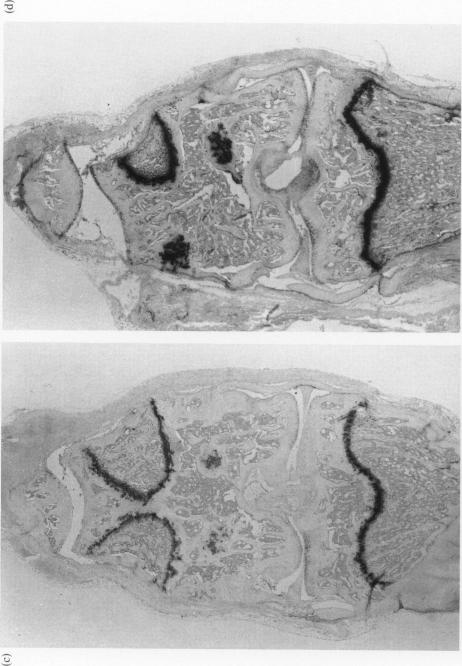
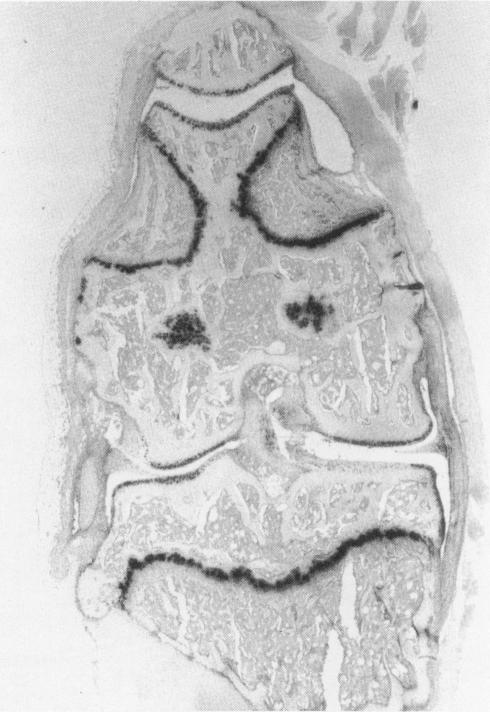
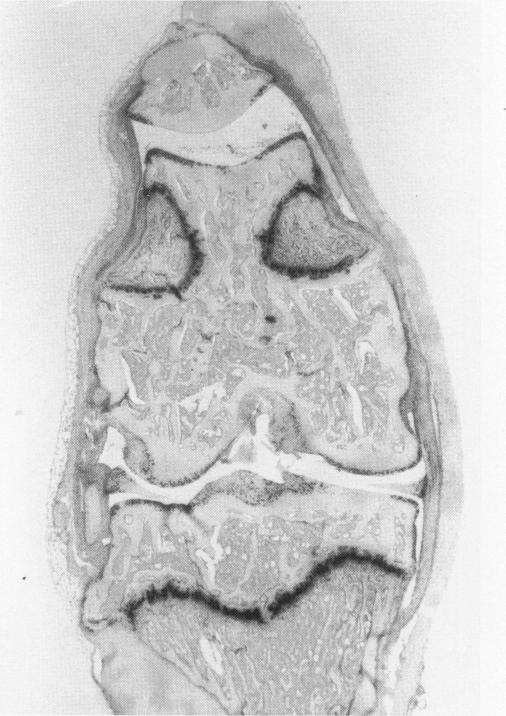
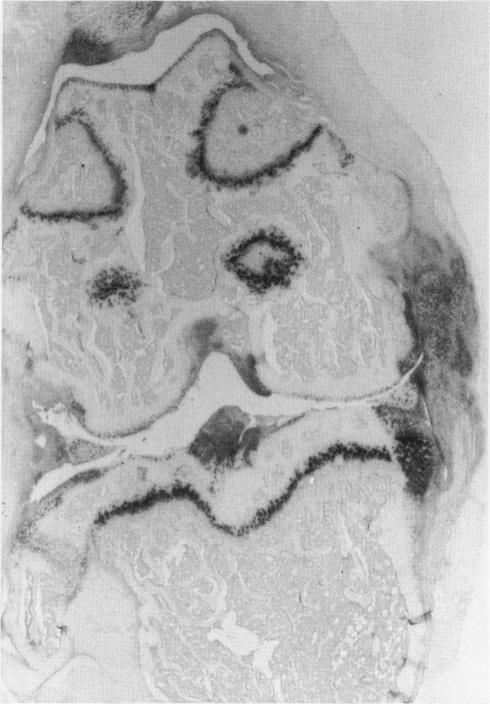
We investigated the in-vivo proteoglycan synthesis in specific areas of murine knee joint articular cartilage after the induction of degenerative joint disease by means of 35S-sulphate autoradiography. Degenerative joint disease was induced either by direct interference with cartilage metabolism (papain and iodoacetate), or by the induction of joint instability (collagenase). Injection of iodoacetate and papain led to inhibition of proteoglycan synthesis mainly in the central parts of the patellae, patellaris femoris and the central part of the medial tibial plateau. Articular cartilage adjacent to the strongly inhibited areas frequently showed a significantly enhanced synthesis of proteoglycans. A strong inhibition of proteoglycan synthesis was observed in the central part of the medial plateau after collagenase injection while other cartilage sites and joint structures such as the capsule and ligaments were stimulated in their proteoglycan synthesis. This study shows that the localization of changes in cartilage metabolism in degenerative joint disease of the knee might be related to differences in the pathogenetic mechanism in different variants of this common joint disorder.
我们通过35S - 硫酸盐放射自显影技术,研究了在诱导小鼠膝关节退行性关节病后,其关节软骨特定区域内蛋白聚糖的体内合成情况。退行性关节病可通过直接干扰软骨代谢(木瓜蛋白酶和碘乙酸盐)或诱导关节不稳定(胶原酶)来诱发。注射碘乙酸盐和木瓜蛋白酶主要导致髌骨中央部分、股四头肌髌部以及内侧胫骨平台中央部分的蛋白聚糖合成受到抑制。与强烈抑制区域相邻的关节软骨常常显示出蛋白聚糖合成显著增强。注射胶原酶后,在内侧平台中央部分观察到蛋白聚糖合成受到强烈抑制,而其他软骨部位以及关节结构如关节囊和韧带的蛋白聚糖合成则受到刺激。本研究表明,膝关节退行性关节病中软骨代谢变化的定位可能与这种常见关节疾病不同变体的发病机制差异有关。