Fadool D A, Ache B W
Whitney Laboratory, University of Florida, St. Augustine 32086.
Neuron. 1992 Nov;9(5):907-18. doi: 10.1016/0896-6273(92)90243-7.
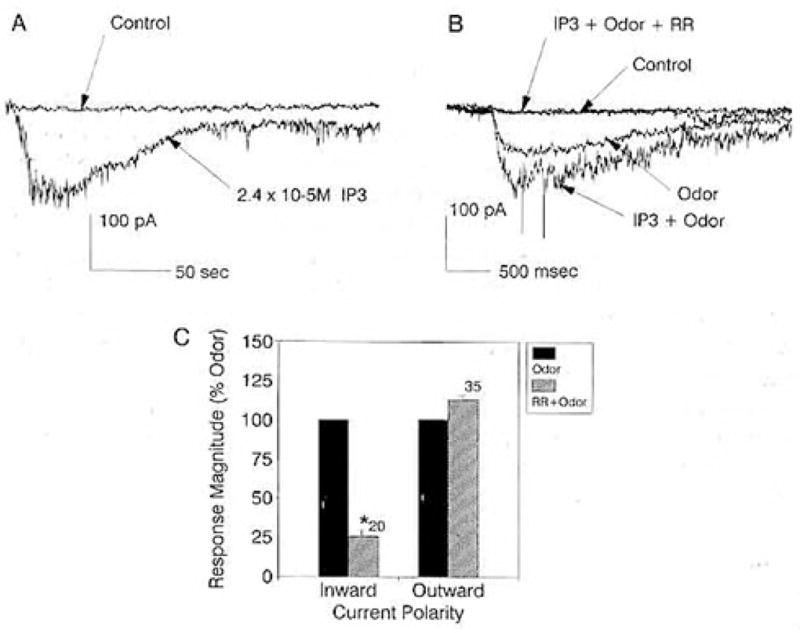
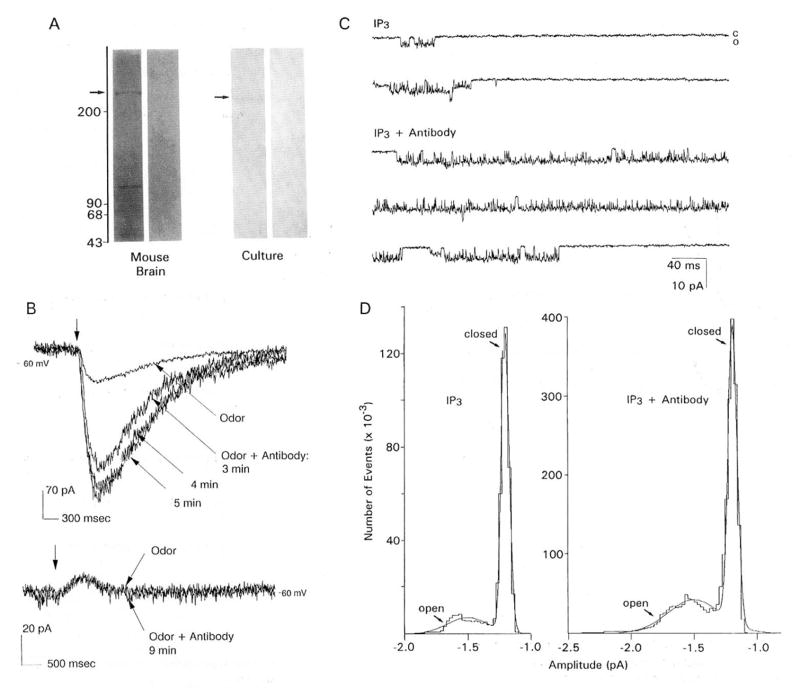
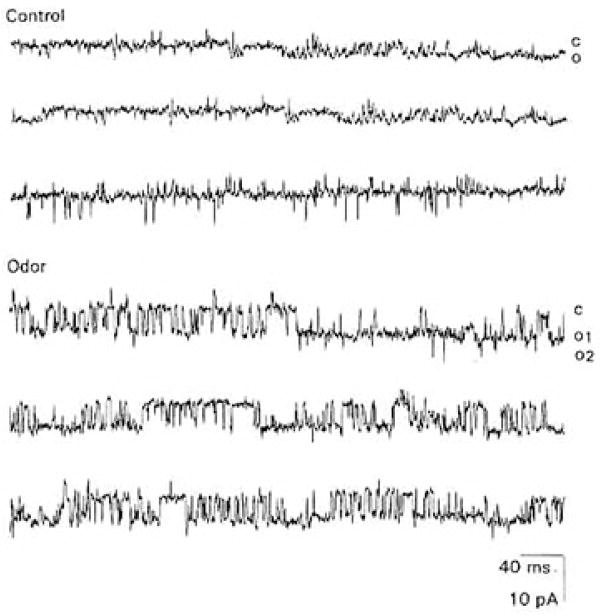
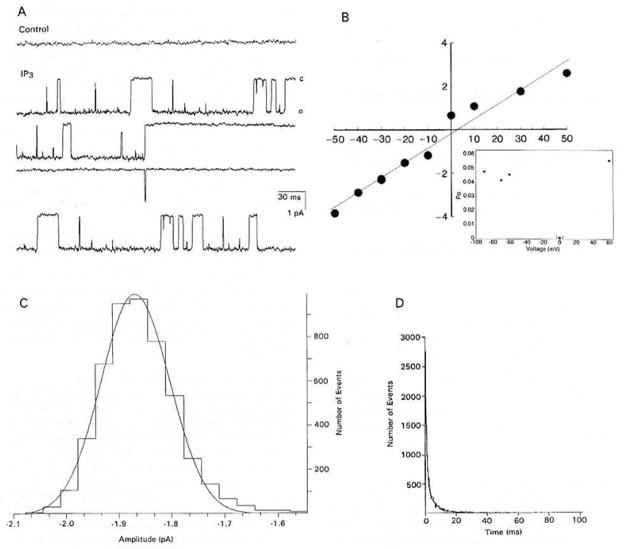
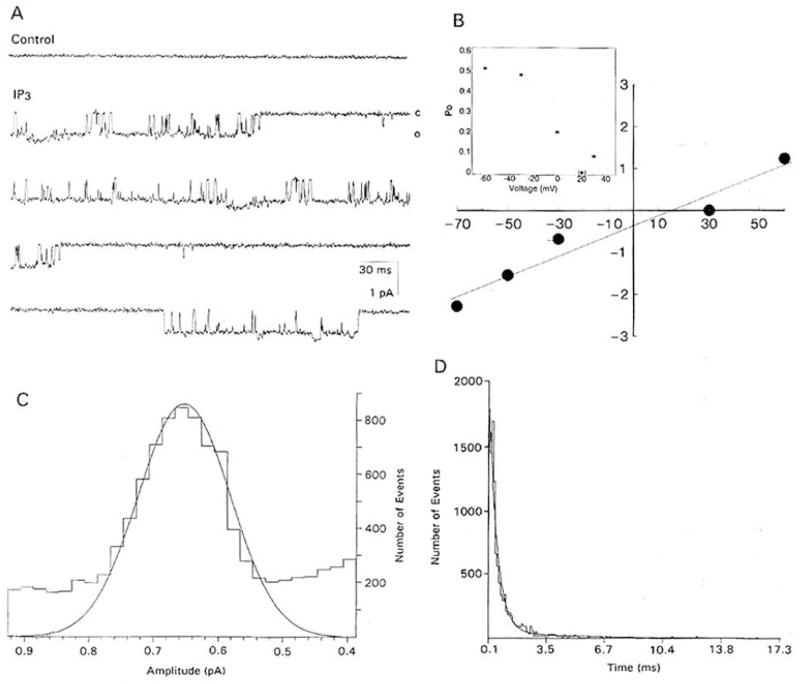
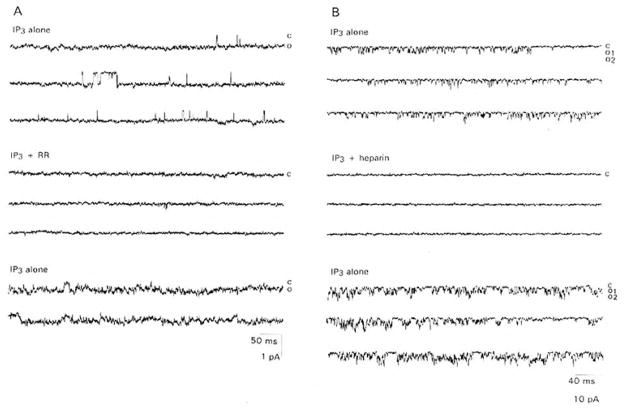
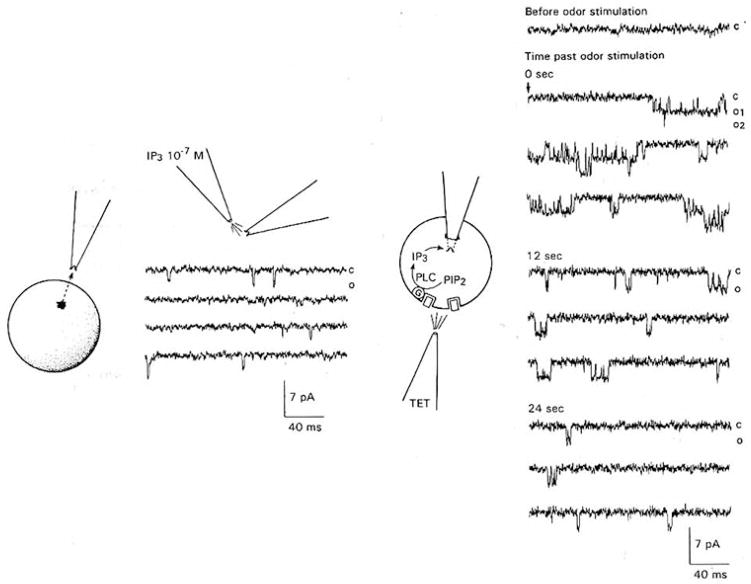
Inositol 1,4,5-trisphosphate (IP3) selectively evokes an inward (excitatory) current in cultured lobster olfactory receptor neurons (ORNs) and directly activates two types of channels in cell-free patches of plasma membrane from the ORNs. The IP3-activated channels have kinetic properties of odor-activated channels in the ORNs and pharmacological properties of intracellular IP3-activated channels in other systems. An antibody directed against an intracellular, cerebellar IP3 receptor recognizes a protein with a molecular weight similar to the mammalian receptor in the ORNs. The antibody selectively increases odor-evoked inward currents and IP3-activated unitary currents in the ORNs. The data provide further evidence for IP3 as an olfactory second messenger and implicate at least one and possibly two novel plasma membrane IP3 receptors in olfactory transduction.
肌醇1,4,5-三磷酸(IP3)可选择性地在培养的龙虾嗅觉受体神经元(ORN)中引发内向(兴奋性)电流,并直接激活ORN质膜无细胞片膜中的两种通道。IP3激活的通道具有ORN中气味激活通道的动力学特性以及其他系统中细胞内IP3激活通道的药理学特性。一种针对细胞内小脑IP3受体的抗体识别出ORN中一种分子量与哺乳动物受体相似的蛋白质。该抗体可选择性地增加ORN中气味诱发的内向电流和IP3激活的单位电流。这些数据为IP3作为嗅觉第二信使提供了进一步的证据,并表明在嗅觉转导中至少存在一种且可能存在两种新型质膜IP3受体。