GOSS W A, DEITZ W H, COOK T M
J Bacteriol. 1964 Oct;88(4):1112-8. doi: 10.1128/jb.88.4.1112-1118.1964.
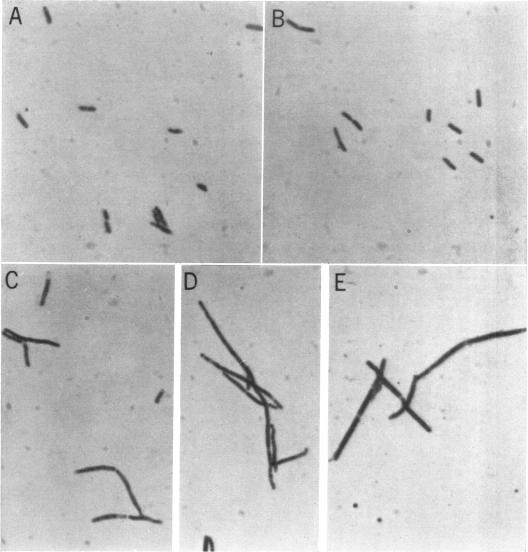
Goss, William A. (Sterling-Winthrop Research Institute, Rensselaer, N.Y.), William H. Dietz, and Thomas M. Cook. Mechanism of action of nalidixic acid on Escherichia coli. J. Bacteriol. 88:1112-1118. 1964.-Nalidixic acid was lethal for proliferating cultures of Escherichia coli. Associated with this lethal effect was the formation of elongated, serpentine forms. Cultures treated with nalidixic acid were osmotically stable; lethality was observed in the presence of stabilizers. Although it was possible to demonstrate leakage of intracellular components from treated cells, this effect occurred only after 99% of the cells were nonviable. Nalidixic acid had little or no effect on respiration with glucose as substrate. If cellular growth was restricted by suboptimal temperature or nutritional deficiencies, the drug was not lethal. Chemical analysis of cellular constituents revealed that lipid, protein, and ribonucleic acid levels were of the same order of magnitude in control and drug-treated cells. Only deoxyribonucleic acid (DNA) levels were markedly lowered in drug-treated cells. These facts are consistent with the view that nalidixic acid interferes with the synthesis of E. coli DNA.
戈斯,威廉·A.(纽约州伦塞勒斯特林-温思罗普研究所),威廉·H.迪茨,以及托马斯·M.库克。萘啶酸对大肠杆菌的作用机制。《细菌学杂志》88:1112 - 1118。1964年。——萘啶酸对增殖的大肠杆菌培养物具有致死性。与此致死效应相关的是形成细长的、蜿蜒状形态。用萘啶酸处理的培养物在渗透压方面是稳定的;在有稳定剂存在的情况下仍观察到致死性。虽然有可能证明经处理的细胞有细胞内成分泄漏,但这种效应仅在99%的细胞失去活力后才出现。萘啶酸以葡萄糖为底物时对呼吸作用几乎没有影响。如果细胞生长因温度不适宜或营养缺乏而受到限制,该药物就没有致死性。对细胞成分的化学分析表明,对照细胞和经药物处理的细胞中脂质、蛋白质和核糖核酸的水平处于相同数量级。只有经药物处理的细胞中脱氧核糖核酸(DNA)水平显著降低。这些事实与萘啶酸干扰大肠杆菌DNA合成的观点一致。