Lloyd R M, Shatkin A J
Center for Advanced Biotechnology and Medicine, Piscataway, New Jersey 08854-5638.
J Virol. 1992 Dec;66(12):6878-84. doi: 10.1128/JVI.66.12.6878-6884.1992.
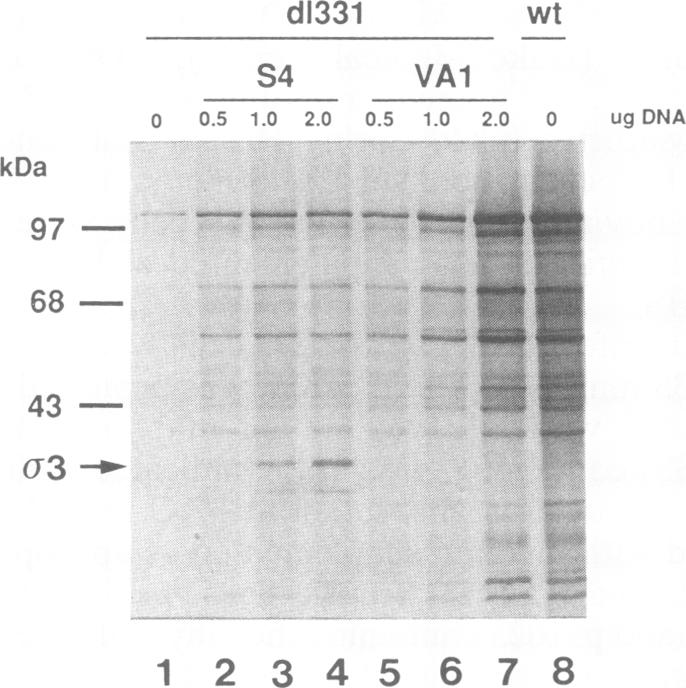
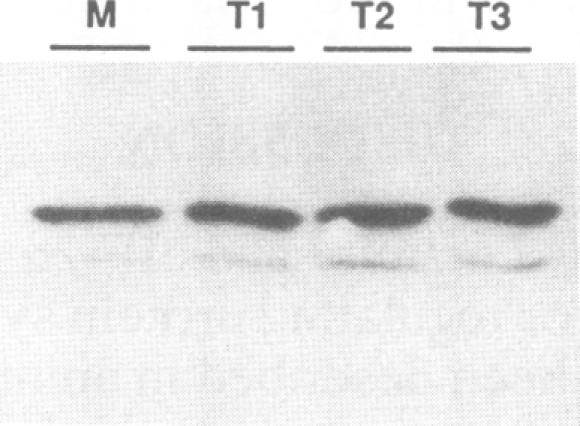
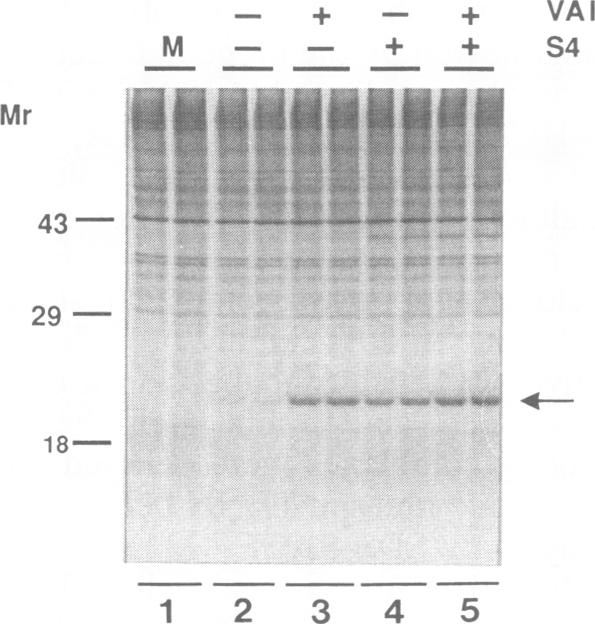
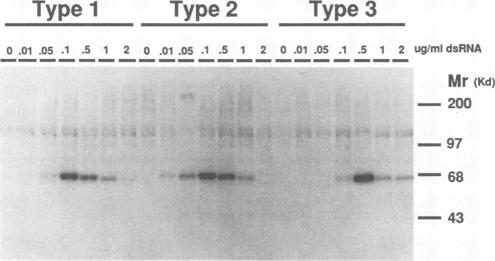
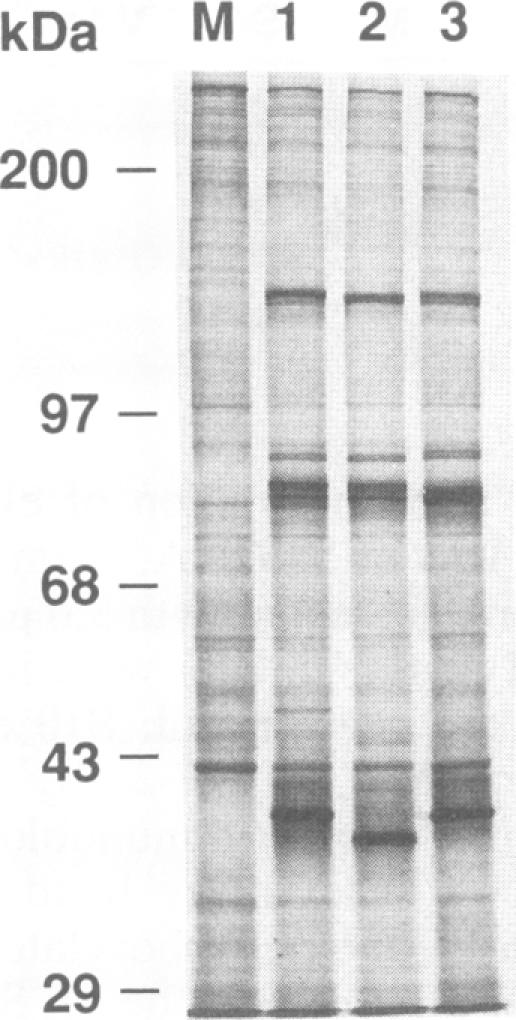
COS cells transfected with plasmids that activate DAI depend on expression of virus-associated I (VAI) RNA to prevent the inhibitory effects of the alpha subunit of eukaryotic initiation factor 2 (eIF-2 alpha) kinase (DAI) and restore the translation of vector-derived dihydrofolate reductase mRNA. This VAI RNA requirement could be completely replaced by reovirus polypeptide sigma 3, consistent with its double-stranded RNA (dsRNA)-binding activity. S4 gene transfection of 293 cells also partially restored adenovirus protein synthesis after infection with the VAI-negative dl331 mutant. In dl331-infected 293 cells, eIF-2 alpha was present mainly in the acidic, phosphorylated form, and trans complementation with polypeptide sigma 3 or VAI RNA decreased the proportion of eIF-2 alpha (P) from approximately 85 to approximately 30%. Activation of DAI by addition of dsRNA to extracts of S4 DNA-transfected COS cells required 10-fold-higher levels of dsRNA than extracts made from cells that were not producing polypeptide sigma 3. In extracts of reovirus-infected mouse L cells, the concentration of dsRNA needed to activate DAI was dependent on the viral serotype used for the infection. Although the proportion of eIF-2 alpha (P) was greater than that in uninfected cells, most of the factor remained in the unphosphorylated form, even at 16 h after infection, consistent with the partial inhibition of host protein synthesis observed with all three viral serotypes. The results indicate that reovirus polypeptide sigma 3 participates in the regulation of protein synthesis by modulating DAI and eIF-2 alpha phosphorylation.
用激活双链RNA依赖蛋白激酶(DAI)的质粒转染的COS细胞,依赖病毒相关I(VAI)RNA的表达来防止真核起始因子2(eIF-2α)激酶(DAI)α亚基的抑制作用,并恢复载体衍生的二氢叶酸还原酶mRNA的翻译。这种对VAI RNA的需求可以被呼肠孤病毒多肽σ3完全替代,这与其双链RNA(dsRNA)结合活性一致。293细胞的S4基因转染在用VAI阴性的dl331突变体感染后也部分恢复了腺病毒蛋白的合成。在dl331感染的293细胞中,eIF-2α主要以酸性磷酸化形式存在,与多肽σ3或VAI RNA的反式互补使eIF-2α(P)的比例从约85%降至约30%。向S4 DNA转染的COS细胞提取物中添加dsRNA激活DAI所需的dsRNA水平比未产生多肽σ3的细胞提取物高10倍。在呼肠孤病毒感染的小鼠L细胞提取物中,激活DAI所需的dsRNA浓度取决于用于感染的病毒血清型。尽管eIF-2α(P)的比例高于未感染细胞,但即使在感染后16小时,大多数因子仍保持未磷酸化形式,这与所有三种病毒血清型观察到的宿主蛋白合成的部分抑制一致。结果表明,呼肠孤病毒多肽σ3通过调节DAI和eIF-2α磷酸化参与蛋白质合成的调控。