School of Molecular Biosciences, College of Veterinary Medicine, Washington State University, Pullman, WA, United States.
School of Molecular Biosciences, College of Veterinary Medicine, Washington State University, Pullman, WA, United States; Paul G. Allen School for Global Animal Health, College of Veterinary Medicine, Washington State University, Pullman, WA, United States.
Int Rev Cell Mol Biol. 2019;345:35-136. doi: 10.1016/bs.ircmb.2018.08.002. Epub 2018 Sep 25.
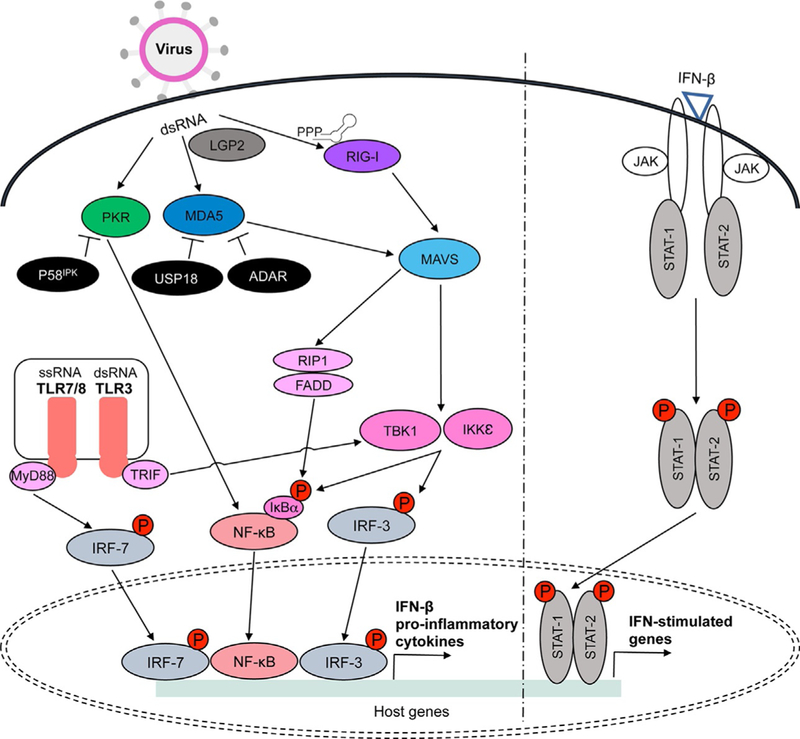
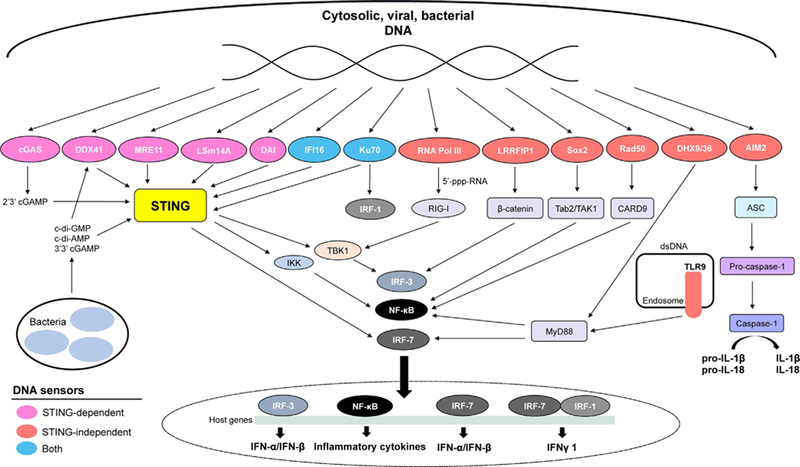
Innate immunity, the first line of defense against invading pathogens, is an ancient form of host defense found in all animals, from sponges to humans. During infection, innate immune receptors recognize conserved molecular patterns, such as microbial surface molecules, metabolites produces during infection, or nucleic acids of the microbe's genome. When initiated, the innate immune response activates a host defense program that leads to the synthesis proteins capable of pathogen killing. In mammals, the induction of cytokines during the innate immune response leads to the recruitment of professional immune cells to the site of infection, leading to an adaptive immune response. While a fully functional innate immune response is crucial for a proper host response and curbing microbial infection, if the innate immune response is dysfunctional and is activated in the absence of infection, autoinflammation and autoimmune disorders can develop. Therefore, it follows that the innate immune response must be tightly controlled to avoid an autoimmune response from host-derived molecules, yet still unencumbered to respond to infection. In this review, we will focus on the innate immune response activated from cytosolic nucleic acids, derived from the microbe or host itself. We will depict how viruses and bacteria activate these nucleic acid sensing pathways and their mechanisms to inhibit the pathways. We will also describe the autoinflammatory and autoimmune disorders that develop when these pathways are hyperactive. Finally, we will discuss gaps in knowledge with regard to innate immune response failure and identify where further research is needed.
先天免疫是抵御入侵病原体的第一道防线,是一种在所有动物中都存在的古老宿主防御形式,从海绵动物到人类。在感染过程中,先天免疫受体识别保守的分子模式,如微生物表面分子、感染过程中产生的代谢物或微生物基因组的核酸。当先天免疫反应被启动时,会激活宿主防御程序,导致能够杀死病原体的蛋白质的合成。在哺乳动物中,先天免疫反应中细胞因子的诱导导致专业免疫细胞募集到感染部位,从而引发适应性免疫反应。虽然功能齐全的先天免疫反应对于宿主的正常反应和抑制微生物感染至关重要,但如果先天免疫反应失调并在没有感染的情况下被激活,自身炎症和自身免疫性疾病可能会发展。因此,可以得出结论,先天免疫反应必须受到严格控制,以避免宿主来源的分子发生自身免疫反应,但仍能不受阻碍地对感染作出反应。在这篇综述中,我们将重点讨论源自微生物或宿主自身的细胞质核酸激活的先天免疫反应。我们将描述病毒和细菌如何激活这些核酸感应途径及其抑制途径的机制。我们还将描述这些途径过度活跃时发生的自身炎症和自身免疫性疾病。最后,我们将讨论先天免疫反应失败方面的知识空白,并确定需要进一步研究的领域。