Hide Geoff, Hughes Jacqueline M, McNuff Robert
Centre for Parasite Biology, Molecular Epidemiology and Ecology, Biosciences Research Institute, School of Environment and Life Sciences, University of Salford, UK, M5 4WT.
BMC Ecol. 2003 Sep 30;3:7. doi: 10.1186/1472-6785-3-7.
The rapid expansion in the availability of genome and DNA sequence information has opened up new possibilities for the development of methods for detecting free-living protozoa in environmental samples. The protozoan Blepharisma japonicum was used to investigate a rapid and simple detection system based on polymerase chain reaction amplification (PCR) from organisms immobilised on FTA paper.
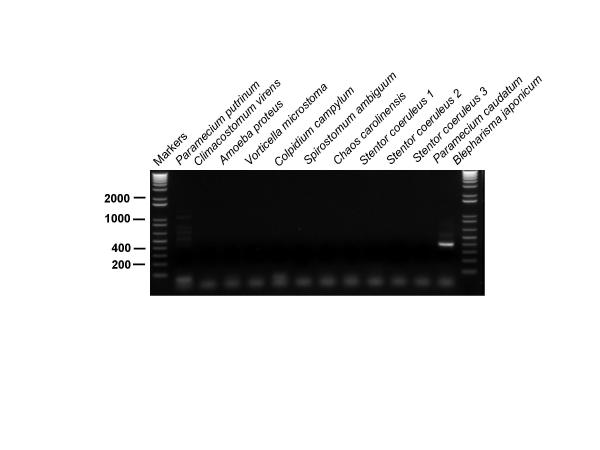
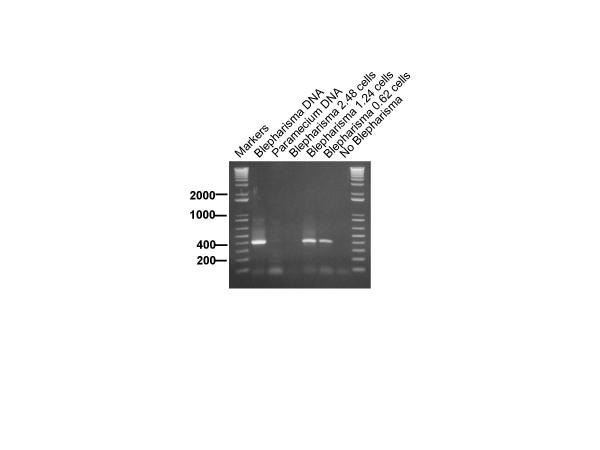
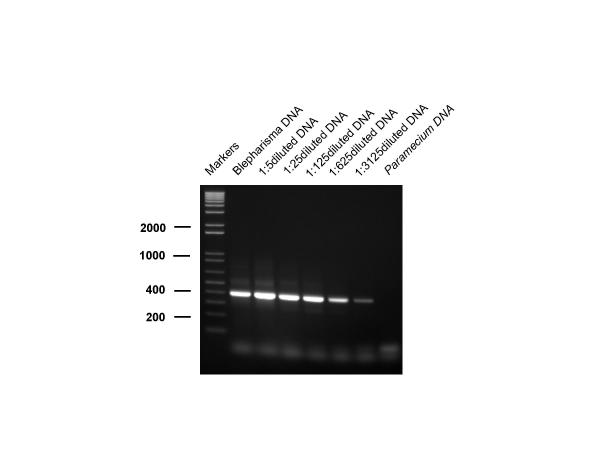
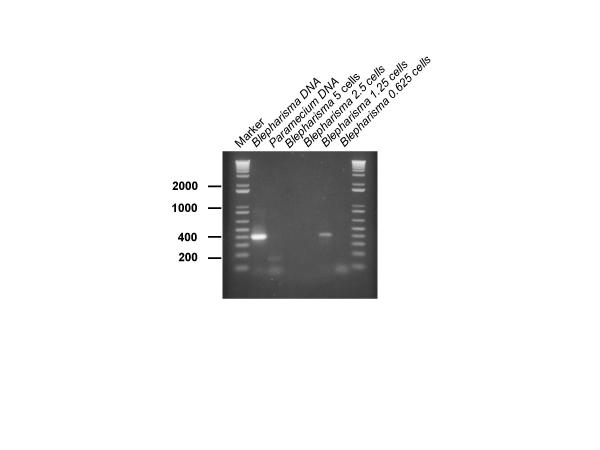
Using primers designed from the alpha-tubulin genes of Blepharisma, specific and sensitive detection to the equivalent of a single Blepharisma cell could be achieved. Similar detection levels were found using water samples, containing Blepharisma, which were dried onto Whatman FTA paper.
This system has potential as a sensitive convenient detection system for Blepharisma and could be applied to other protozoan organisms.
基因组和DNA序列信息可用性的迅速扩展为开发检测环境样品中自由生活原生动物的方法开辟了新的可能性。利用日本睫滴虫研究了一种基于聚合酶链反应扩增(PCR)的快速简便检测系统,该系统用于检测固定在FTA滤纸上的生物体。
使用从日本睫滴虫α-微管蛋白基因设计的引物,能够实现对单个日本睫滴虫细胞等效物的特异性和灵敏检测。对于含有日本睫滴虫并干燥在Whatman FTA滤纸上的水样,也发现了类似的检测水平。
该系统有潜力成为一种灵敏便捷的日本睫滴虫检测系统,并可应用于其他原生动物。