Faruque Shah M, Chowdhury Nityananda, Kamruzzaman M, Ahmad Q Shafi, Faruque A S G, Salam M Abdus, Ramamurthy T, Nair G Balakrish, Weintraub Andrej, Sack David A
International Centre for Diarrhoeal Disease Research, Dhaka, Bangladesh.
Emerg Infect Dis. 2003 Sep;9(9):1116-22. doi: 10.3201/eid0909.020443.
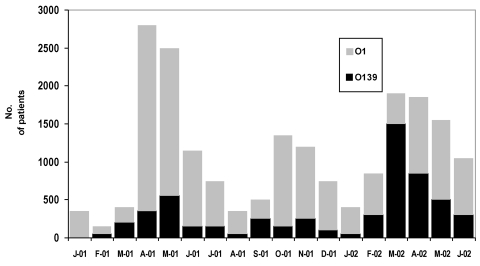
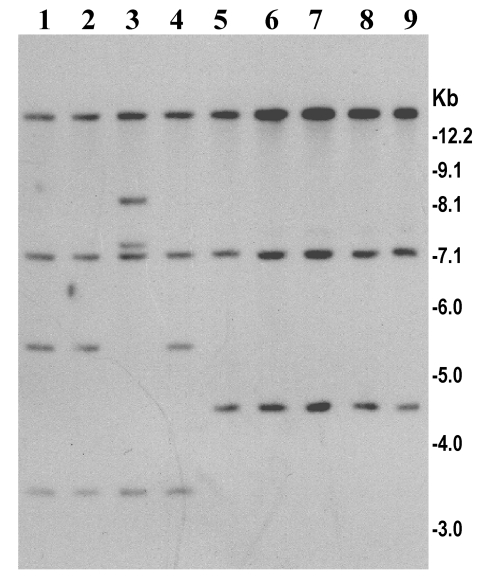
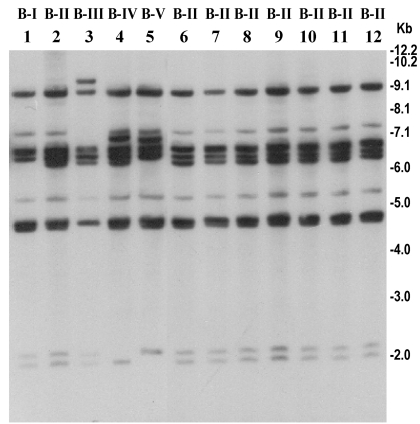
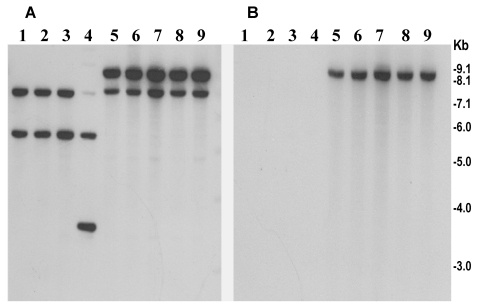
During March and April 2002, a resurgence of Vibrio cholerae O139 occurred in Dhaka and adjoining areas of Bangladesh with an estimated 30,000 cases of cholera. Patients infected with O139 strains were much older than those infected with O1 strains (p<0.001). The reemerged O139 strains belong to a single ribotype corresponding to one of two ribotypes that caused the initial O139 outbreak in 1993. Unlike the strains of 1993, the recent strains are susceptible to trimethoprim, sulphamethoxazole, and streptomycin but resistant to nalidixic acid. The new O139 strains carry a copy of the Calcutta type CTX(Calc) prophage in addition to the CTX(ET) prophage carried by the previous strains. Thus, the O139 strains continue to evolve, and the adult population continues to be more susceptible to O139 cholera, which suggests a lack of adequate immunity against this serogroup. These findings emphasize the need for continuous monitoring of the new epidemic strains.
2002年3月至4月期间,孟加拉国达卡及周边地区霍乱弧菌O139再次流行,估计有30000例霍乱病例。感染O139菌株的患者比感染O1菌株的患者年龄大得多(p<0.001)。再次出现的O139菌株属于单一核糖体分型,与1993年首次爆发O139疫情的两种核糖体分型之一相对应。与1993年的菌株不同,近期菌株对甲氧苄啶、磺胺甲恶唑和链霉素敏感,但对萘啶酸耐药。新的O139菌株除了携带先前菌株所携带的CTX(ET)前噬菌体之外,还携带一份加尔各答型CTX(Calc)前噬菌体。因此,O139菌株在持续进化,成年人群仍然对O139霍乱更易感,这表明对该血清群缺乏足够的免疫力。这些发现强调了持续监测新流行菌株的必要性。