de Verdier K, Ohagen P, Alenius S
Department of Ruminant and Porcine Diseases, National Veterinary Institute, Uppsala, Sweden.
Acta Vet Scand. 2003;44(1-2):97-101. doi: 10.1186/1751-0147-44-97.
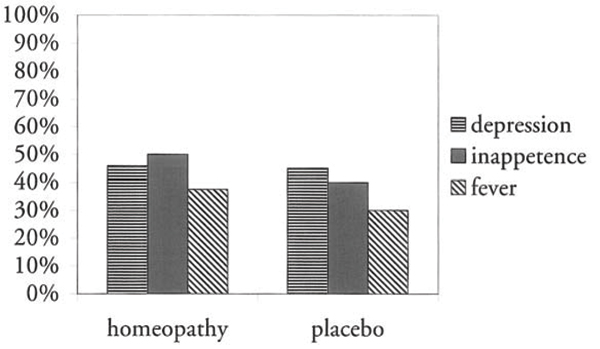
A double-blind, placebo-controlled clinical trial of a homeopathic treatment of neonatal calf diarrhoea was performed using 44 calves in 12 dairy herds. Calves with spontaneously derived diarrhoea were treated with either the homeopathic remedy Podophyllum (D30) (n = 24) or a placebo (n = 20). No clinically or statistically significant difference between the 2 groups was demonstrated. Calves treated with Podophyllum had an average of 3.1 days of diarrhoea compared with 2.9 days for the placebo group. Depression, inappetence and fever were presented equally in the 2 groups. These results support the widely held opinion that scientific proof for the efficacy of veterinary homeopathy is lacking. In the European Union this implies a considerable risk for animal welfare, since in some countries priority is given to homeopathic treatments in organic farming.
采用12个奶牛场的44头犊牛进行了一项顺势疗法治疗新生犊牛腹泻的双盲、安慰剂对照临床试验。患有自发性腹泻的犊牛分别接受顺势疗法药物鬼臼(D30)治疗(n = 24)或安慰剂治疗(n = 20)。两组之间未显示出临床或统计学上的显著差异。接受鬼臼治疗的犊牛腹泻平均持续3.1天,而安慰剂组为2.9天。两组中抑郁、食欲不振和发热的情况相当。这些结果支持了一种广泛持有的观点,即缺乏兽医顺势疗法疗效的科学证据。在欧盟,这意味着对动物福利有相当大的风险,因为在一些国家,有机农业优先采用顺势疗法治疗。