Siegel R M, Katsumata M, Miyashita T, Louie D C, Greene M I, Reed J C
Department of Pathology and Laboratory Medicine, University of Pennsylvania School of Medicine, Philadelphia 19104.
Proc Natl Acad Sci U S A. 1992 Aug 1;89(15):7003-7. doi: 10.1073/pnas.89.15.7003.
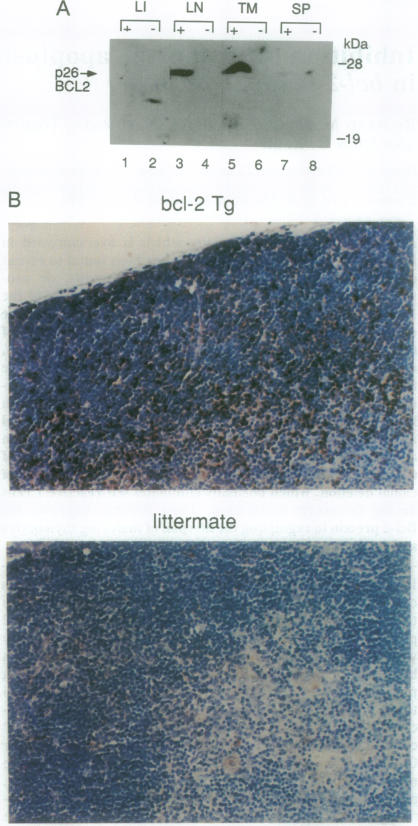
The bcl-2 gene, which is overexpressed in human follicular B-cell lymphomas, has been found to extend cellular lifespan through inhibition of apoptosis, or programmed cell death. However, the physiological role of the Bcl-2 protein in lymphocyte development is unclear. We have established a transgenic mouse line that expresses high levels of the Bcl-2 protein in both cortical and medullary thymocytes, disrupting the normal pattern of expression of this gene. We found that in these mice, immature thymocytes became resistant to apoptosis mediated by corticosteroids and calcium ionophores. Untreated thymocytes also exhibited a survival advantage in suspension cultures compared with controls. In addition, overexpression of bcl-2 enabled a proportion of thymocytes and peripheral T cells to escape the process of clonal deletion, which normally eliminates self-reactive T cells during thymocyte maturation. These findings implicate the Bcl-2 protein in regulating the lifespan of maturing thymocytes and in the antigenic-selection process.
在人类滤泡性B细胞淋巴瘤中过度表达的bcl-2基因,已被发现可通过抑制凋亡(即程序性细胞死亡)来延长细胞寿命。然而,Bcl-2蛋白在淋巴细胞发育中的生理作用尚不清楚。我们建立了一种转基因小鼠品系,该品系在皮质和髓质胸腺细胞中均高水平表达Bcl-2蛋白,从而破坏了该基因的正常表达模式。我们发现,在这些小鼠中,未成熟胸腺细胞对皮质类固醇和钙离子载体介导的凋亡产生了抗性。与对照相比,未经处理的胸腺细胞在悬浮培养中也表现出存活优势。此外,bcl-2的过度表达使一部分胸腺细胞和外周T细胞能够逃避克隆清除过程,该过程通常在胸腺细胞成熟期间消除自身反应性T细胞。这些发现表明Bcl-2蛋白在调节成熟胸腺细胞的寿命以及抗原选择过程中发挥作用。