Nozawa Kazuhisa, Fritzler Marvin J, von Mühlen Carlos A, Chan Edward K L
Department of Oral Biology, University of Florida College of Dentistry, Gainesville, Florida, USA.
Arthritis Res Ther. 2004;6(2):R95-102. doi: 10.1186/ar1035. Epub 2003 Dec 15.
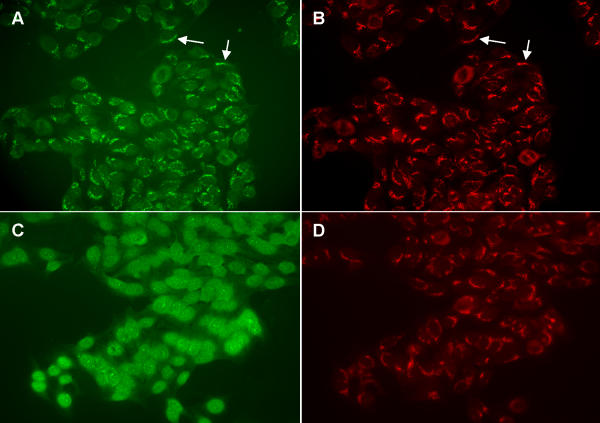
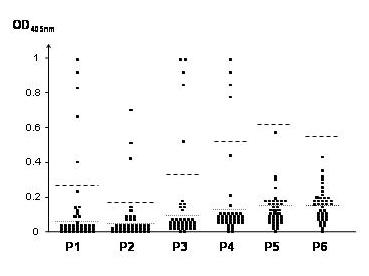
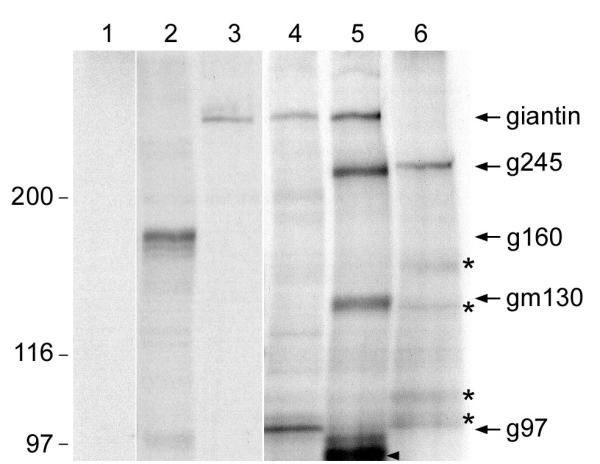
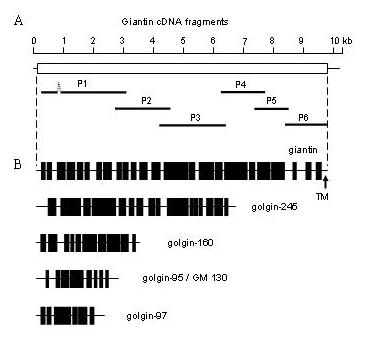
Anti-Golgi complex antibodies (AGAs) are primarily associated with systemic lupus erythematosus and Sjögren's syndrome. Here we report on the immunoreactivity of AGAs against five Golgi autoantigens (giantin, golgin-245, golgin-160, golgin-95/GM130, and golgin-97) and provide data from epitope mapping on the most common Golgi autoantigen, namely giantin. A total of 80 human sera containing AGAs, as defined by indirect immunofluorescence on HEp-2 cells, were analyzed by ELISA using recombinant autoantigens and immunoprecipitation. The proportion of AGA sera that reacted with the five Golgi autoantigens was correlated with the molecular mass of the Golgi antigens. Autoantibodies to giantin, the largest Golgi autoantigen, were the predominant AGAs, being found in 50% of the AGA sera. Epitope mapping of giantin was performed using six recombinant fragments spanning the entire protein. Antigiantin-positive sera with low titer autoantibodies recognized epitopes in the carboxyl-terminal fragments that are proximal to the Golgi membrane, whereas higher titer sera exhibited strong reactivity to amino-terminal and central domains that are likely to extend from the Golgi membrane into the cytoplasm. Our working hypothesis is that aberrantly expressed Golgi complex autoantigens may be released into the immune system when cells undergo lysis. By virtue of a carboxyl-terminal transmembrane domain, giantin is likely to be more stably associated with the cytoplasmic face of the Golgi complex than are other golgins, which are peripheral proteins. The stable association of giantin with the putative released Golgi complex may contribute to its preferential autoantigenicity.
抗高尔基体复合物抗体(AGAs)主要与系统性红斑狼疮和干燥综合征相关。在此,我们报告了AGAs针对五种高尔基体自身抗原(巨蛋白、高尔基体蛋白-245、高尔基体蛋白-160、高尔基体蛋白-95/GM130和高尔基体蛋白-97)的免疫反应性,并提供了关于最常见的高尔基体自身抗原即巨蛋白的表位作图数据。通过使用重组自身抗原的酶联免疫吸附测定(ELISA)和免疫沉淀法,对总共80份经HEp-2细胞间接免疫荧光法定义为含有AGAs的人血清进行了分析。与五种高尔基体自身抗原发生反应的AGA血清比例与高尔基体抗原的分子量相关。针对最大的高尔基体自身抗原巨蛋白的自身抗体是主要的AGAs,在50%的AGA血清中被检测到。使用跨越整个蛋白质的六个重组片段对巨蛋白进行了表位作图。抗巨蛋白阳性且自身抗体滴度低的血清识别靠近高尔基体膜的羧基末端片段中的表位,而滴度较高的血清对可能从高尔基体膜延伸到细胞质中的氨基末端和中央结构域表现出强烈反应性。我们的工作假设是,当细胞裂解时,异常表达的高尔基体复合物自身抗原可能会释放到免疫系统中。由于羧基末端跨膜结构域,巨蛋白可能比其他高尔基体蛋白(外周蛋白)更稳定地与高尔基体复合物的细胞质面结合。巨蛋白与假定释放的高尔基体复合物的稳定结合可能导致其优先成为自身抗原。