Aronow B J, Silbiger R N, Dusing M R, Stock J L, Yager K L, Potter S S, Hutton J J, Wiginton D A
Department of Pediatrics, University of Cincinnati College of Medicine, Cincinnati Children's Hospital, Ohio 45229.
Mol Cell Biol. 1992 Sep;12(9):4170-85. doi: 10.1128/mcb.12.9.4170-4185.1992.
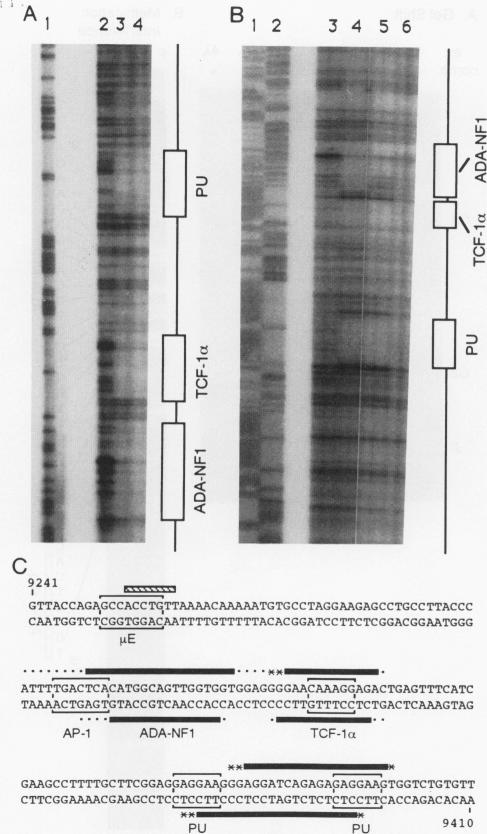
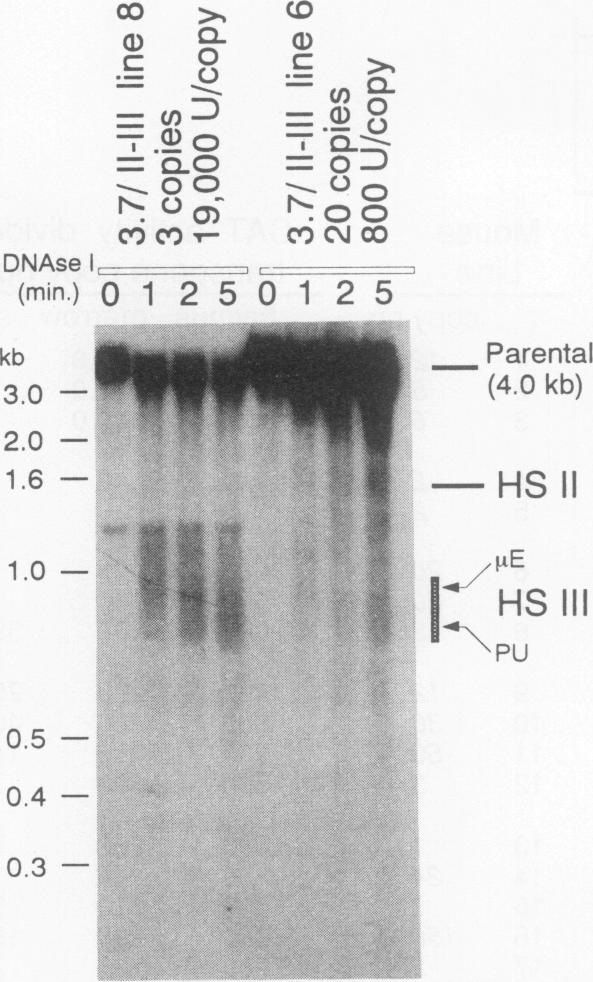
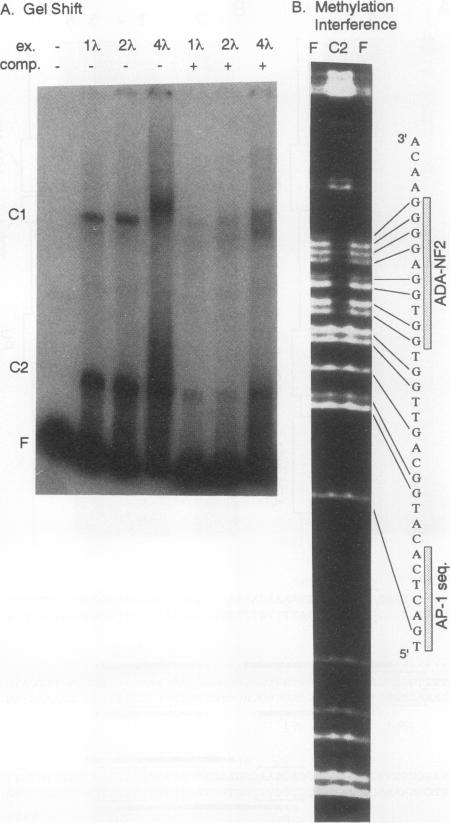
We previously observed that human ADA gene expression, required for the intrathymic maturation of T cells, is controlled by first-intron sequences. Used as a cis activator, the intron generates copy-dependent reporter expression in transgenic thymocytes, and we here dissect its critical determinants. Of six DNase I-hypersensitive sites (HS sites) in the intron, only HS III was a transfection-active classic enhancer in T cells. The enhancer contains a critical core region, ACATGGCAGTTGGTGGTGGAGGGGAACA, that interacts with at least two factors, ADA-NF1 and ADA-NF2. Activity of the core is strongly augmented by adjacent elements contained within a 200-bp domain corresponding to the limits of HS III hypersensitivity. These core-adjacent sequences include consensus matches for recognition by the AP-1, TCF-1 alpha, mu E, and Ets transcription factor families. In contrast, considerably more extensive sequences flanking the enhancer domain were required for position-independent and copy-proportional expression in transgenic mouse thymocytes. The additionally required upstream segment encompassed the nonenhancer HS II site. The required downstream segment, composed largely of Alu-repetitive DNA, was non-DNase I hypersensitive. Transgenes that lacked either segment were subject to strong positional effects. Among these variably expressing lines, the expression level correlated with the degree of hypersensitivity at HS III. This finding suggests that formation of hypersensitivity is normally facilitated by the flanking segments. These results delineate a complex thymic regulatory region within the intron and indicate that a series of interactions is necessary for the enhancer domain to function consistently within chromatin.
我们之前观察到,T细胞在胸腺内成熟所需的人类ADA基因表达受第一内含子序列控制。作为顺式激活因子,该内含子在转基因胸腺细胞中产生拷贝依赖性报告基因表达,我们在此剖析其关键决定因素。在该内含子的六个DNase I高敏位点(HS位点)中,只有HS III是T细胞中具有转染活性的经典增强子。该增强子包含一个关键核心区域ACATGGCAGTTGGTGGTGGAGGGGAACA,它与至少两种因子ADA-NF1和ADA-NF2相互作用。核心区域的活性因对应于HS III高敏性边界的200 bp结构域内的相邻元件而显著增强。这些核心相邻序列包括AP-1、TCF-1α、μE和Ets转录因子家族识别的共有匹配序列。相比之下,在转基因小鼠胸腺细胞中实现位置独立和拷贝比例表达需要增强子结构域两侧更广泛的序列。额外需要的上游片段包括非增强子HS II位点。所需的下游片段主要由Alu重复DNA组成,对DNase I不敏感。缺少任何一个片段的转基因都受到强烈的位置效应影响。在这些表达可变的品系中,表达水平与HS III处的高敏程度相关。这一发现表明,侧翼片段通常有助于高敏性的形成。这些结果描绘了内含子内一个复杂的胸腺调节区域,并表明增强子结构域在染色质内持续发挥功能需要一系列相互作用。