Hur Eugene, Pfaff Samuel J, Payne E Sturgis, Grøn Hanne, Buehrer Benjamin M, Fletterick Robert J
Graduate Group in Biophysics, University of California, San Francisco, California, USA.
PLoS Biol. 2004 Sep;2(9):E274. doi: 10.1371/journal.pbio.0020274. Epub 2004 Aug 24.
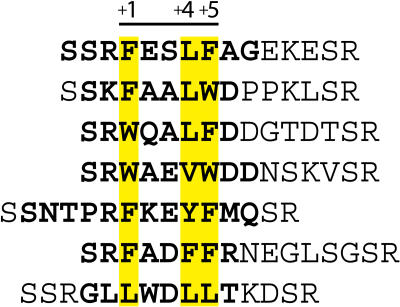
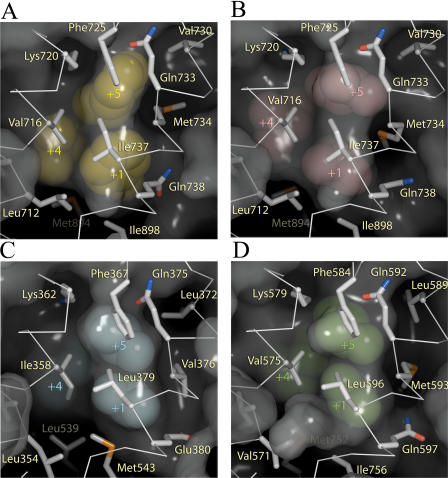
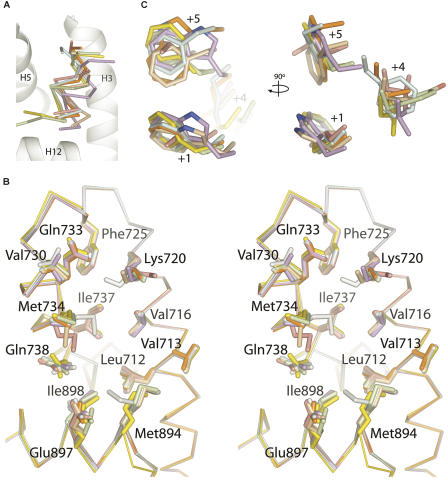
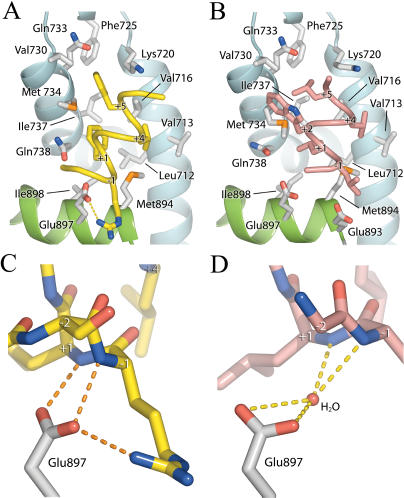
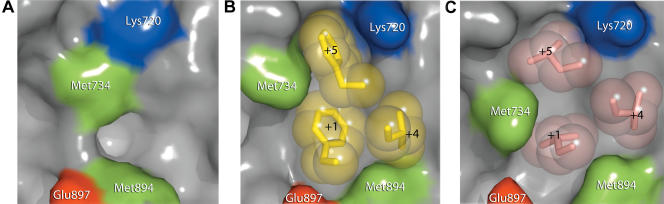
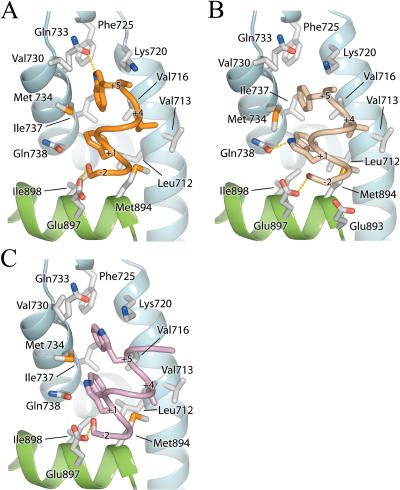
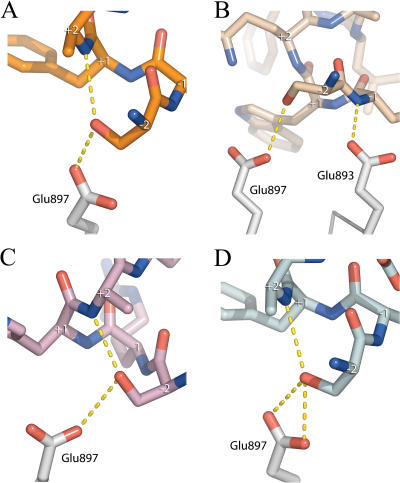
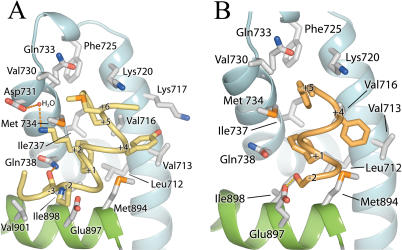
Prostate cancer is a leading killer of men in the industrialized world. Underlying this disease is the aberrant action of the androgen receptor (AR). AR is distinguished from other nuclear receptors in that after hormone binding, it preferentially responds to a specialized set of coactivators bearing aromatic-rich motifs, while responding poorly to coactivators bearing the leucine-rich "NR box" motifs favored by other nuclear receptors. Under normal conditions, interactions with these AR-specific coactivators through aromatic-rich motifs underlie targeted gene transcription. However, during prostate cancer, abnormal association with such coactivators, as well as with coactivators containing canonical leucine-rich motifs, promotes disease progression. To understand the paradox of this unusual selectivity, we have derived a complete set of peptide motifs that interact with AR using phage display. Binding affinities were measured for a selected set of these peptides and their interactions with AR determined by X-ray crystallography. Structures of AR in complex with FxxLF, LxxLL, FxxLW, WxxLF, WxxVW, FxxFF, and FxxYF motifs reveal a changing surface of the AR coactivator binding interface that permits accommodation of both AR-specific aromatic-rich motifs and canonical leucine-rich motifs. Induced fit provides perfect mating of the motifs representing the known family of AR coactivators and suggests a framework for the design of AR coactivator antagonists.
前列腺癌是工业化国家男性的主要杀手。这种疾病的根源是雄激素受体(AR)的异常作用。AR与其他核受体的区别在于,在激素结合后,它优先响应一组带有富含芳香族基序的特定共激活因子,而对其他核受体青睐的带有富含亮氨酸的“NR盒”基序的共激活因子反应较差。在正常情况下,通过富含芳香族基序与这些AR特异性共激活因子的相互作用是靶向基因转录的基础。然而,在前列腺癌期间,与这类共激活因子以及与含有典型富含亮氨酸基序的共激活因子的异常结合会促进疾病进展。为了理解这种异常选择性的矛盾之处,我们利用噬菌体展示技术获得了一组与AR相互作用的完整肽基序。对这些肽中的一组进行了结合亲和力测量,并通过X射线晶体学确定了它们与AR的相互作用。与FxxLF、LxxLL、FxxLW、WxxLF、WxxVW、FxxFF和FxxYF基序形成复合物的AR结构揭示了AR共激活因子结合界面不断变化的表面,该表面能够容纳AR特异性富含芳香族基序和典型富含亮氨酸基序。诱导契合为代表已知AR共激活因子家族的基序提供了完美匹配,并为AR共激活因子拮抗剂的设计提供了框架。