Engler Adam J, Griffin Maureen A, Sen Shamik, Bönnemann Carsten G, Sweeney H Lee, Discher Dennis E
School of Engineering and Applied Science, University of Pennsylvania, Philadelphia, PA 19104, USA.
J Cell Biol. 2004 Sep 13;166(6):877-87. doi: 10.1083/jcb.200405004.
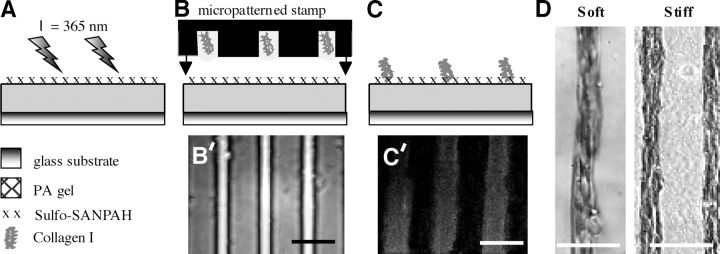
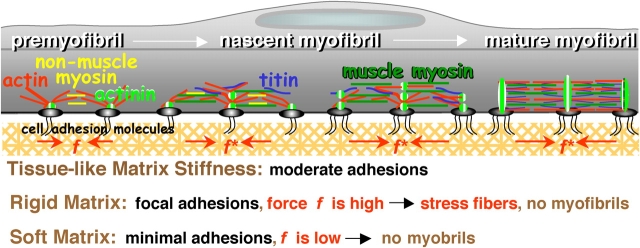
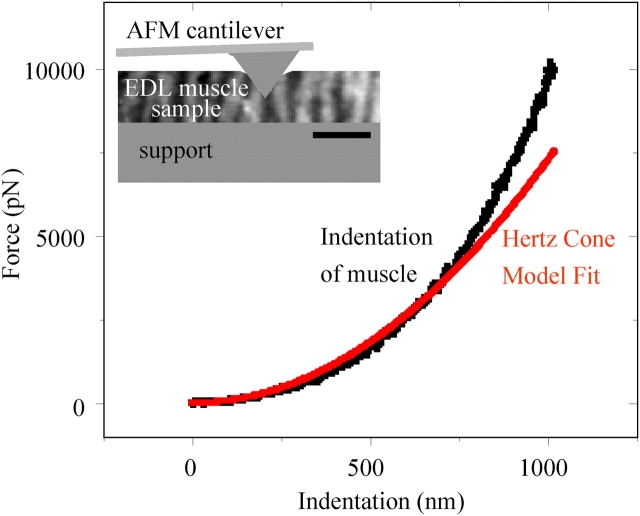
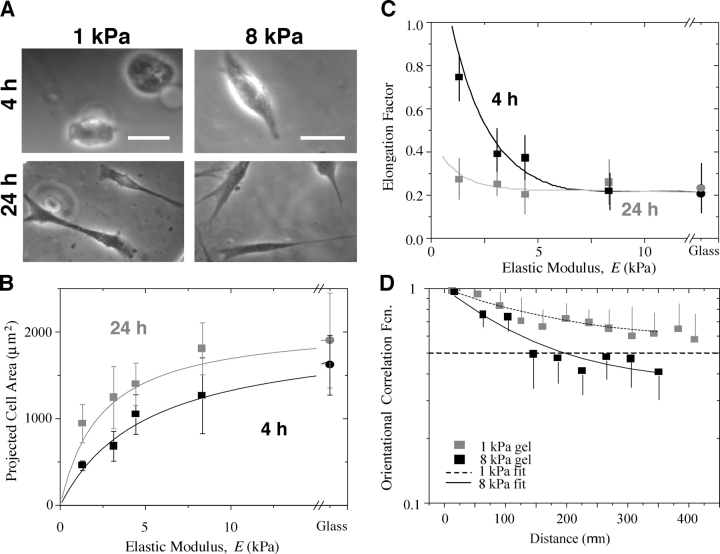
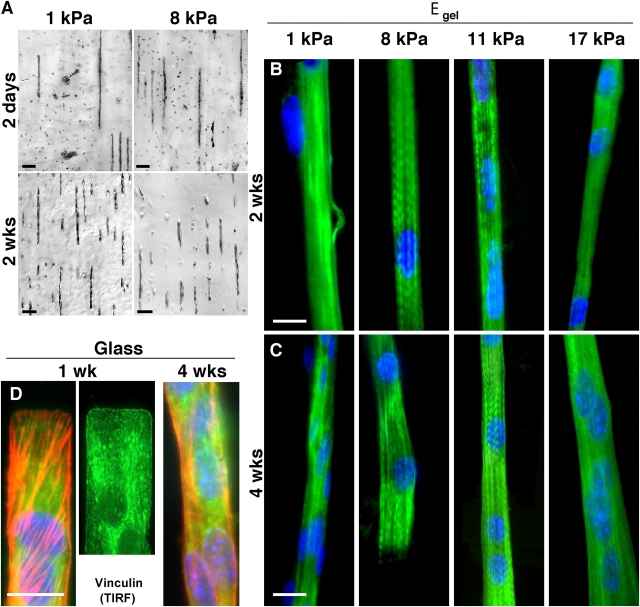
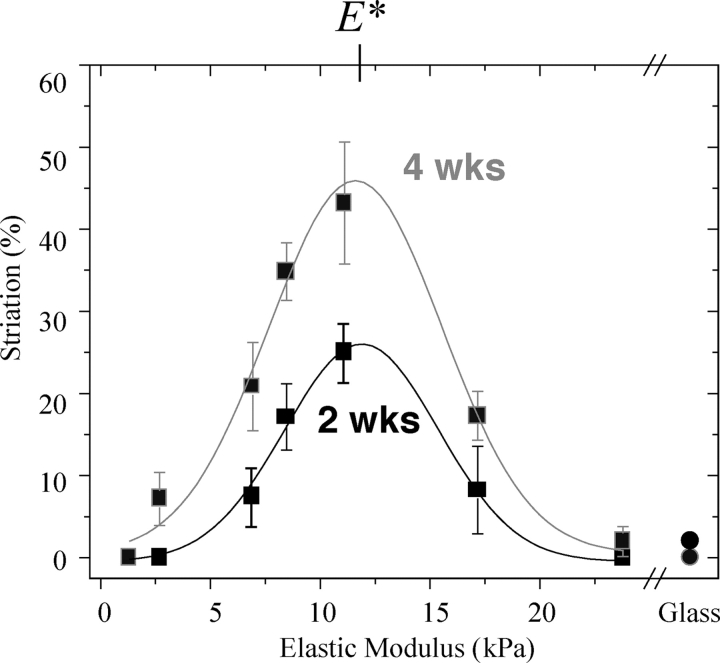
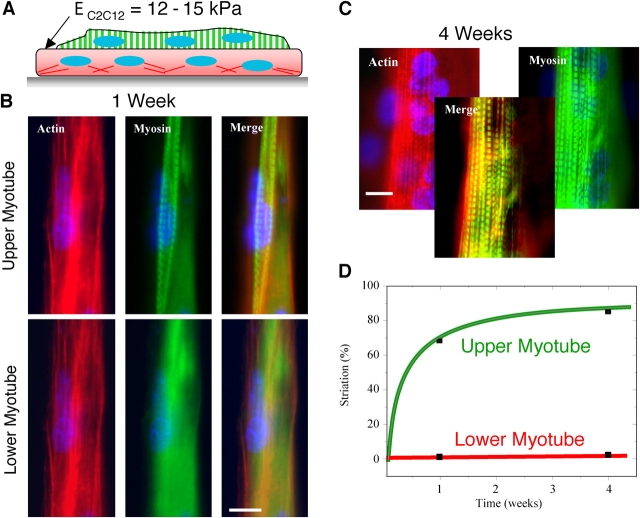
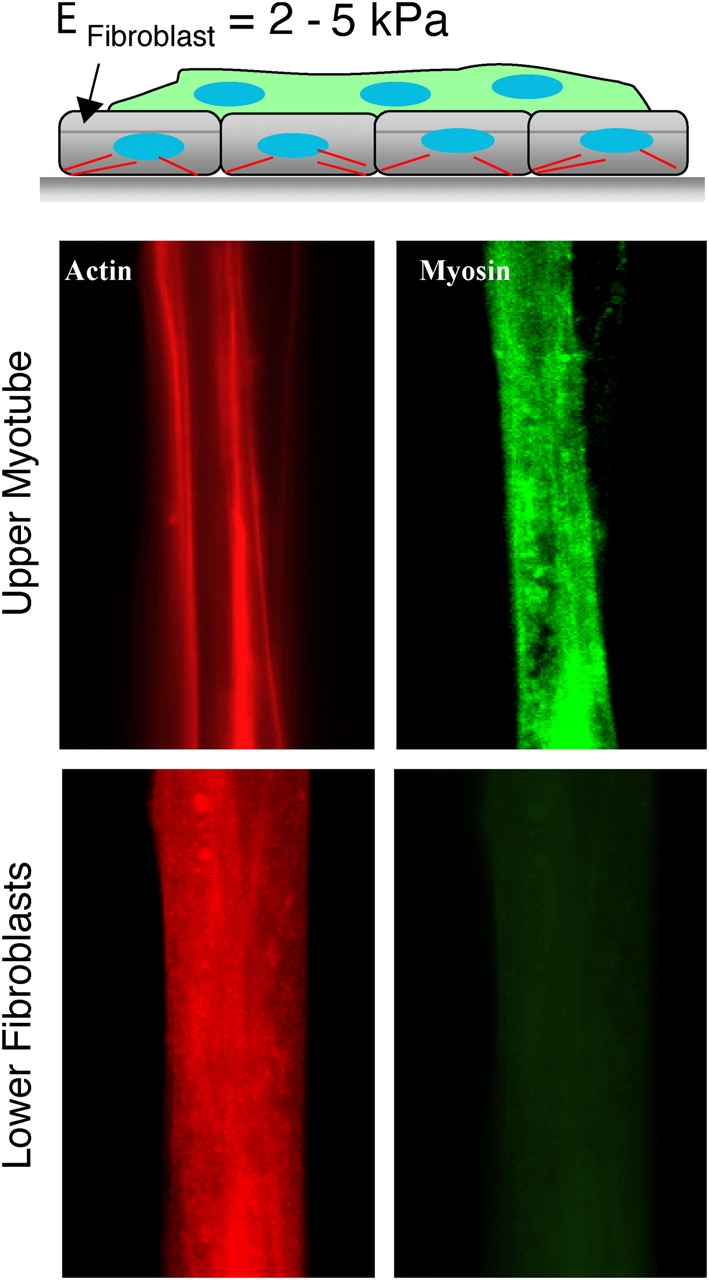
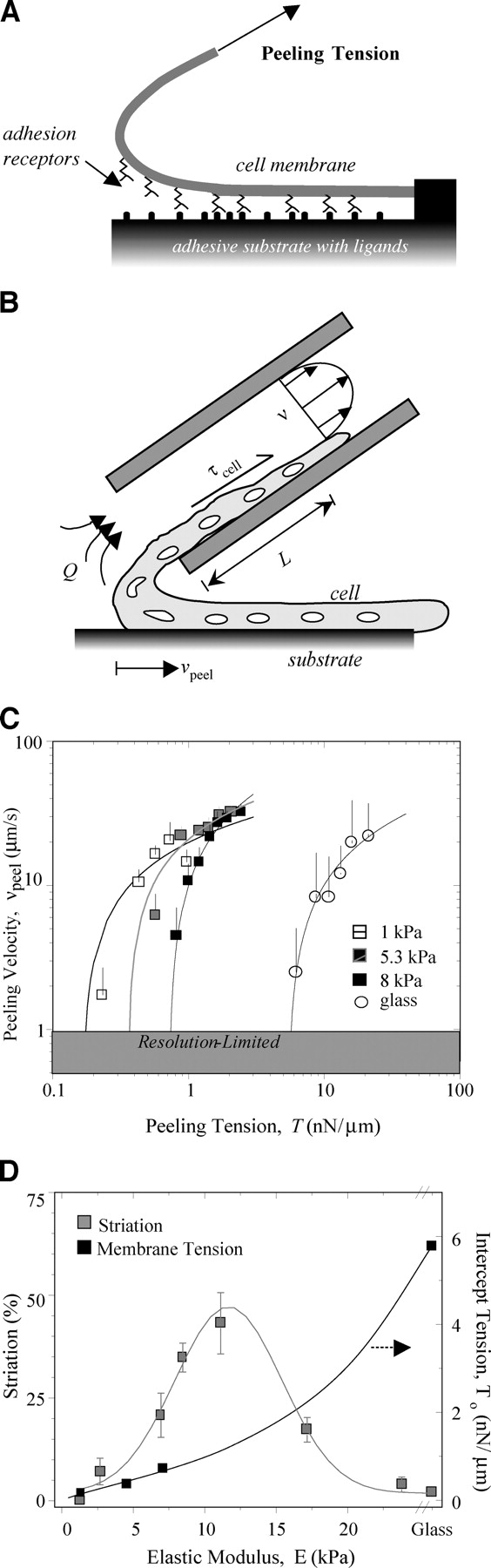
Contractile myocytes provide a test of the hypothesis that cells sense their mechanical as well as molecular microenvironment, altering expression, organization, and/or morphology accordingly. Here, myoblasts were cultured on collagen strips attached to glass or polymer gels of varied elasticity. Subsequent fusion into myotubes occurs independent of substrate flexibility. However, myosin/actin striations emerge later only on gels with stiffness typical of normal muscle (passive Young's modulus, E approximately 12 kPa). On glass and much softer or stiffer gels, including gels emulating stiff dystrophic muscle, cells do not striate. In addition, myotubes grown on top of a compliant bottom layer of glass-attached myotubes (but not softer fibroblasts) will striate, whereas the bottom cells will only assemble stress fibers and vinculin-rich adhesions. Unlike sarcomere formation, adhesion strength increases monotonically versus substrate stiffness with strongest adhesion on glass. These findings have major implications for in vivo introduction of stem cells into diseased or damaged striated muscle of altered mechanical composition.
细胞能够感知其力学和分子微环境,并相应地改变基因表达、组织结构和/或形态。在此,将成肌细胞培养在附着于玻璃或不同弹性聚合物凝胶的胶原条上。随后融合形成肌管的过程与底物柔韧性无关。然而,只有在具有正常肌肉典型硬度的凝胶(被动杨氏模量,E约为12 kPa)上,肌动蛋白/肌球蛋白条纹才会较晚出现。在玻璃以及更软或更硬的凝胶上,包括模拟僵硬型营养不良肌肉的凝胶,细胞不会形成条纹。此外,生长在附着于玻璃的顺应性底层肌管(而非较软的成纤维细胞)之上的肌管会形成条纹,而底层细胞只会组装应力纤维和富含纽蛋白的黏附结构。与肌节形成不同,黏附强度随底物硬度单调增加,在玻璃上的黏附力最强。这些发现对于将干细胞体内导入机械组成改变的患病或受损横纹肌具有重要意义。