Szabo E A, Pemberton J M, Desmarchelier P M
Department of Microbiology, University of Queensland, Australia.
Appl Environ Microbiol. 1992 Jan;58(1):418-20. doi: 10.1128/aem.58.1.418-420.1992.
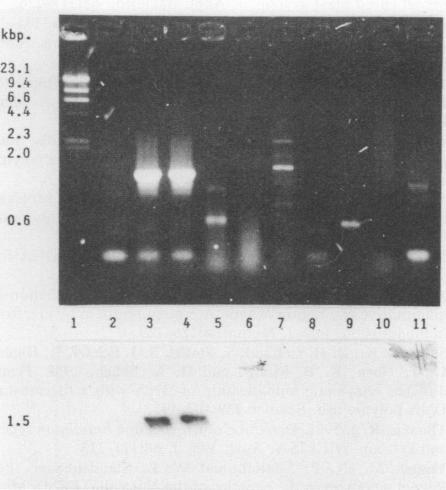
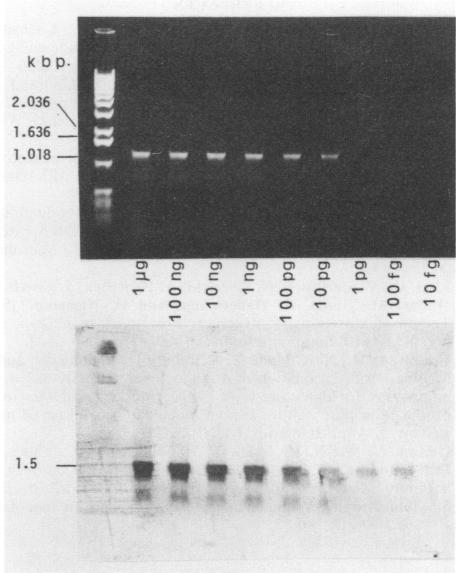
The polymerase chain reaction (PCR) and a radiolabeled oligonucleotide probe were used to specifically detect proteolytic and nonproteolytic Clostridium botulinum type B. Two synthetic primers deduced from the amino acid sequence data of type B neurotoxin were used to amplify a 1.5-kbp fragment corresponding to the light chain of the toxin. Although, nonspecific priming was observed when the PCR protocol was tested with other clostridial species, only the PCR product from C. botulinum type B isolates reacted with the radiolabeled internal probe. As little as 100 fg of DNA (approximately 35 clostridial cells) could be detected after only 25 amplification cycles.
采用聚合酶链反应(PCR)和放射性标记的寡核苷酸探针来特异性检测B型肉毒梭菌的蛋白水解型和非蛋白水解型菌株。根据B型神经毒素的氨基酸序列数据推导的两条合成引物,用于扩增对应于毒素轻链的1.5千碱基对片段。虽然在用其他梭菌属物种测试PCR方案时观察到非特异性引物结合现象,但只有来自B型肉毒梭菌分离株的PCR产物能与放射性标记的内部探针发生反应。仅经过25个扩增循环后,就能检测到低至100飞克的DNA(约35个梭菌细胞)。