Ricci-Vitiani Lucia, Pedini Francesca, Mollinari Cristiana, Condorelli Gerolama, Bonci Désirée, Bez Alessandra, Colombo Augusto, Parati Eugenio, Peschle Cesare, De Maria Ruggero
Dept. of Hematology, Oncology, and Molecular Medicine, Istituto Superiore di Sanità, Viale Regina Elena 299, 00161 Rome, Italy.
J Exp Med. 2004 Nov 15;200(10):1257-66. doi: 10.1084/jem.20040921.
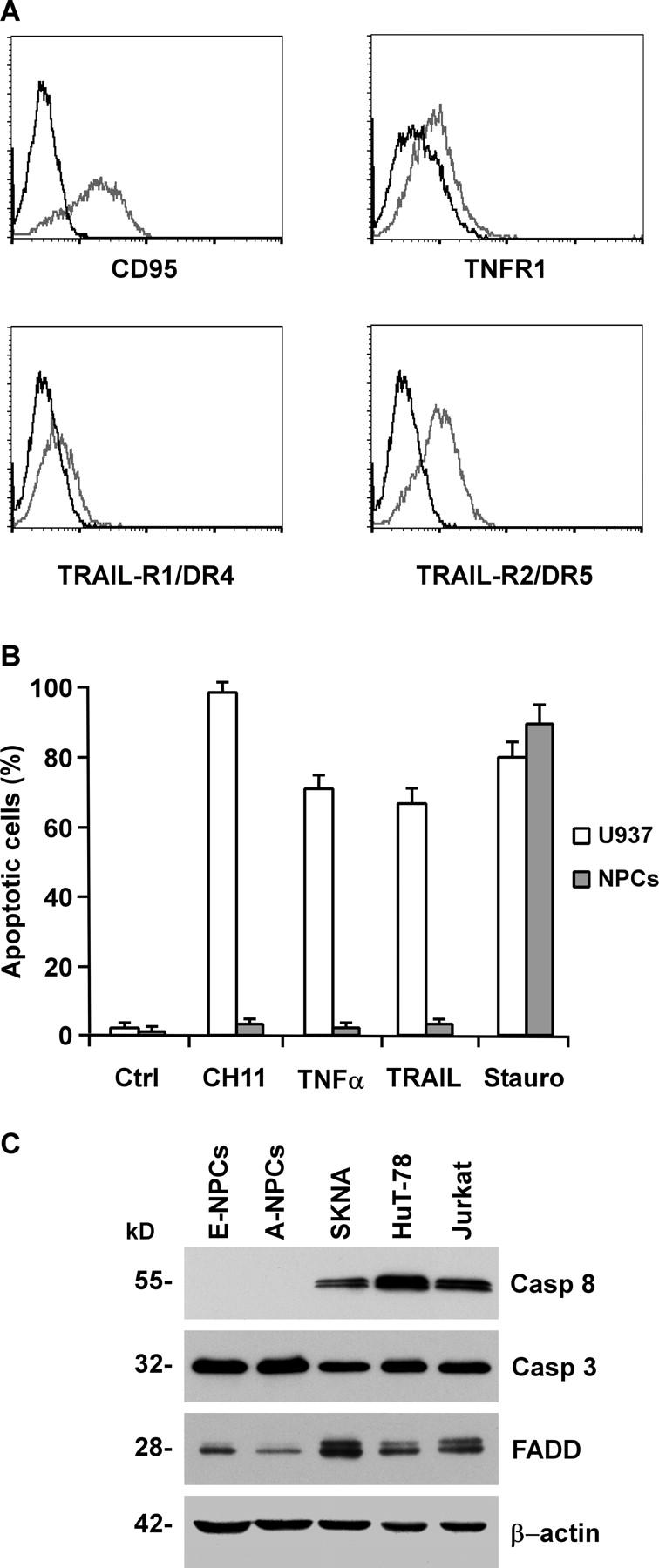
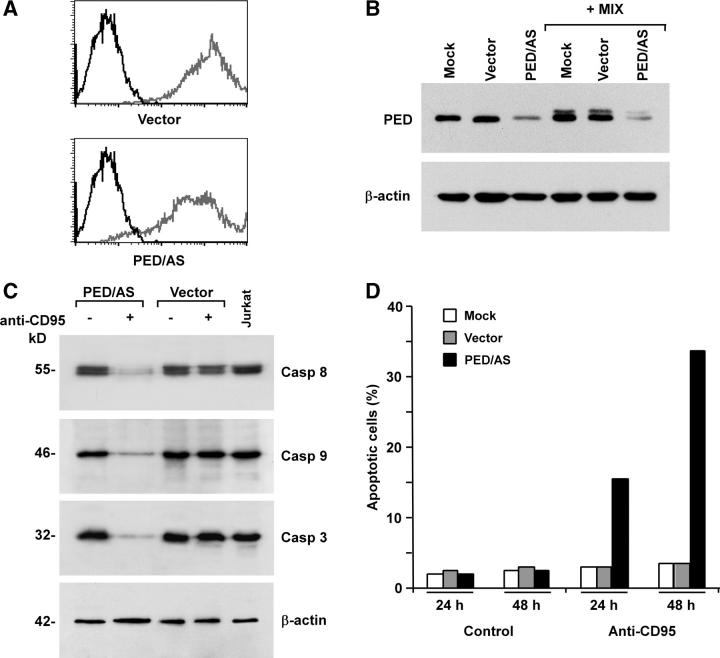
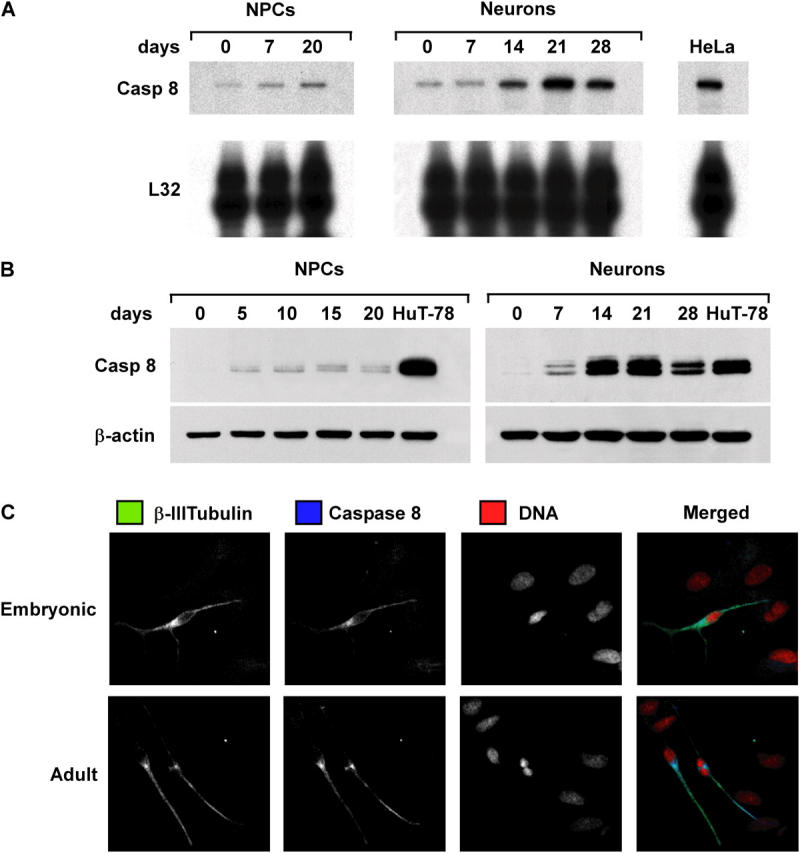
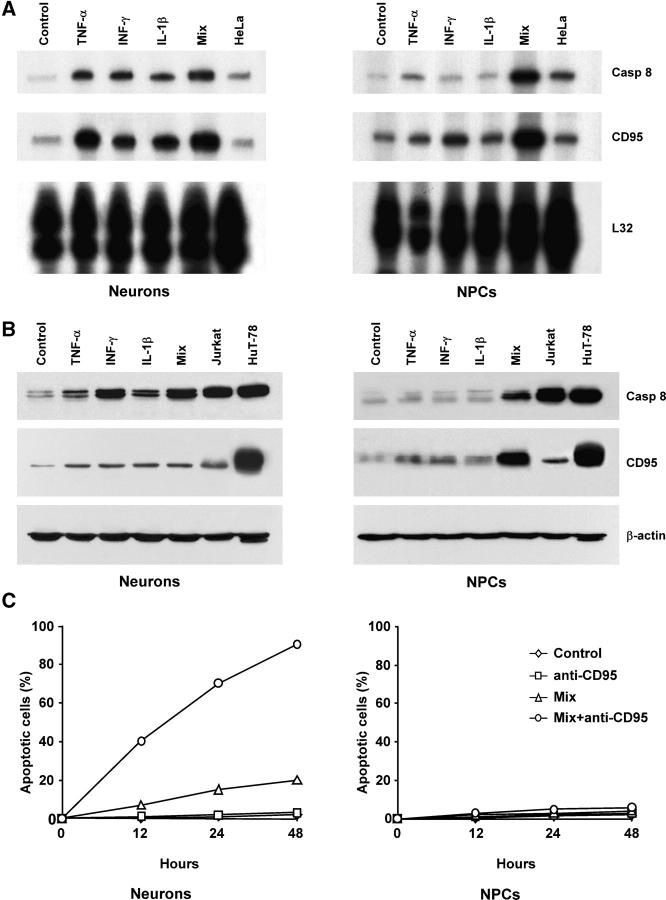
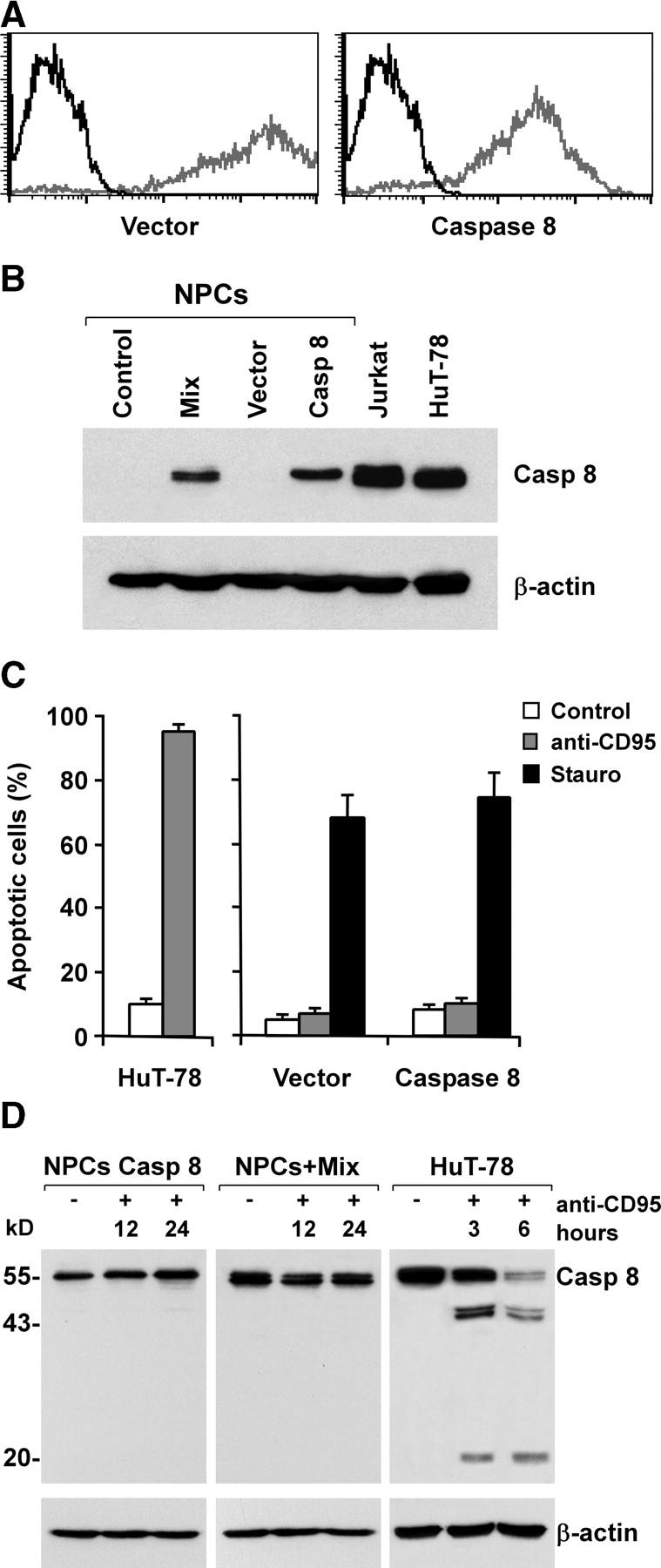
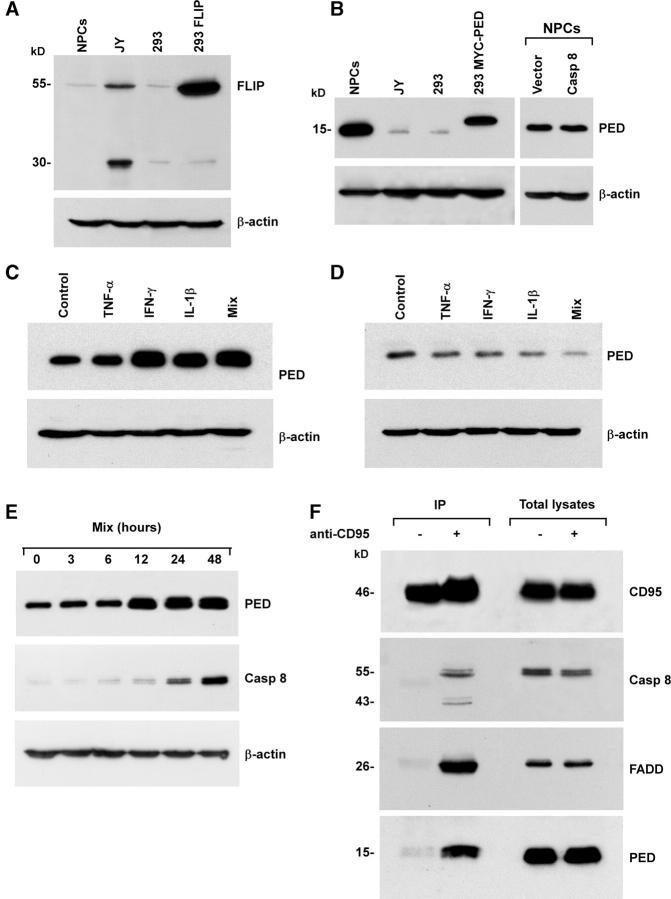
The mechanisms that control neural stem and progenitor cell survival are unknown. In several pathological conditions, death receptor (DR) ligands and inflammatory cytokines exert a deleterious effect on neurons, whereas primitive neural cells migrate and survive in the site of lesion. Here, we show that even in the presence of inflammatory cytokines, DRs are unable to generate death signals in primitive neural cells. Neural stem and progenitor cells did not express caspase 8, the presence of which is required for initiating the caspase cascade. However, exogenous or cytokine-mediated expression of caspase 8 was not sufficient to restore their DR sensitivity. Searching for molecules potentially able to block DR death-inducing signaling complex (DISC), we found that primitive neural cells expressed high levels of the death effector domain-containing protein PED (also known as PEA-15). PED localized in the DISC and prevented caspase 8 recruitment and activation. Moreover, lentiviral-mediated delivery of PED antisense DNA resulted in dramatic down-regulation of the endogenous gene expression and sensitization of primitive neural cells to apoptosis mediated by inflammatory cytokines and DRs. Thus, absence of caspase 8 and high expression of PED constitute two levels of protection from apoptosis induced by DRs and inflammatory cytokines in neural stem and progenitor cells.
控制神经干细胞和祖细胞存活的机制尚不清楚。在几种病理情况下,死亡受体(DR)配体和炎性细胞因子对神经元产生有害影响,而原始神经细胞在损伤部位迁移并存活。在此,我们表明,即使在存在炎性细胞因子的情况下,DRs也无法在原始神经细胞中产生死亡信号。神经干细胞和祖细胞不表达半胱天冬酶8,而其存在是启动半胱天冬酶级联反应所必需的。然而,外源性或细胞因子介导的半胱天冬酶8表达不足以恢复它们对DR的敏感性。在寻找可能能够阻断DR死亡诱导信号复合物(DISC)的分子时,我们发现原始神经细胞高水平表达含死亡效应结构域的蛋白PED(也称为PEA-15)。PED定位于DISC中,并阻止半胱天冬酶8的募集和激活。此外,慢病毒介导的PED反义DNA递送导致内源性基因表达显著下调,并使原始神经细胞对炎性细胞因子和DR介导的凋亡敏感。因此,半胱天冬酶8的缺失和PED的高表达构成了神经干细胞和祖细胞免受DRs和炎性细胞因子诱导的凋亡的两个保护水平。