Department of Oncology and Molecular Medicine Rome, Italy.
Environment and Health, Higher Institute of Health Rome, Italy.
Neuro Oncol. 2020 Dec 18;22(12):1771-1784. doi: 10.1093/neuonc/noaa127.
Glioblastoma (GBM) stemlike cells (GSCs) are thought to be responsible for the maintenance and aggressiveness of GBM, the most common primary brain tumor in adults. This study aims at elucidating the involvement of deregulations within the imprinted delta-like homolog 1 gene‒type III iodothyronine deiodinase gene (DLK-DIO3) region on chromosome 14q32 in GBM pathogenesis.
Real-time PCR analyses were performed on GSCs and GBM tissues. Methylation analyses, gene expression, and reverse-phase protein array profiles were used to investigate the tumor suppressor function of the maternally expressed 3 gene (MEG3).
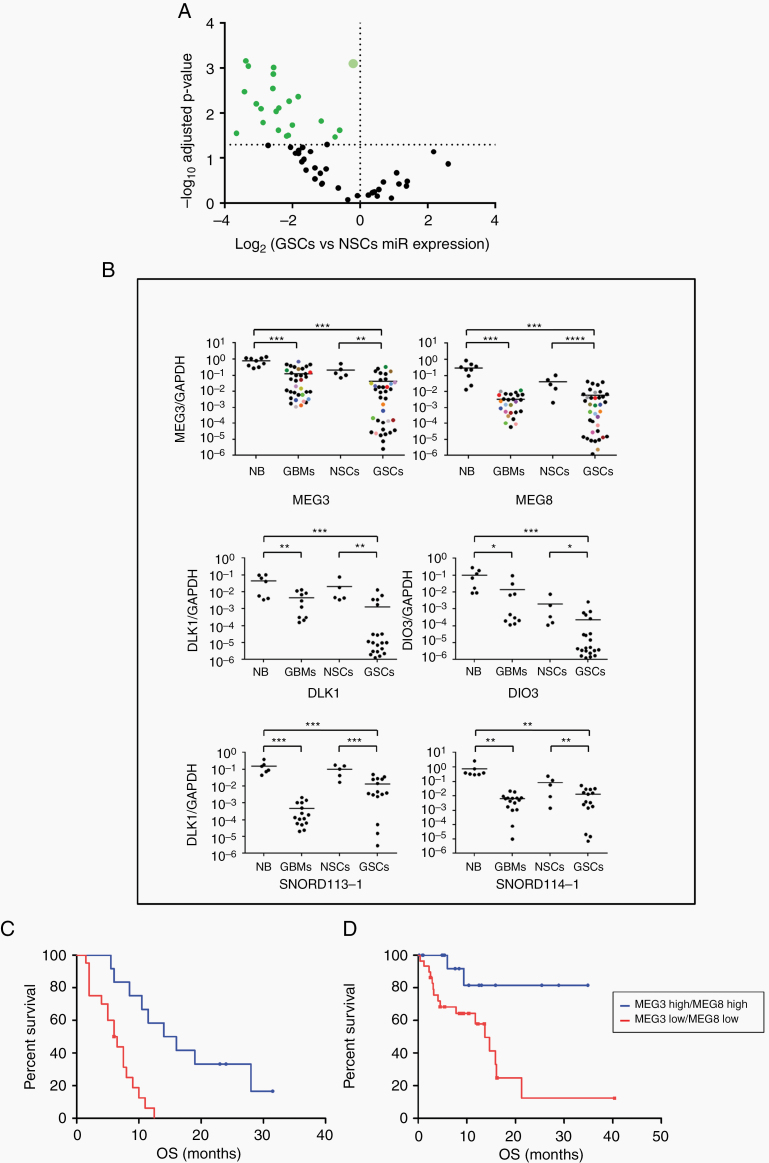
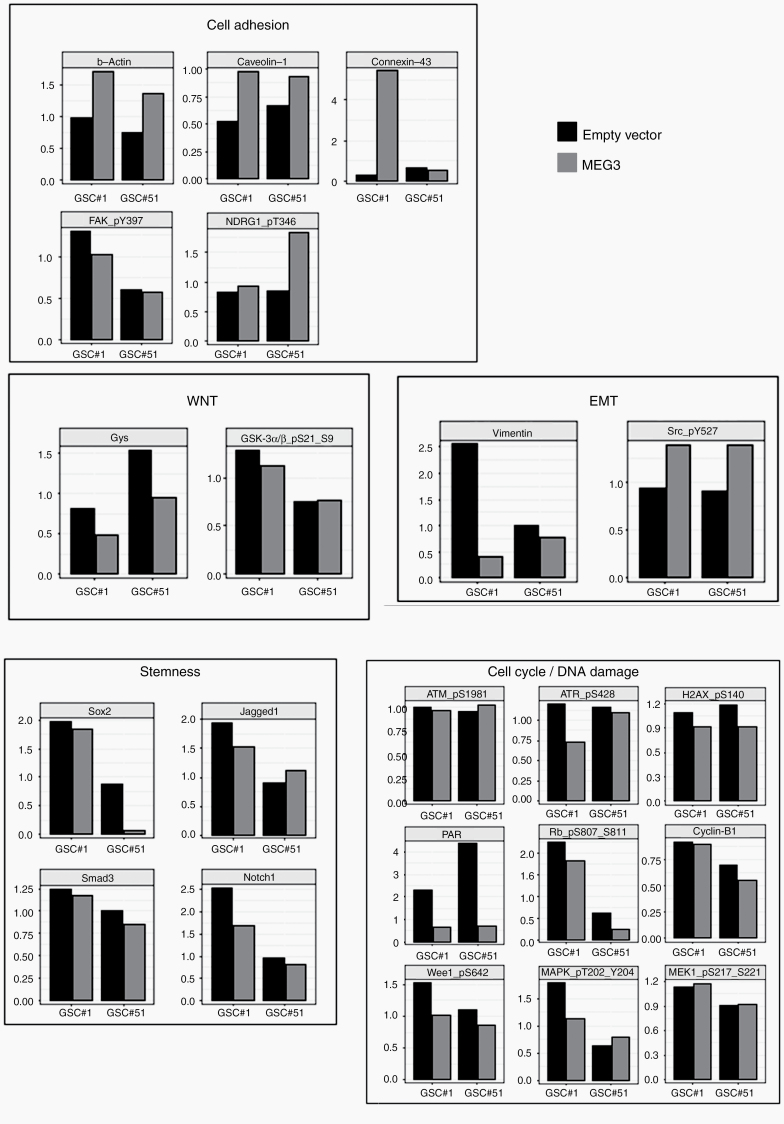
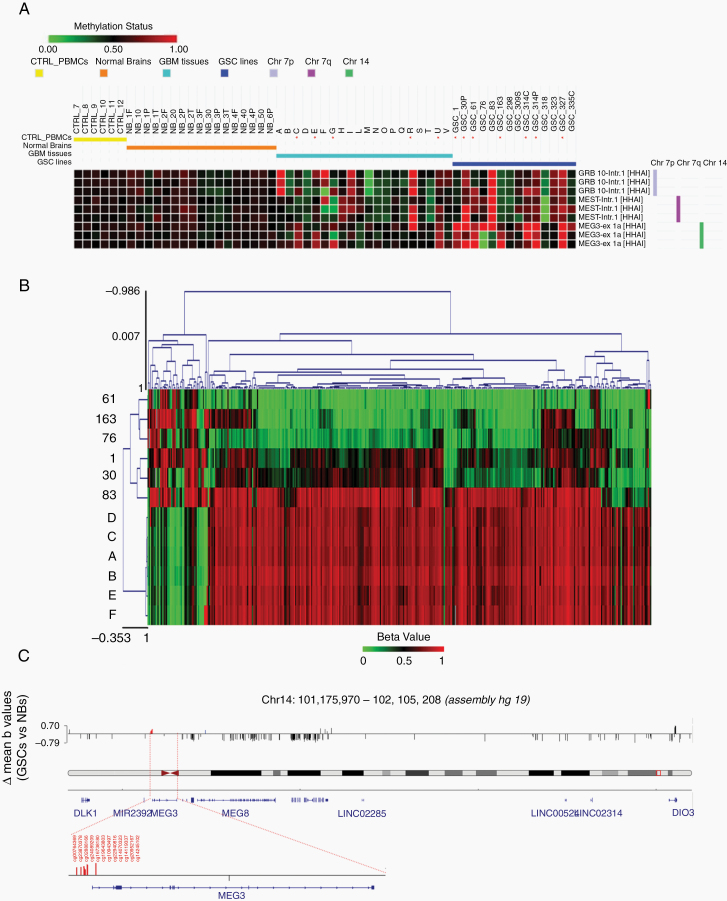
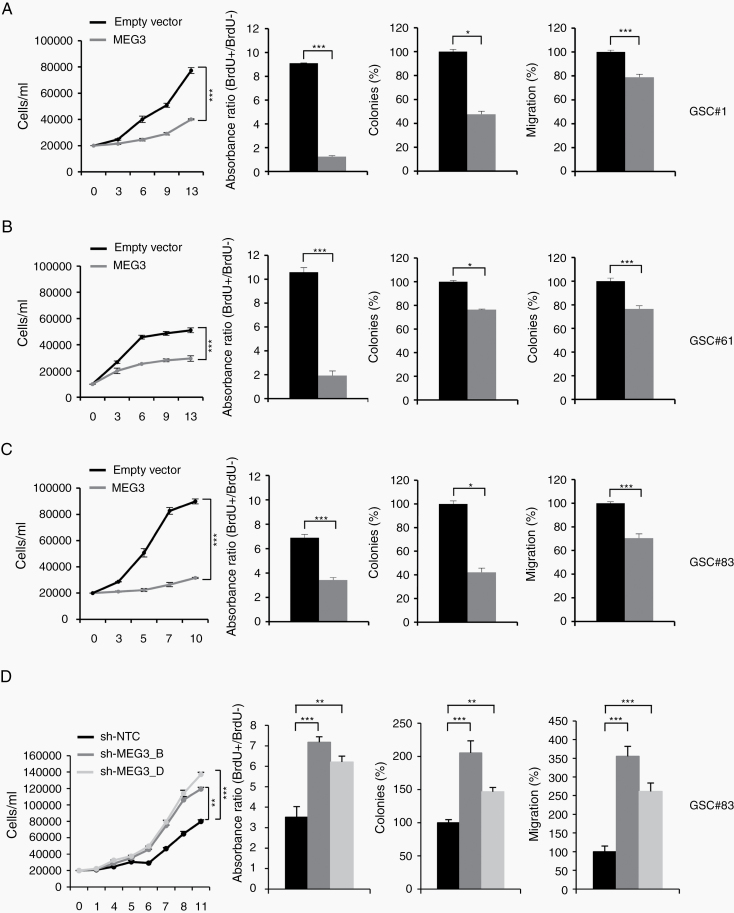
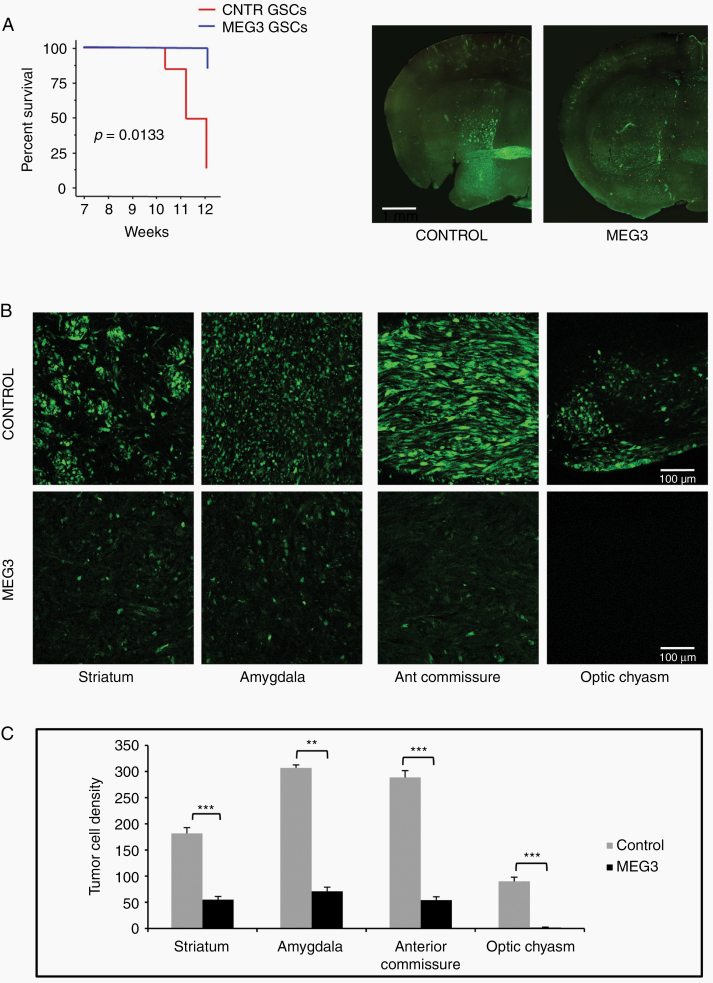
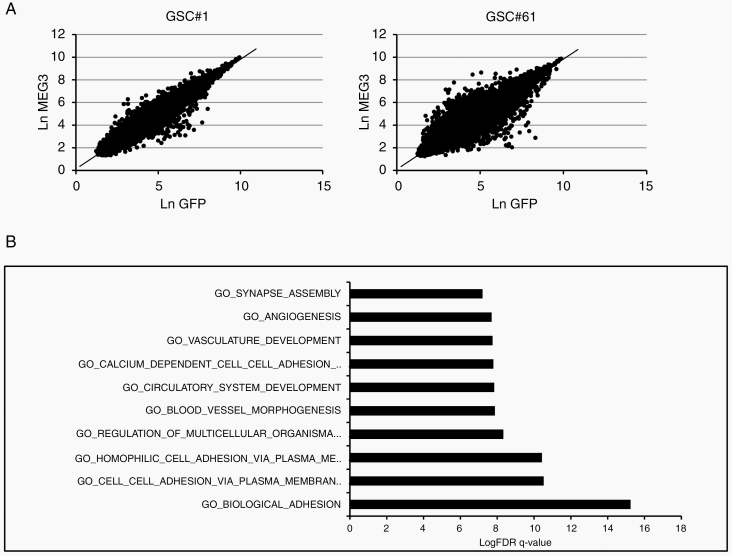
Loss of expression of genes and noncoding RNAs within the DLK1-DIO3 region was observed in GSCs and GBM tissues compared with normal brain. This downregulation is mainly mediated by epigenetic silencing. Kaplan-Meier analysis indicated that low expression of MEG3 and MEG8 long noncoding (lnc)RNAs significantly correlated with short survival in GBM patients. MEG3 restoration impairs tumorigenic abilities of GSCs in vitro by inhibiting cell growth, migration, and colony formation and decreases in vivo tumor growth, reducing infiltrative growth. These effects were associated with modulation of genes involved in cell adhesion and epithelial-to-mesenchymal transition (EMT).
In GBM, MEG3 acts as a tumor suppressor mainly regulating cell adhesion, EMT, and cell proliferation, thus providing a potential candidate for novel GBM therapies.
胶质母细胞瘤(GBM)干细胞(GSCs)被认为是 GBM 维持和侵袭性的原因,GBM 是成人中最常见的原发性脑肿瘤。本研究旨在阐明 14q32 染色体上印迹 delta 样同源物 1 基因‒III 型甲状腺素脱碘酶基因(DLK-DIO3)区域内的失调在 GBM 发病机制中的作用。
对 GSCs 和 GBM 组织进行实时 PCR 分析。采用甲基化分析、基因表达和反相蛋白阵列谱分析来研究母系表达的 3 号基因(MEG3)的肿瘤抑制功能。
与正常脑组织相比,在 GSCs 和 GBM 组织中观察到 DLK1-DIO3 区域内的基因和非编码 RNA 表达缺失。这种下调主要是由表观遗传沉默介导的。Kaplan-Meier 分析表明,MEG3 和 MEG8 长链非编码(lnc)RNA 的低表达与 GBM 患者的短生存期显著相关。MEG3 的恢复通过抑制细胞生长、迁移和集落形成,减少体内肿瘤生长,减少浸润性生长,从而损害 GSCs 的致瘤能力。这些作用与参与细胞黏附和上皮间质转化(EMT)的基因的调节有关。
在 GBM 中,MEG3 作为一种肿瘤抑制因子,主要调节细胞黏附、EMT 和细胞增殖,从而为新型 GBM 治疗提供了一个潜在的候选物。