Department CIBIO, University of Trento, Trento 38123, Italy.
Department CIBIO, University of Trento, Trento 38123, Italy.
Cell Rep. 2021 Apr 27;35(4):109024. doi: 10.1016/j.celrep.2021.109024.
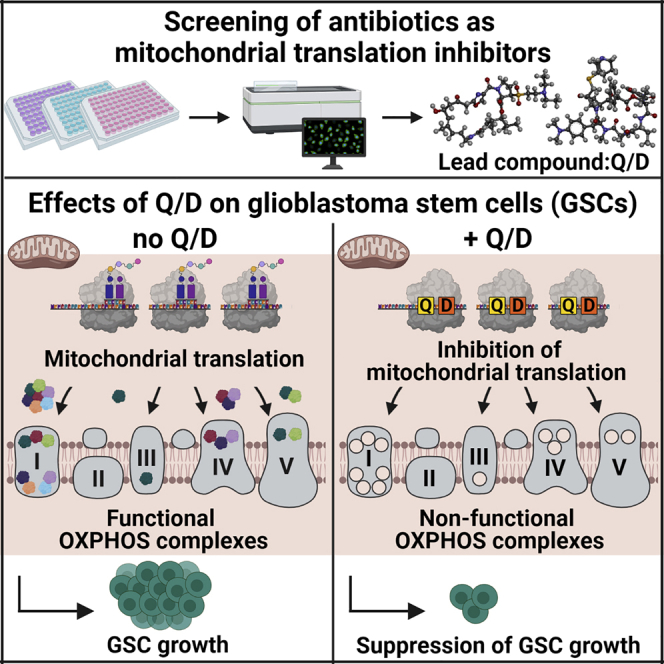
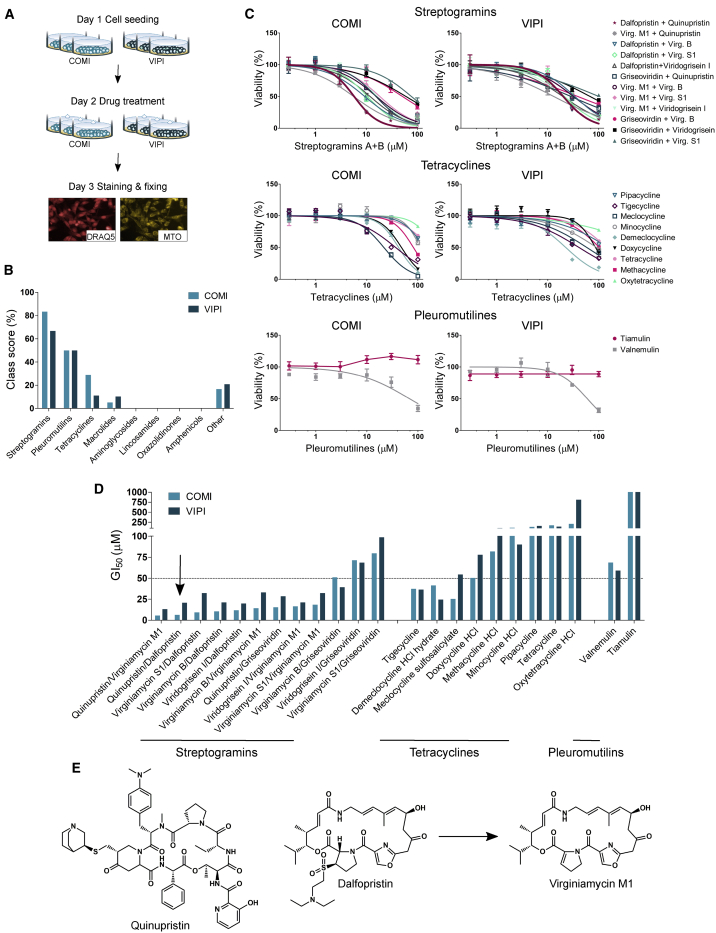
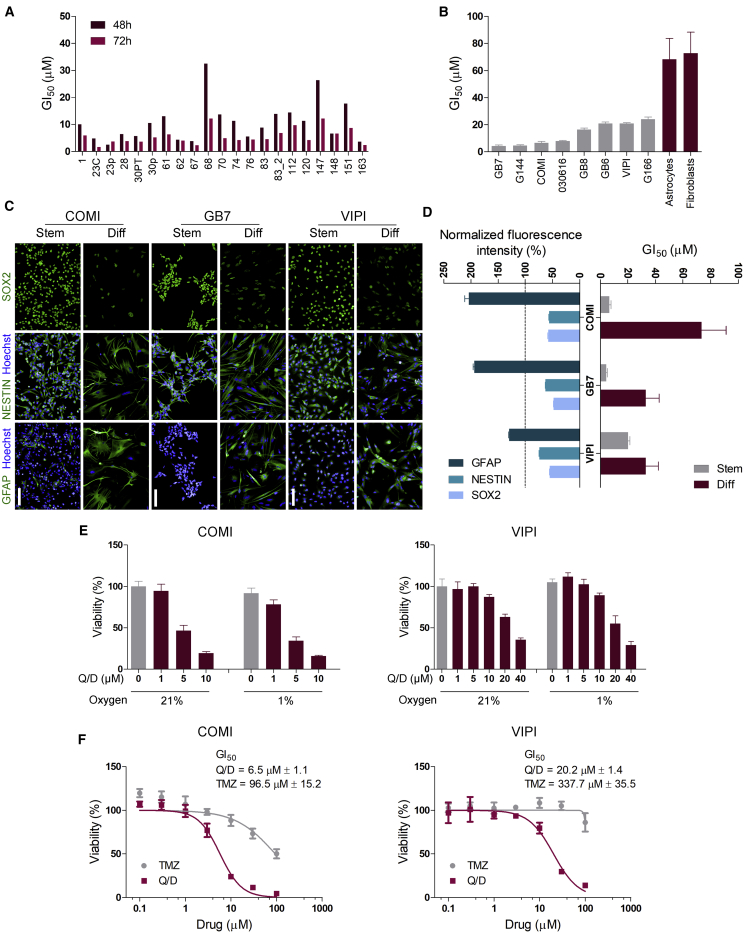
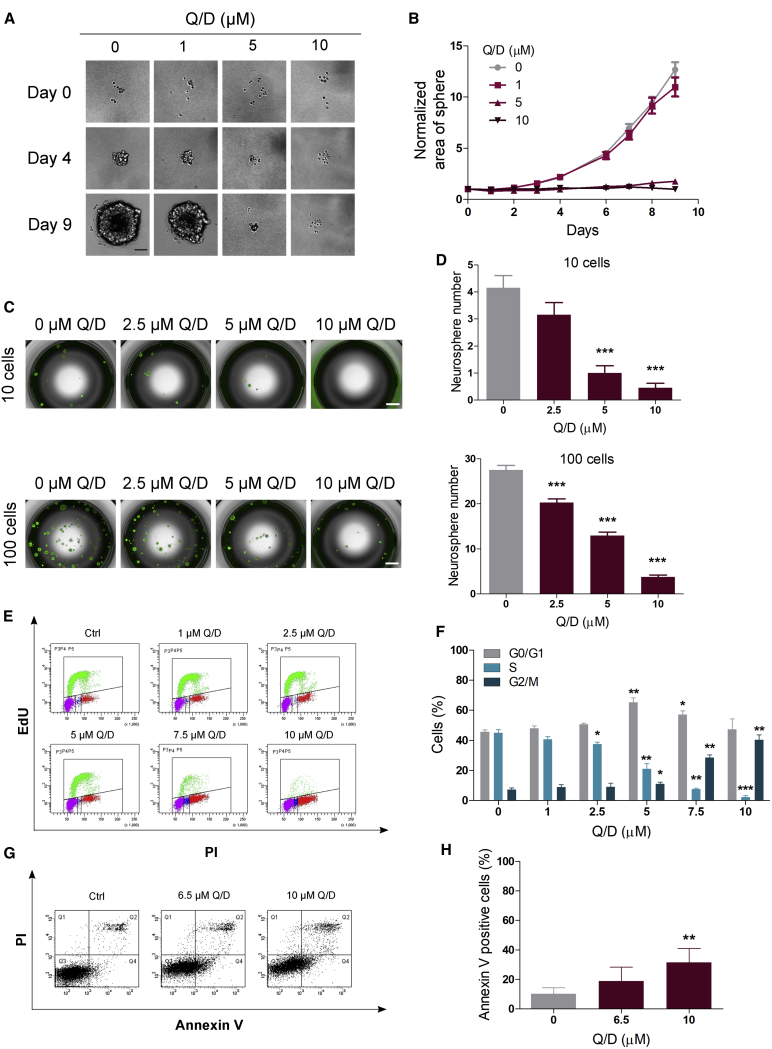
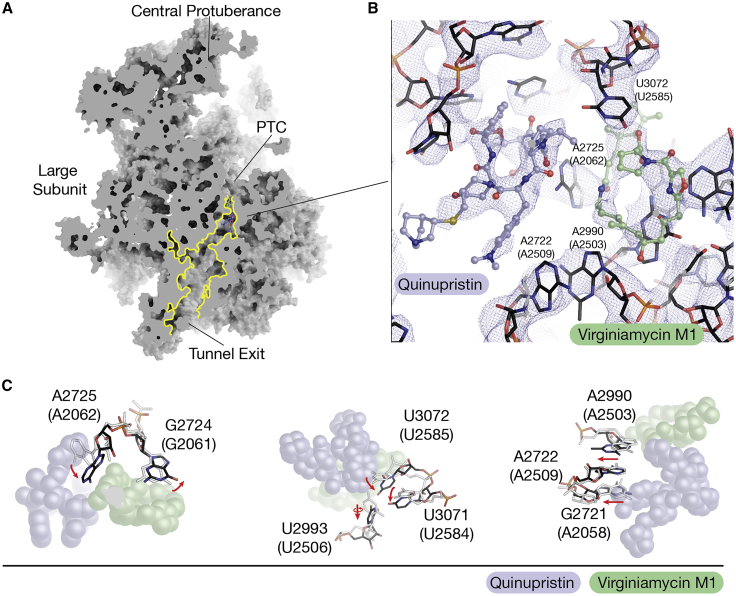
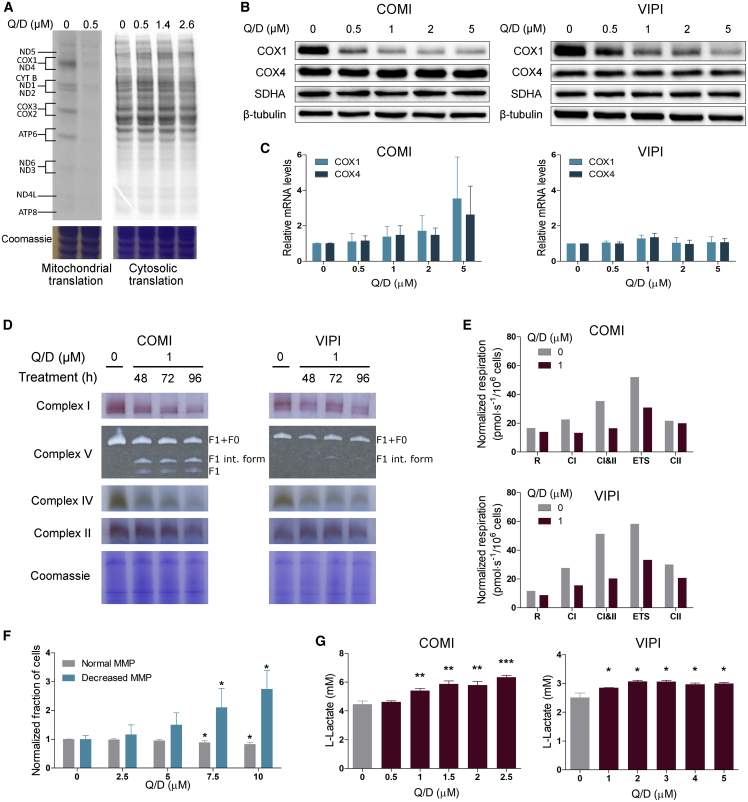
Glioblastoma stem cells (GSCs) resist current glioblastoma (GBM) therapies. GSCs rely highly on oxidative phosphorylation (OXPHOS), whose function requires mitochondrial translation. Here we explore the therapeutic potential of targeting mitochondrial translation and report the results of high-content screening with putative blockers of mitochondrial ribosomes. We identify the bacterial antibiotic quinupristin/dalfopristin (Q/D) as an effective suppressor of GSC growth. Q/D also decreases the clonogenicity of GSCs in vitro, consequently dysregulating the cell cycle and inducing apoptosis. Cryoelectron microscopy (cryo-EM) reveals that Q/D binds to the large mitoribosomal subunit, inhibiting mitochondrial protein synthesis and functionally dysregulating OXPHOS complexes. These data suggest that targeting mitochondrial translation could be explored to therapeutically suppress GSC growth in GBM and that Q/D could potentially be repurposed for cancer treatment.
胶质母细胞瘤干细胞(GSCs)对当前的胶质母细胞瘤(GBM)疗法具有抗性。GSCs 高度依赖氧化磷酸化(OXPHOS),其功能需要线粒体翻译。在这里,我们探讨了靶向线粒体翻译的治疗潜力,并报告了使用假定的线粒体核糖体阻滞剂进行高通量筛选的结果。我们发现细菌抗生素奎奴普丁/达福普汀(Q/D)是一种有效的 GSC 生长抑制剂。Q/D 还降低了 GSCs 的体外集落形成能力,从而扰乱细胞周期并诱导细胞凋亡。低温电子显微镜(cryo-EM)显示,Q/D 结合到大线粒体核糖体亚基上,抑制线粒体蛋白合成并在功能上扰乱 OXPHOS 复合物。这些数据表明,靶向线粒体翻译可能被探索用于治疗性抑制 GBM 中的 GSC 生长,并且 Q/D 可能有潜力被重新用于癌症治疗。