Wang B, Zhang A, Sun J L, Liu H, Hu J, Xu L X
Department of Mechanical Engineering, Shanghai Jiao Tong University, People's Republic of China.
J Biomech Eng. 2005 Feb;127(1):32-8. doi: 10.1115/1.1835350.
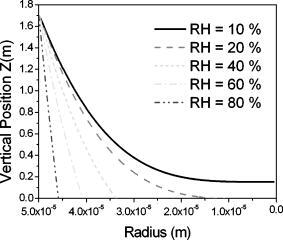
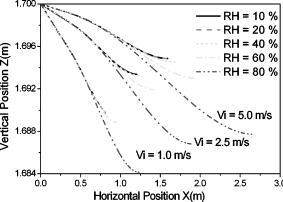
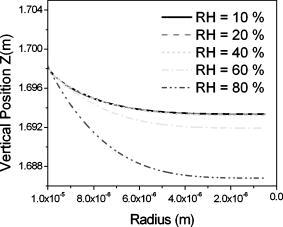
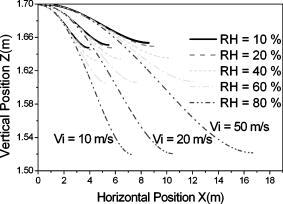
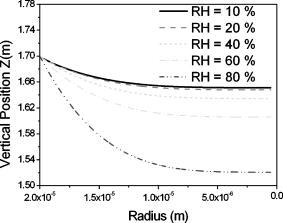
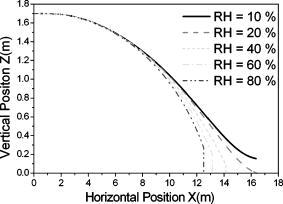
Microscale liquid droplets could act as the SARS carriers in air when released from an infected person through breathing, coughing, or sneezing. In this study, a dynamic model has been built to quantitatively investigate the effect of the relative humidity on the transport of liquid-droplets in air using coupled mass transfer and momentum equations. Under higher relative humidity, the exhaled liquid droplets evaporate slowly. Larger droplets fall faster, which could reduce the probability of the droplets inhalation. This may be one of the most important factors that influence the SARS transmission in air.
当感染SARS的人通过呼吸、咳嗽或打喷嚏释放出微小的液滴时,这些液滴可能会成为空气中SARS的传播载体。在本研究中,通过耦合传质和动量方程建立了一个动态模型,以定量研究相对湿度对空气中液滴传输的影响。在较高的相对湿度下,呼出的液滴蒸发缓慢。较大的液滴下落速度更快,这可能会降低液滴被吸入的概率。这可能是影响空气中SARS传播的最重要因素之一。