Pinisetty D, Huang C, Dong Q, Tiersch T R, Devireddy R V
Bioengineering Laboratory, Department of Mechanical Engineering, Louisiana State University, Baton Rouge, LA, USA.
Cryobiology. 2005 Jun;50(3):250-63. doi: 10.1016/j.cryobiol.2005.02.003.
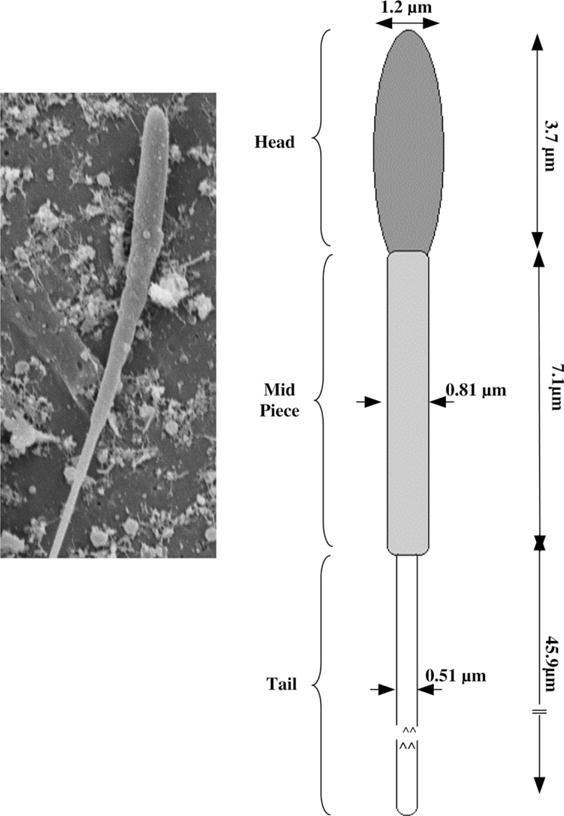
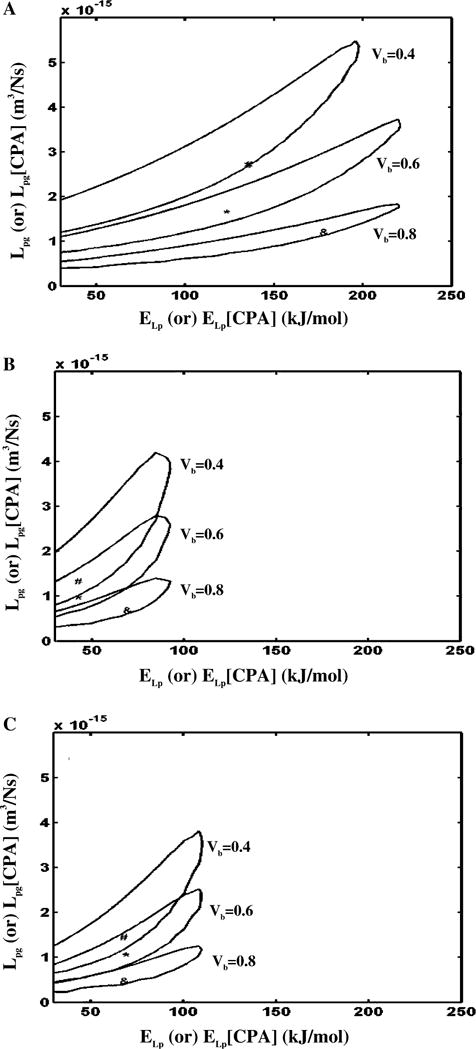
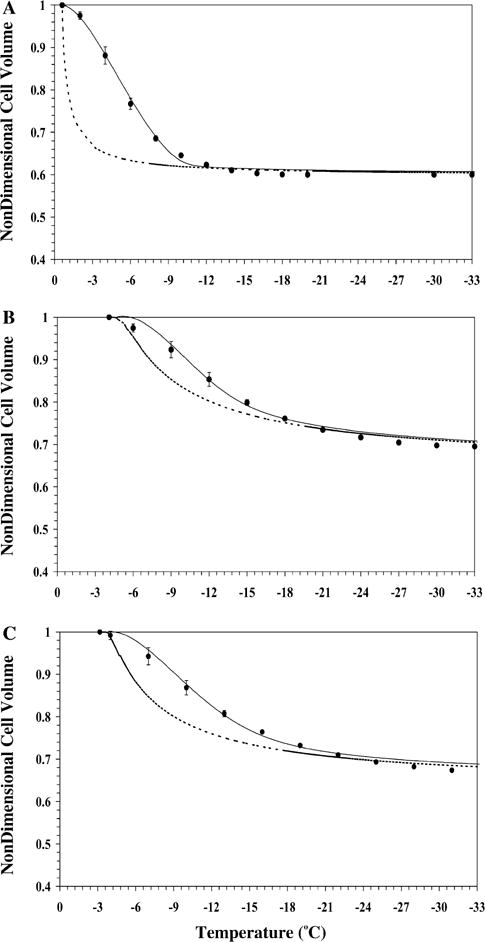
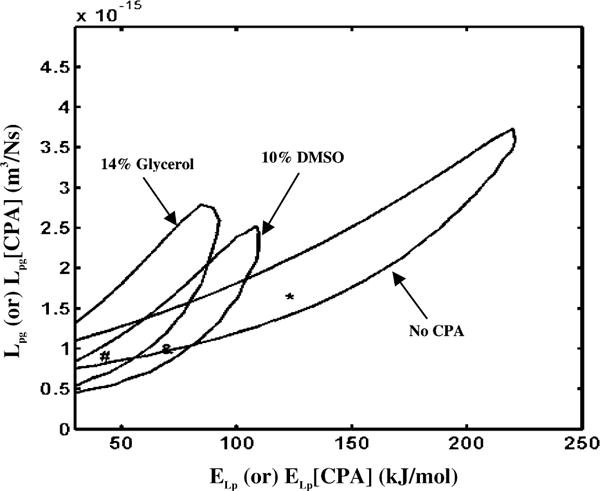
This study reports the subzero water transport characteristics (and empirically determined optimal rates for freezing) of sperm cells of live-bearing fishes of the genus Xiphophorus, specifically those of the southern platyfish Xiphophorus maculatus. These fishes are valuable models for biomedical research and are commercially raised as ornamental fish for use in aquariums. Water transport during freezing of X. maculatus sperm cell suspensions was obtained using a shape-independent differential scanning calorimeter technique in the presence of extracellular ice at a cooling rate of 20 degrees C/min in three different media: (1) Hanks' balanced salt solution (HBSS) without cryoprotective agents (CPAs); (2) HBSS with 14% (v/v) glycerol, and (3) HBSS with 10% (v/v) dimethyl sulfoxide (DMSO). The sperm cell was modeled as a cylinder with a length of 52.35 microm and a diameter of 0.66 microm with an osmotically inactive cell volume (Vb) of 0.6 V0, where V0 is the isotonic or initial cell volume. This translates to a surface area, SA to initial water volume, WV ratio of 15.15 microm(-1). By fitting a model of water transport to the experimentally determined volumetric shrinkage data, the best fit membrane permeability parameters (reference membrane permeability to water at 0 degrees C, Lpg or Lpg [cpa] and the activation energy, E(Lp) or E(Lp) [cpa]) were found to range from: Lpg or Lpg [cpa] = 0.0053-0.0093 microm/minatm; E(Lp) or E(Lp) [cpa] = 9.79-29.00 kcal/mol. By incorporating these membrane permeability parameters in a recently developed generic optimal cooling rate equation (optimal cooling rate, [Formula: see text] where the units of B(opt) are degrees C/min, E(Lp) or E(Lp) [cpa] are kcal/mol, L(pg) or L(pg) [cpa] are microm/minatm and SA/WV are microm(-1)), we determined the optimal rates of freezing X. maculatus sperm cells to be 28 degrees C/min (in HBSS), 47 degrees C/min (in HBSS+14% glycerol) and 36 degrees C/min (in HBSS+10% DMSO). Preliminary empirical experiments suggest that the optimal rate of freezing X. maculatus sperm in the presence of 14% glycerol to be approximately 25 degrees C/min. Possible reasons for the observed discrepancy between the theoretically predicted and experimentally determined optimal rates of freezing X. maculatus sperm cells are discussed.
本研究报告了剑尾鱼属胎生鱼类精子细胞的零下水分运输特性(以及通过实验确定的最佳冷冻速率),特别是南方剑尾鱼(Xiphophorus maculatus)的精子细胞。这些鱼类是生物医学研究的重要模型,并且作为观赏鱼在商业上养殖用于水族馆。在三种不同介质中,以20℃/min的冷却速率,利用形状无关差示扫描量热法技术,在细胞外冰存在的情况下,获得了南方剑尾鱼精子细胞悬液冷冻过程中的水分运输情况:(1)不含冷冻保护剂(CPA)的汉克斯平衡盐溶液(HBSS);(2)含14%(v/v)甘油的HBSS;(3)含10%(v/v)二甲基亚砜(DMSO)的HBSS。将精子细胞建模为一个圆柱体,长度为52.35微米,直径为0.66微米,渗透惰性细胞体积(Vb)为0.6V0,其中V0为等渗或初始细胞体积。这意味着表面积(SA)与初始水体积(WV)之比为15.15微米-1。通过将水分运输模型拟合到实验确定的体积收缩数据,发现最佳拟合膜渗透参数(0℃时水的参考膜渗透率,Lpg或Lpg[cpa]以及活化能,E(Lp)或E(Lp)[cpa])范围为:Lpg或Lpg[cpa]=0.0053-0.0093微米/min·atm;E(Lp)或E(Lp)[cpa]=9.79-29.00千卡/mol。通过将这些膜渗透参数纳入最近开发的通用最佳冷却速率方程(最佳冷却速率,[公式:见原文],其中B(opt)的单位为℃/min,E(Lp)或E(Lp)[cpa]的单位为千卡/mol,L(pg)或L(pg)[cpa]的单位为微米/min·atm,SA/WV的单位为微米-1),我们确定了南方剑尾鱼精子细胞的最佳冷冻速率为:在HBSS中为28℃/min,在HBSS+14%甘油中为47℃/min,在HBSS+10% DMSO中为36℃/min。初步的经验实验表明,在14%甘油存在下,南方剑尾鱼精子的最佳冷冻速率约为25℃/min。讨论了理论预测的和实验确定的南方剑尾鱼精子细胞最佳冷冻速率之间观察到差异的可能原因。