Richard Sophie, Moslemi Safa, Sipahutar Herbert, Benachour Nora, Seralini Gilles-Eric
Laboratoire de Biochimie et Biologie Moleculaire, USC-INCRA, Université de Caen, Caen, France.
Environ Health Perspect. 2005 Jun;113(6):716-20. doi: 10.1289/ehp.7728.
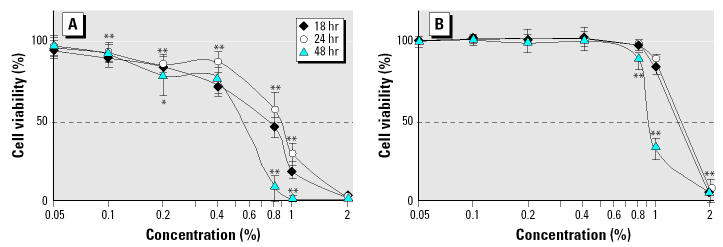
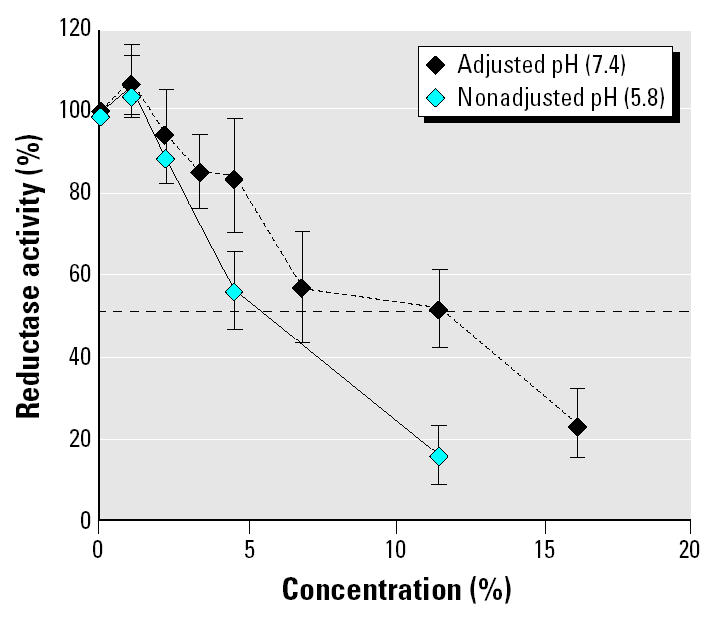
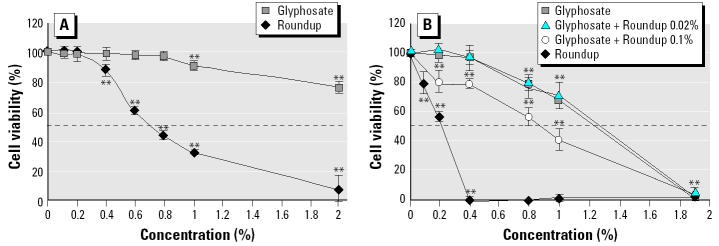
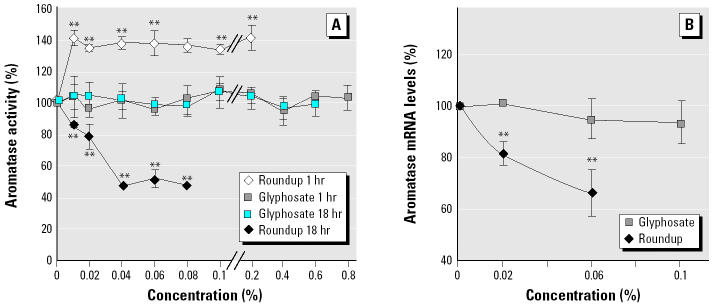
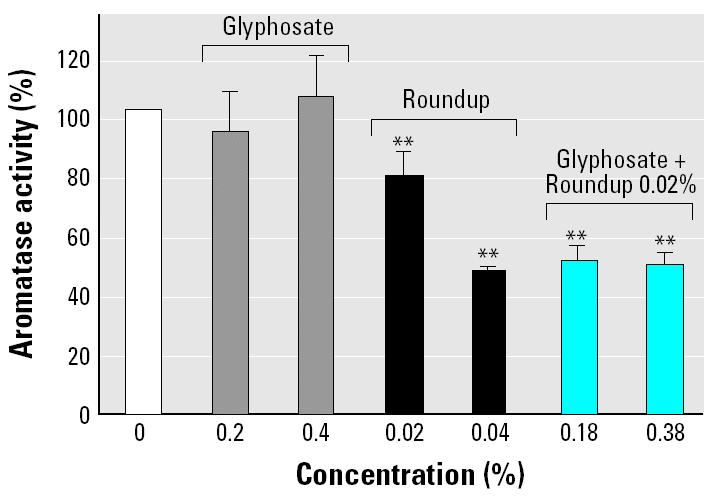
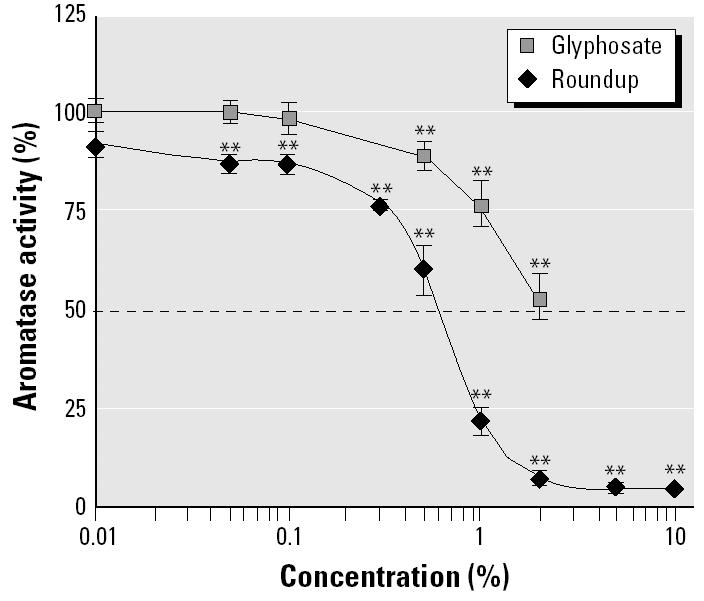
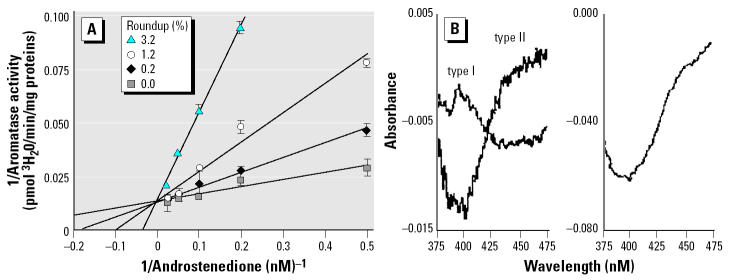
Roundup is a glyphosate-based herbicide used worldwide, including on most genetically modified plants that have been designed to tolerate it. Its residues may thus enter the food chain, and glyphosate is found as a contaminant in rivers. Some agricultural workers using glyphosate have pregnancy problems, but its mechanism of action in mammals is questioned. Here we show that glyphosate is toxic to human placental JEG3 cells within 18 hr with concentrations lower than those found with agricultural use, and this effect increases with concentration and time or in the presence of Roundup adjuvants. Surprisingly, Roundup is always more toxic than its active ingredient. We tested the effects of glyphosate and Roundup at lower nontoxic concentrations on aromatase, the enzyme responsible for estrogen synthesis. The glyphosate-based herbicide disrupts aromatase activity and mRNA levels and interacts with the active site of the purified enzyme, but the effects of glyphosate are facilitated by the Roundup formulation in microsomes or in cell culture. We conclude that endocrine and toxic effects of Roundup, not just glyphosate, can be observed in mammals. We suggest that the presence of Roundup adjuvants enhances glyphosate bioavailability and/or bioaccumulation.
农达是一种基于草甘膦的除草剂,在全球范围内使用,包括用于大多数已设计成能耐受它的转基因植物上。因此,其残留物可能进入食物链,并且在河流中发现草甘膦作为污染物存在。一些使用草甘膦的农业工人出现怀孕问题,但其在哺乳动物中的作用机制受到质疑。在此我们表明,草甘膦在18小时内对人胎盘JEG3细胞有毒性,其浓度低于农业使用中的浓度,并且这种效应随浓度和时间增加,或在农达助剂存在的情况下增强。令人惊讶的是,农达总是比其活性成分毒性更大。我们在较低的无毒浓度下测试了草甘膦和农达对芳香化酶的影响,芳香化酶是负责雌激素合成的酶。基于草甘膦的除草剂会破坏芳香化酶活性和mRNA水平,并与纯化酶的活性位点相互作用,但在微粒体或细胞培养中,农达制剂会促进草甘膦的作用。我们得出结论,在哺乳动物中可以观察到农达的内分泌和毒性作用,而不仅仅是草甘膦的作用。我们认为农达助剂的存在会提高草甘膦的生物利用度和/或生物累积性。