Theruvathu Jacob A, Jaruga Pawel, Nath Raghu G, Dizdaroglu Miral, Brooks P J
Section on Molecular Neurobiology, Laboratory of Neurogenetics, National Institute on Alcohol Abuse and Alcoholism, NIH 5625 Fishers Lane, Room 3S32, MSC 9412, Bethesda, MD 20952-9412, USA.
Nucleic Acids Res. 2005 Jun 21;33(11):3513-20. doi: 10.1093/nar/gki661. Print 2005.
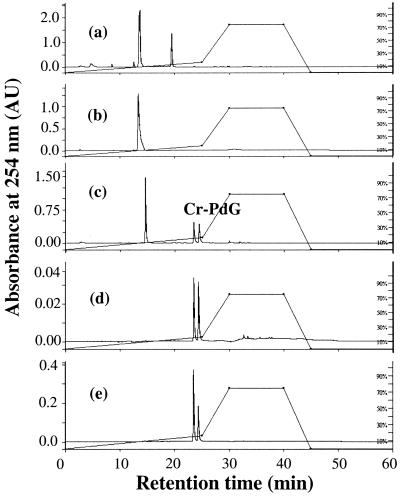
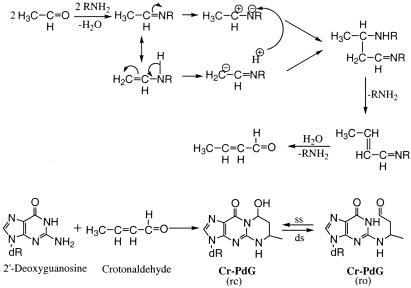
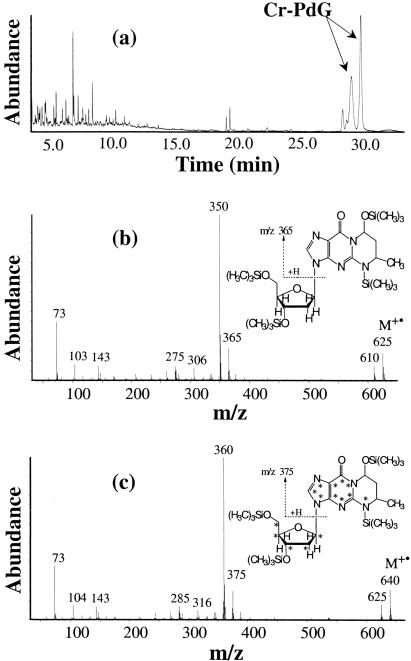
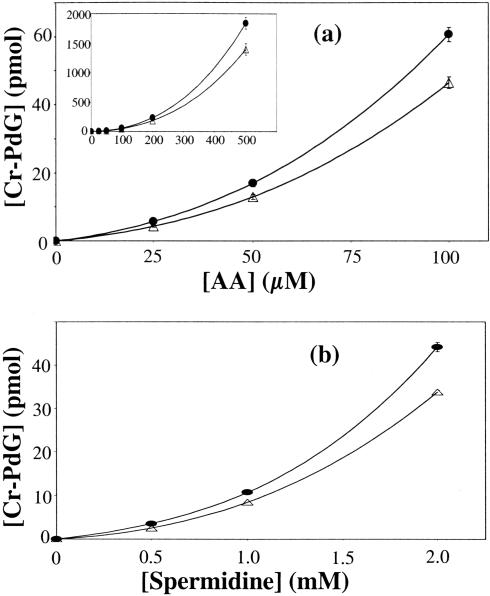
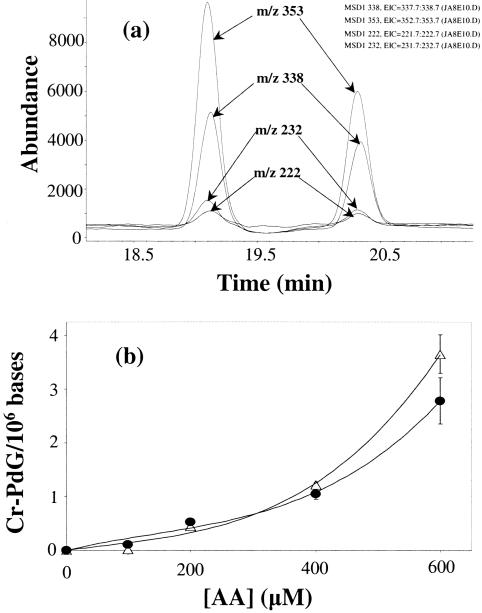
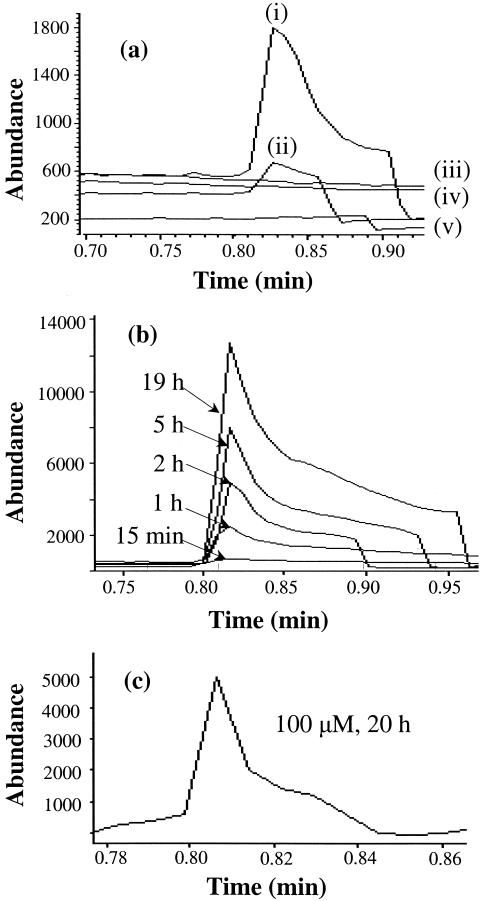
Alcoholic beverage consumption is associated with an increased risk of upper gastrointestinal cancer. Acetaldehyde (AA), the first metabolite of ethanol, is a suspected human carcinogen, but the molecular mechanisms underlying AA carcinogenicity are unclear. In this work, we tested the hypothesis that polyamines could facilitate the formation of mutagenic alpha-methyl-gamma-hydroxy-1,N2-propano-2'-deoxyguanosine (Cr-PdG) adducts from biologically relevant AA concentrations. We found that Cr-PdG adducts could be formed by reacting deoxyguanosine with muM concentrations of AA in the presence of spermidine, but not with either AA or spermidine alone. The identities of the Cr-PdG adducts were confirmed by both liquid and gas chromatography-mass spectrometry. Using a novel isotope-dilution liquid chromatography-mass spectrometry assay, we found that in the presence of 5 mM spermidine, AA concentrations of 100 microM and above resulted in the formation of Cr-PdG in genomic DNA. These AA levels are within the range that occurs in human saliva after alcoholic beverage consumption. We also showed that spermidine directly reacts with AA to generate crotonaldehyde (CrA), most likely via an enamine aldol condensation mechanism. We propose that AA derived from ethanol metabolism is converted to CrA by polyamines in dividing cells, forming Cr-PdG adducts, which may be responsible for the carcinogenicity of alcoholic beverage consumption.
酒精饮料的摄入与上消化道癌症风险增加有关。乙醛(AA)是乙醇的第一种代谢产物,是一种疑似人类致癌物,但其致癌性的分子机制尚不清楚。在这项研究中,我们检验了一种假设,即多胺可以促进从生物学相关的AA浓度形成诱变的α-甲基-γ-羟基-1,N2-丙基-2'-脱氧鸟苷(Cr-PdG)加合物。我们发现,在亚精胺存在的情况下,脱氧鸟苷与微摩尔浓度的AA反应可以形成Cr-PdG加合物,但单独使用AA或亚精胺时则不能。通过液相色谱和气相色谱-质谱法证实了Cr-PdG加合物的身份。使用一种新型的同位素稀释液相色谱-质谱分析法,我们发现,在存在5 mM亚精胺的情况下,100 microM及以上的AA浓度会导致基因组DNA中形成Cr-PdG。这些AA水平在饮用酒精饮料后人类唾液中出现的范围内。我们还表明,亚精胺直接与AA反应生成巴豆醛(CrA),最有可能是通过烯胺醛醇缩合机制。我们提出,乙醇代谢产生的AA在分裂细胞中被多胺转化为CrA,形成Cr-PdG加合物,这可能是酒精饮料摄入致癌性的原因。