Chen Tsute, Abbey Kevin, Deng Wen-jie, Cheng Meng-chuan
The Forsyth Institute, 140 Fenway, Boston, MA 02115, USA.
Nucleic Acids Res. 2005 Jul 1;33(Web Server issue):W734-40. doi: 10.1093/nar/gki361.
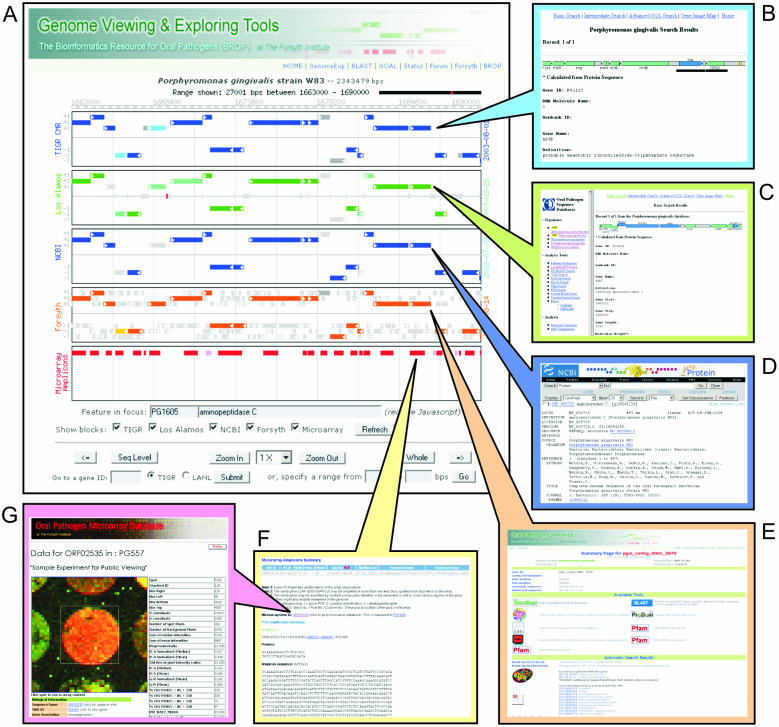
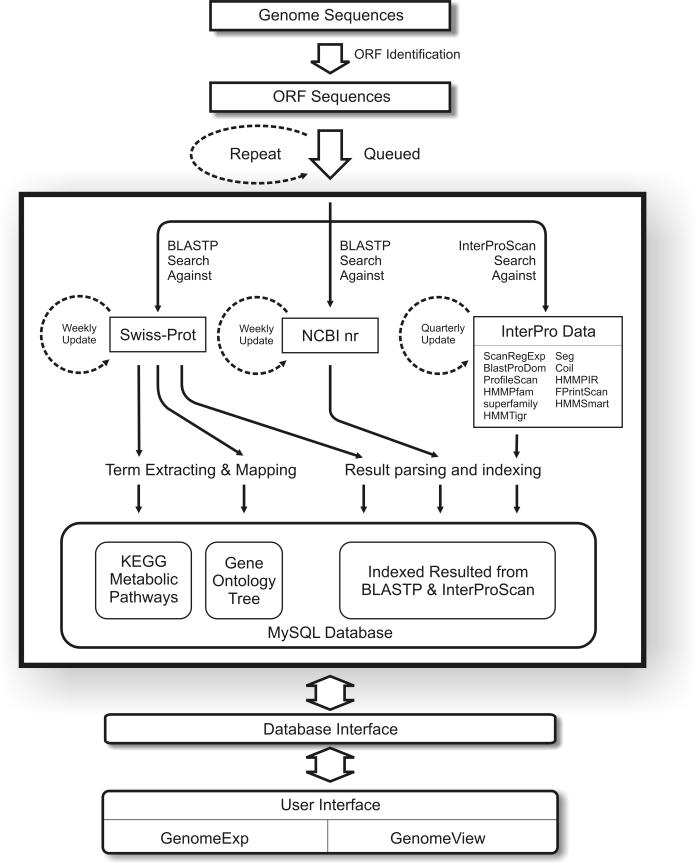
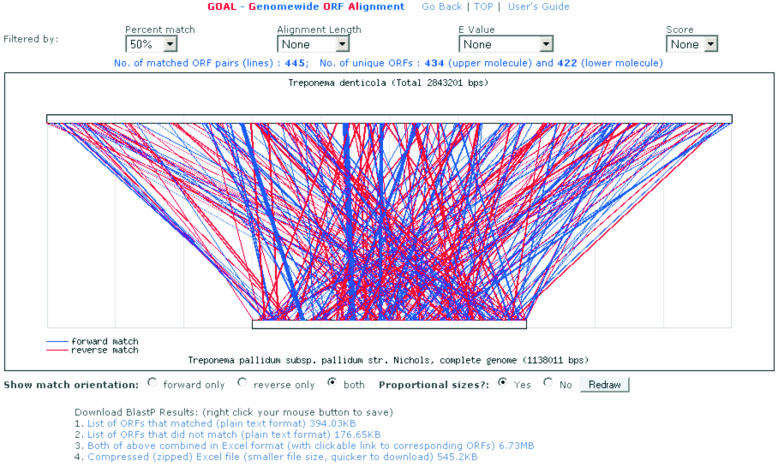
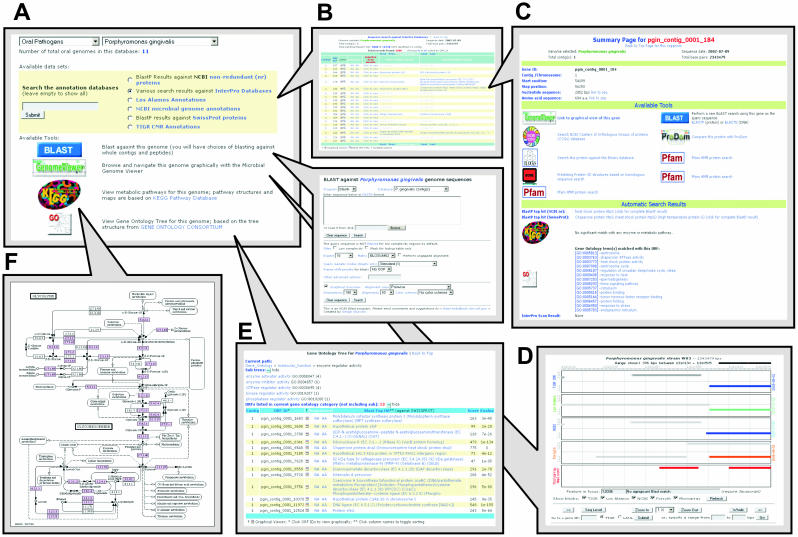
Complete genomic sequences of several oral pathogens have been deciphered and multiple sources of independently annotated data are available for the same genomes. Different gene identification schemes and functional annotation methods used in these databases present a challenge for cross-referencing and the efficient use of the data. The Bioinformatics Resource for Oral Pathogens (BROP) aims to integrate bioinformatics data from multiple sources for easy comparison, analysis and data-mining through specially designed software interfaces. Currently, databases and tools provided by BROP include: (i) a graphical genome viewer (Genome Viewer) that allows side-by-side visual comparison of independently annotated datasets for the same genome; (ii) a pipeline of automatic data-mining algorithms to keep the genome annotation always up-to-date; (iii) comparative genomic tools such as Genome-wide ORF Alignment (GOAL); and (iv) the Oral Pathogen Microarray Database. BROP can also handle unfinished genomic sequences and provides secure yet flexible control over data access. The concept of providing an integrated source of genomic data, as well as the data-mining model used in BROP can be applied to other organisms. BROP can be publicly accessed at http://www.brop.org.
几种口腔病原体的完整基因组序列已被破解,并且有多个独立注释数据来源可用于相同的基因组。这些数据库中使用的不同基因识别方案和功能注释方法对交叉引用和数据的有效利用提出了挑战。口腔病原体生物信息学资源(BROP)旨在通过专门设计的软件界面整合来自多个来源的生物信息学数据,以便于比较、分析和数据挖掘。目前,BROP提供的数据库和工具包括:(i)一个图形化基因组浏览器(基因组浏览器),可对同一基因组的独立注释数据集进行并排可视化比较;(ii)一套自动数据挖掘算法管道,以保持基因组注释始终最新;(iii)比较基因组工具,如全基因组ORF比对(GOAL);以及(iv)口腔病原体微阵列数据库。BROP还可以处理未完成的基因组序列,并对数据访问提供安全且灵活的控制。提供基因组数据集成源的概念以及BROP中使用的数据挖掘模型可应用于其他生物体。可通过http://www.brop.org公开访问BROP。