Schoenlein P V, Shen D W, Barrett J T, Pastan I, Gottesman M M
Laboratory of Cell Biology, National Institutes of Health, National Cancer Institute, Bethesda, Maryland 20892.
Mol Biol Cell. 1992 May;3(5):507-20. doi: 10.1091/mbc.3.5.507.
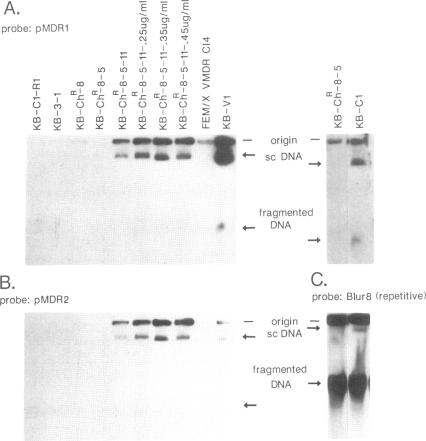
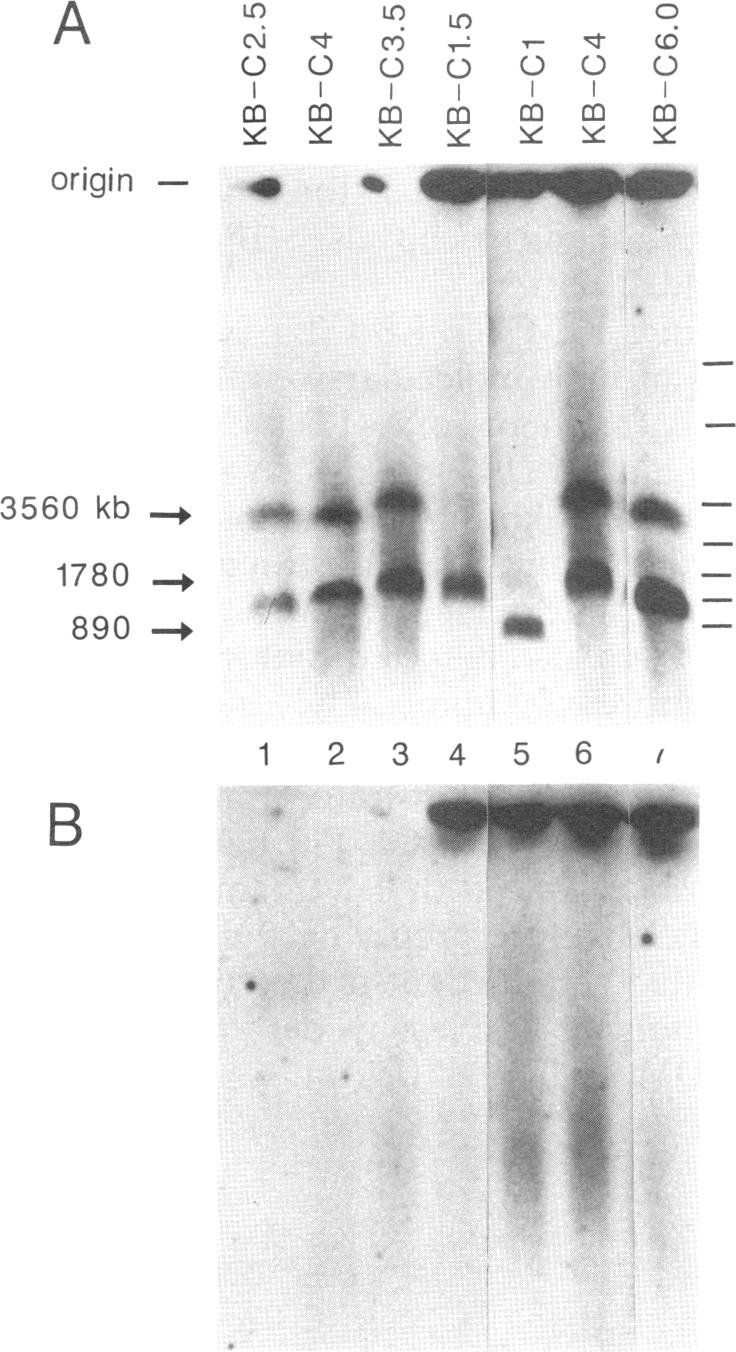
This study characterizes amplified structures carrying the human multidrug resistance (MDR) genes in colchicine-selected multidrug resistant KB cell lines and strongly supports a model of gene amplification in which small circular extrachromosomal DNA elements generated from contiguous chromosomal DNA regions multimerize to form cytologically detectable double minute chromosomes (DMs). The human MDR1 gene encodes the 170-kDa P-glycoprotein, which is a plasma membrane pump for many structurally unrelated chemotherapeutic drugs. MDR1 and its homolog, MDR2, undergo amplification when KB cells are subjected to stepwise selection in increasing concentrations of colchicine. The structure of the amplification unit at each step of drug selection was characterized using both high-voltage gel electrophoresis and pulsed-field gel electrophoresis (PFGE) techniques. An 890-kb submicroscopic extrachromosomal circular DNA element carrying the MDR1 and MDR2 genes was detected in cell line KB-ChR-8-5-11, the earliest step in drug selection in which conventional Southern/hybridization analyses detected MDR gene amplification. When KB-ChR-8-5-11 was subjected to stepwise increases in colchicine, this circular DNA element dimerized as detected by PFGE with and without digestion with Not 1, which linearizes the 890-kb amplicon. This dimerization process, which also occurred at the next step of colchicine selection, resulted in the formation of cytologically detectable DMs revealed by analysis of Giemsa-stained metaphase spreads.
本研究对秋水仙碱筛选的多药耐药KB细胞系中携带人类多药耐药(MDR)基因的扩增结构进行了表征,并有力支持了一种基因扩增模型,即由相邻染色体DNA区域产生的小环状染色体外DNA元件多聚化形成细胞学上可检测到的双微体染色体(DMs)。人类MDR1基因编码170 kDa的P - 糖蛋白,它是许多结构不相关化疗药物的质膜泵。当KB细胞在浓度不断增加的秋水仙碱中进行逐步筛选时,MDR1及其同源物MDR2会发生扩增。在药物筛选的每个步骤中,利用高压凝胶电泳和脉冲场凝胶电泳(PFGE)技术对扩增单元的结构进行了表征。在细胞系KB - ChR - 8 - 5 - 11中检测到一个携带MDR1和MDR2基因的890 kb亚显微染色体外环状DNA元件,这是药物筛选的最早阶段,此时传统的Southern杂交分析检测到了MDR基因扩增。当KB - ChR - 8 - 5 - 11细胞系中的秋水仙碱浓度逐步增加时,这种环状DNA元件发生二聚化,这在有或没有用Not 1酶切(Not 1可使890 kb扩增子线性化)的情况下通过PFGE都能检测到。这种二聚化过程,在秋水仙碱筛选的下一步也会发生,导致通过吉姆萨染色中期铺展分析揭示的细胞学上可检测到的双微体的形成。