Shaman Jeffrey, Day Jonathan F
College of Oceanic and Atmospheric Sciences, Oregon State University, Corvallis, Oregon 97331, USA.
Emerg Infect Dis. 2005 Sep;11(9):1343-50. doi: 10.3201/eid1109.050340.
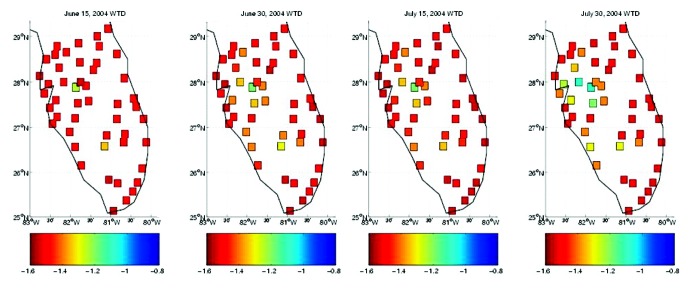
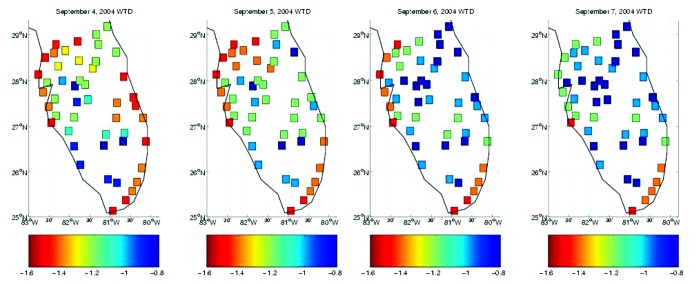
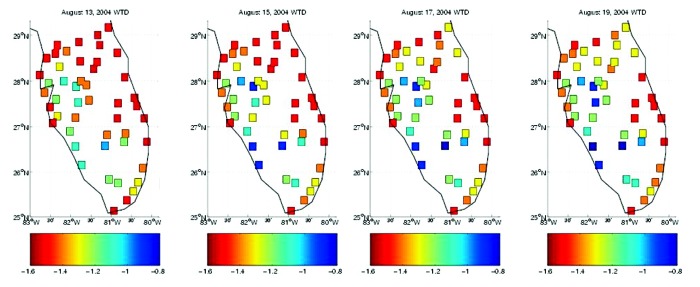
Mosquitoes and mosquitoborne disease transmission are sensitive to hydrologic variability. If local hydrologic conditions can be monitored or modeled at the scales at which these conditions affect the population dynamics of vector mosquitoes and the diseases they transmit, a means for monitoring or modeling mosquito populations and mosquitoborne disease transmission may be realized. We review how hydrologic conditions have been associated with mosquito abundances and mosquitoborne disease transmission and discuss the advantages of different measures of hydrologic variability. We propose that the useful application of any measure of hydrologic conditions requires additional consideration of the scales for both the hydrologic measurement and the vector control interventions that will be used to mitigate an outbreak of vectorborne disease. Our efforts to establish operational monitoring of St. Louis encephalitis virus and West Nile virus transmission in Florida are also reviewed.
蚊子及蚊媒疾病传播对水文变化很敏感。如果能在影响病媒蚊子种群动态及其传播疾病的尺度上监测或模拟当地水文状况,那么就有可能实现监测或模拟蚊子种群及蚊媒疾病传播的方法。我们回顾了水文状况与蚊子数量及蚊媒疾病传播之间的关联,并讨论了不同水文变化测量方法的优势。我们提出,任何水文状况测量方法的有效应用都需要额外考虑水文测量尺度以及用于缓解病媒传播疾病暴发的病媒控制干预措施的尺度。我们还回顾了在佛罗里达州对圣路易斯脑炎病毒和西尼罗河病毒传播进行业务监测的努力。