Yang Kun, Puel Anne, Zhang Shenying, Eidenschenk Céline, Ku Cheng-Lung, Casrouge Armanda, Picard Capucine, von Bernuth Horst, Senechal Brigitte, Plancoulaine Sabine, Al-Hajjar Sami, Al-Ghonaium Abdulaziz, Maródi László, Davidson Donald, Speert David, Roifman Chaim, Garty Ben-Zion, Ozinsky Adrian, Barrat Franck J, Coffman Robert L, Miller Richard L, Li Xiaoxia, Lebon Pierre, Rodriguez-Gallego Carlos, Chapel Helen, Geissmann Frédéric, Jouanguy Emmanuelle, Casanova Jean-Laurent
Laboratory of Human Genetics of Infectious Diseases, University of Paris René Descartes INSERM U550, Necker Medical School, 75015 Paris, France.
Immunity. 2005 Nov;23(5):465-78. doi: 10.1016/j.immuni.2005.09.016.
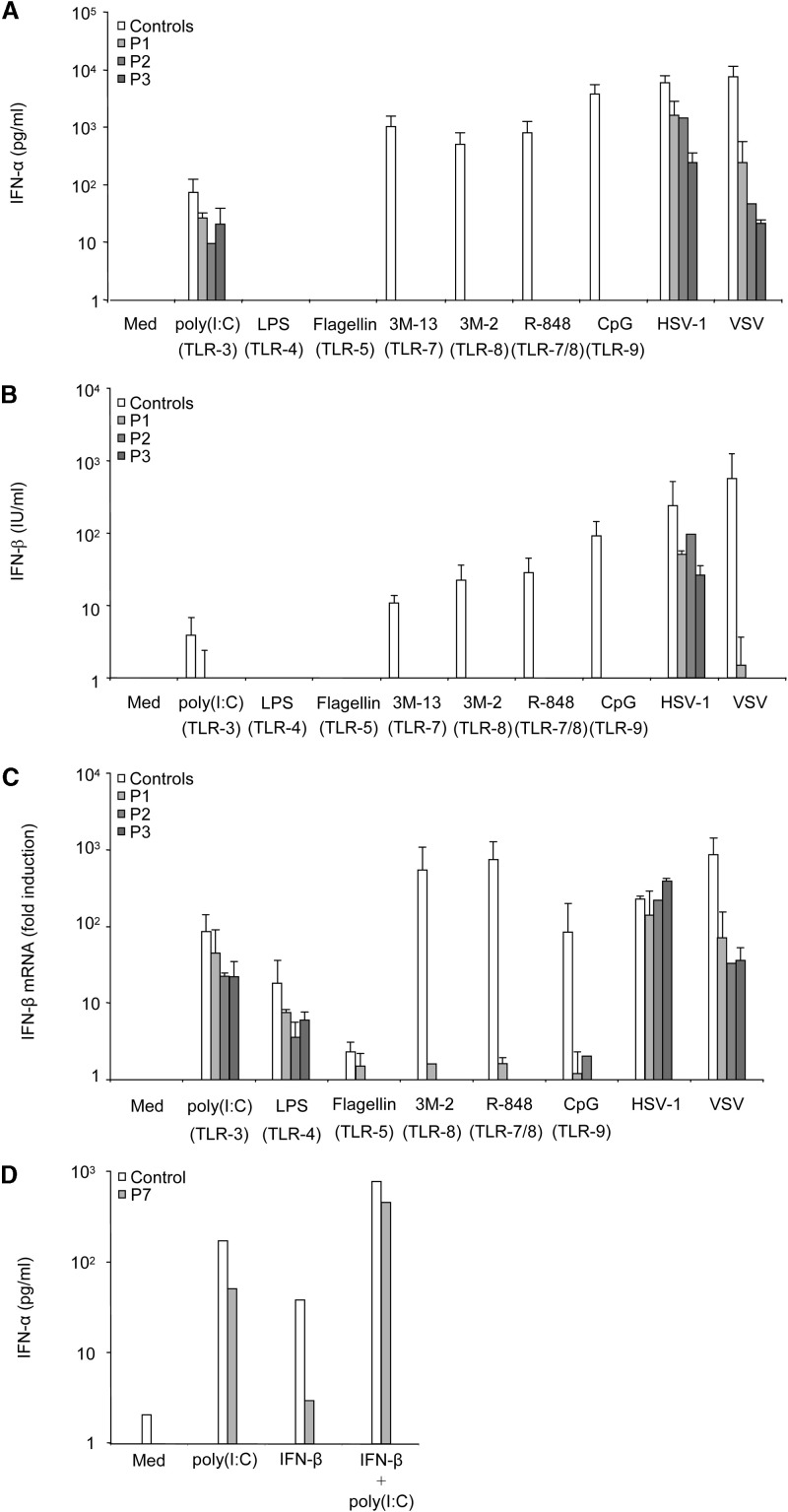
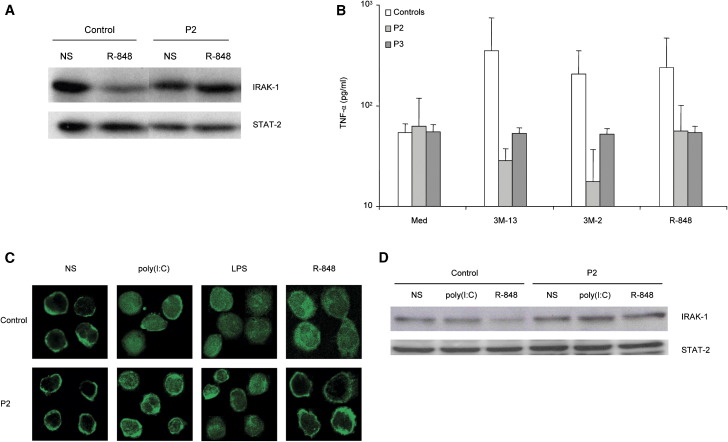
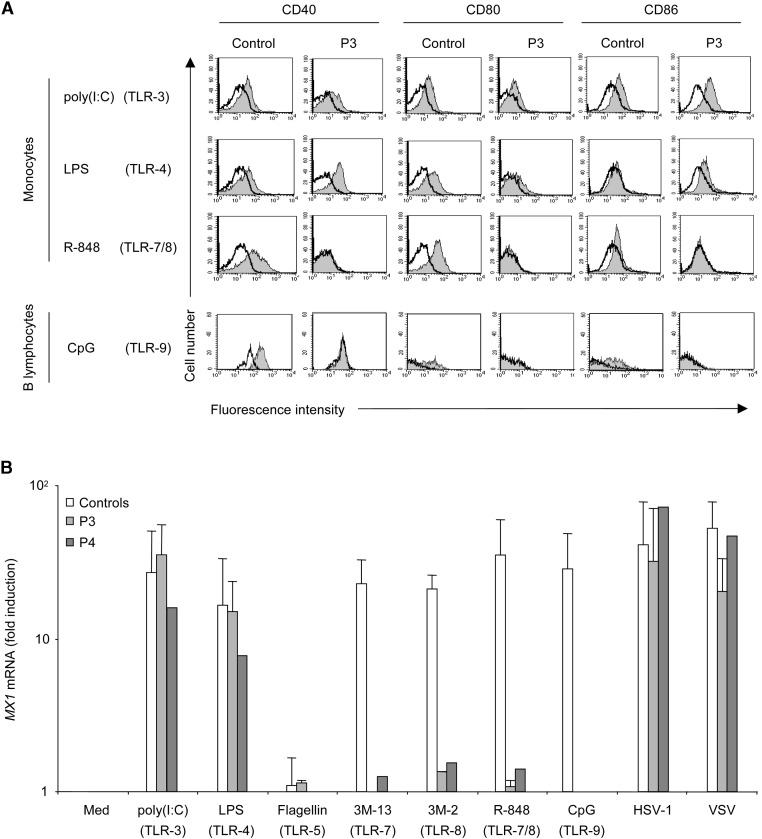
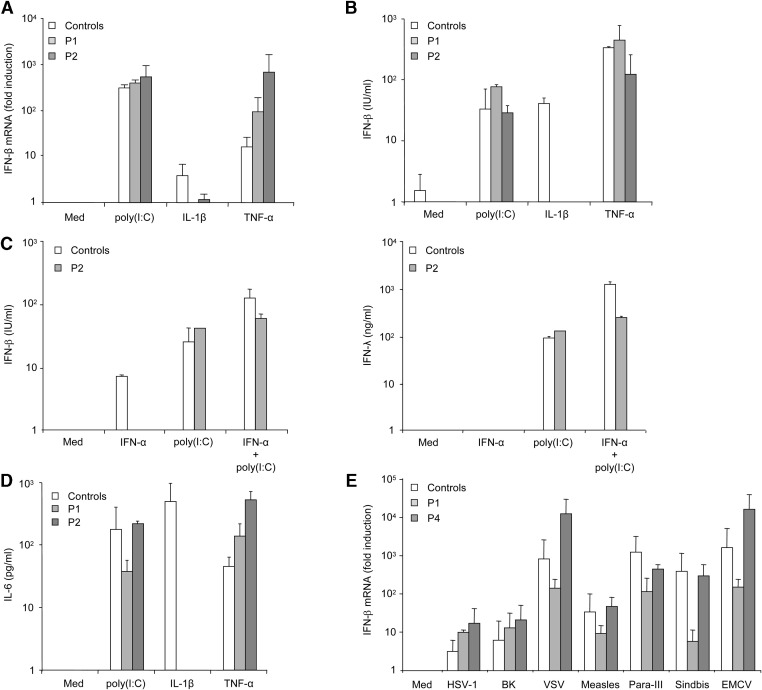
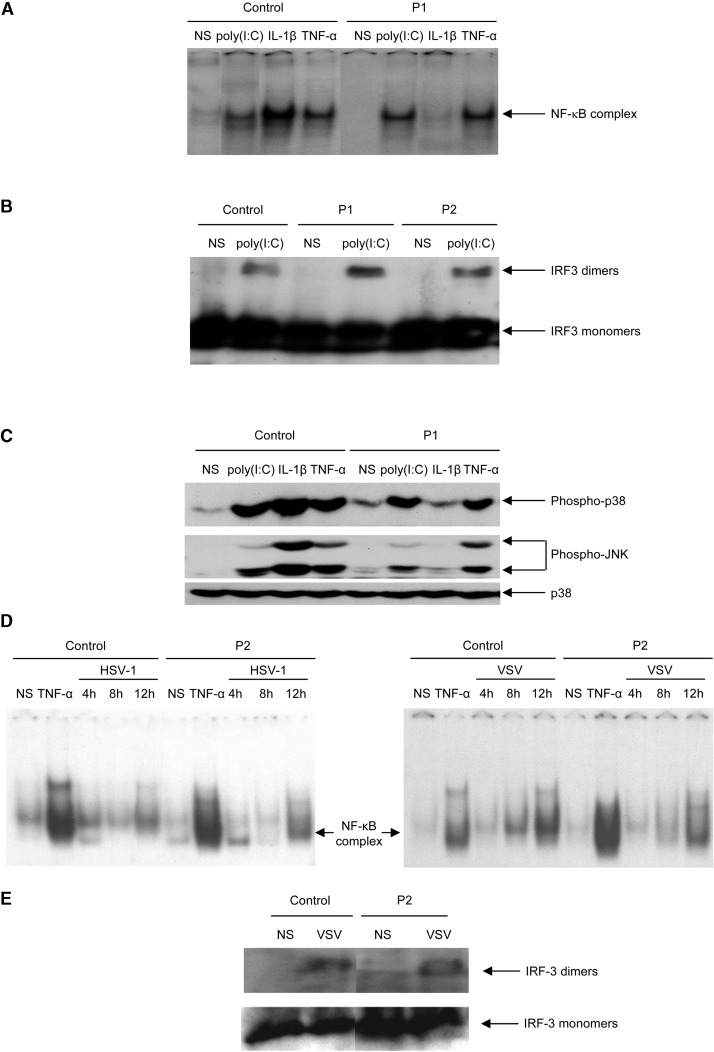
Five TLRs are thought to play an important role in antiviral immunity, sensing viral products and inducing IFN-alpha/beta and -lambda. Surprisingly, patients with a defect of IRAK-4, a critical kinase downstream from TLRs, are resistant to common viruses. We show here that IFN-alpha/beta and -lambda induction via TLR-7, TLR-8, and TLR-9 was abolished in IRAK-4-deficient blood cells. In contrast, IFN-alpha/beta and -lambda were induced normally by TLR-3 and TLR-4 agonists. Moreover, IFN-beta and -lambda were normally induced by TLR-3 agonists and viruses in IRAK-4-deficient fibroblasts. We further show that IFN-alpha/beta and -lambda production in response to 9 of 11 viruses tested was normal or weakly affected in IRAK-4-deficient blood cells. Thus, IRAK-4-deficient patients may control viral infections by TLR-3- and TLR-4-dependent and/or TLR-independent production of IFNs. The TLR-7-, TLR-8-, and TLR-9-dependent induction of IFN-alpha/beta and -lambda is strictly IRAK-4 dependent and paradoxically redundant for protective immunity to most viruses in humans.
五种Toll样受体(TLR)被认为在抗病毒免疫中发挥重要作用,可识别病毒产物并诱导I型干扰素(IFN-α/β)和III型干扰素(IFN-λ)。令人惊讶的是,Toll样受体下游关键激酶白细胞介素-1受体相关激酶4(IRAK-4)缺陷的患者对常见病毒具有抵抗力。我们在此表明,在IRAK-4缺陷的血细胞中,通过TLR-7、TLR-8和TLR-9诱导的IFN-α/β和IFN-λ被消除。相比之下,TLR-3和TLR-4激动剂可正常诱导IFN-α/β和IFN-λ。此外,在IRAK-4缺陷的成纤维细胞中,TLR-3激动剂和病毒可正常诱导IFN-β和IFN-λ。我们进一步表明,在IRAK-4缺陷的血细胞中,针对11种测试病毒中的9种产生的IFN-α/β和IFN-λ正常或受到轻微影响。因此,IRAK-4缺陷患者可能通过TLR-3和TLR-4依赖性和/或TLR非依赖性产生干扰素来控制病毒感染。TLR-7、TLR-8和TLR-9依赖性诱导IFN-α/β和IFN-λ严格依赖于IRAK-4,并且对于人类对大多数病毒的保护性免疫而言,自相矛盾地是多余的。