Muller Kubold A, Martinez D, Camus E, Jongejan F
Department of Parasitology and Tropical Veterinary Medicine, Institute of Infectious Diseases and Immunology, Faculty of Veterinary Medicine, Utrecht, The Netherlands.
J Clin Microbiol. 1992 Jul;30(7):1870-3. doi: 10.1128/jcm.30.7.1870-1873.1992.
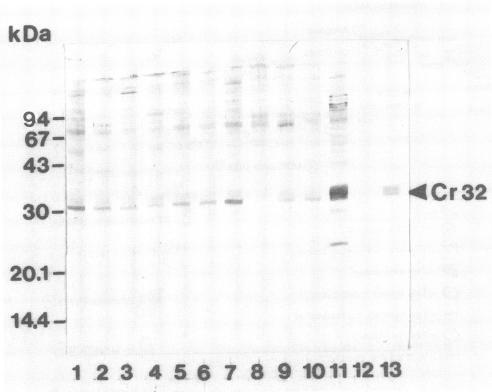
A competitive enzyme-linked immunosorbent assay (cELISA) was developed to detect immunoglobulin G antibodies to the major 32-kDa protein of Cowdria ruminantium. A total of 1,804 serum samples collected from cattle on 19 islands in the eastern Caribbean Basin were tested by this cELISA. A total of 133 serum samples from 10 islands (Antigua, Dominica, Grenada, Guadeloupe, Martinique, Montserrat, St. Kitts, St. Lucia, St. Martin, and St. Vincent) were found to be positive. The presence of antibodies to C. ruminantium in cattle on these islands was confirmed by immunofluorescence and Western blotting (immunoblotting). In earlier studies, C. ruminantium has been demonstrated only on Guadeloupe, Antigua, and Marie Galante. This study shows that the causative agent of heartwater is now firmly established in the Caribbean.