Shea C R, McNutt N S, Volkenandt M, Lugo J, Prioleau P G, Albino A P
Department of Pathology, New York Hospital-Cornell Medical Center, New York 10021.
Am J Pathol. 1992 Jul;141(1):25-9.
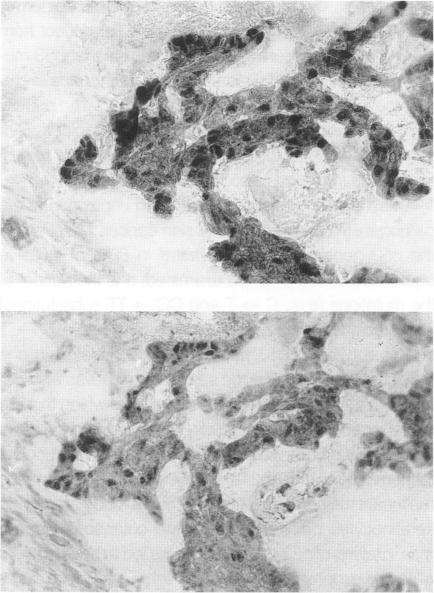
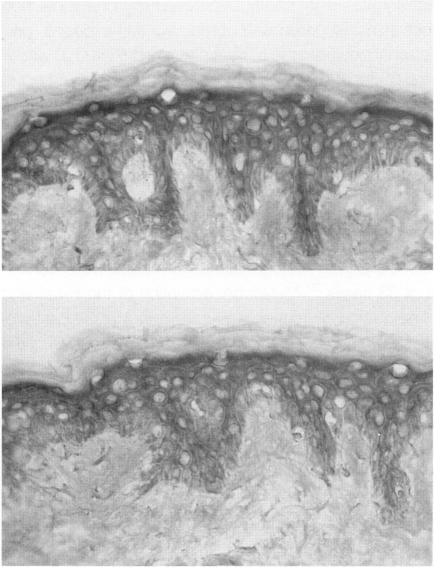
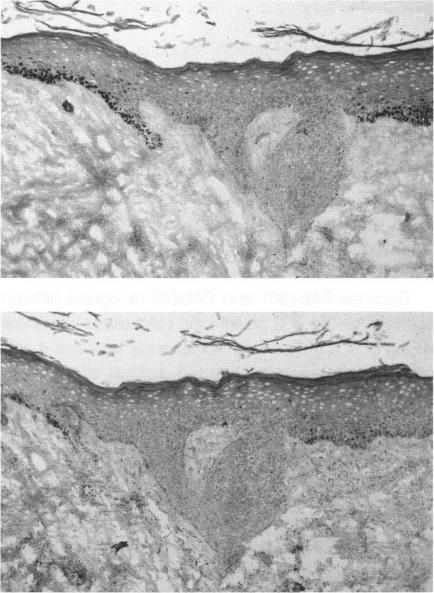
Basal cell carcinoma (BCC) of the skin is the most common human cancer, but its molecular-genetic pathogenesis is unclear. In many other types of cancer, mutations of the tumor-suppressor gene p53 occur frequently and may lead to overexpression of a long-lived mutant form of p53 protein. In this study, overexpression of p53 protein was detected immunohistochemically in 30 (83%) of 36 specimens of BCC of the head and neck. The same regions of tumor typically were reactive both with a monoclonal antibody (PAb240) specific for the mutant protein and with one (PAb1801) directed against an epitope common to both wild-type and mutant p53 protein. Keratinocytes of chronically sun-exposed epidermis adjacent to BCCs also focally overexpressed p53 protein in the majority of cases, whereas those of sun-protected buttock skin did not. Mutation of p53 may form an important part of the pathogenetic sequence in a majority of cases of BCC.
皮肤基底细胞癌(BCC)是人类最常见的癌症,但其分子遗传发病机制尚不清楚。在许多其他类型的癌症中,肿瘤抑制基因p53的突变频繁发生,并可能导致一种长寿命的p53突变蛋白过度表达。在本研究中,通过免疫组织化学检测发现,36例头颈部BCC标本中有30例(83%)存在p53蛋白过度表达。肿瘤的相同区域通常对突变蛋白特异性单克隆抗体(PAb240)和针对野生型及突变型p53蛋白共同表位的一种抗体(PAb1801)均有反应。在大多数病例中,与BCC相邻的长期受阳光照射的表皮角质形成细胞也局部过度表达p53蛋白,而受阳光保护的臀部皮肤角质形成细胞则未出现这种情况。p53突变可能在大多数BCC病例的发病序列中构成重要部分。