New Zealand Dairy Research Institute, Palmerston North, New Zealand.
Appl Environ Microbiol. 1989 Jun;55(6):1537-43. doi: 10.1128/aem.55.6.1537-1543.1989.
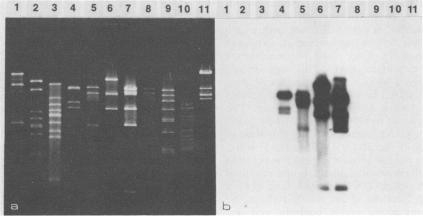
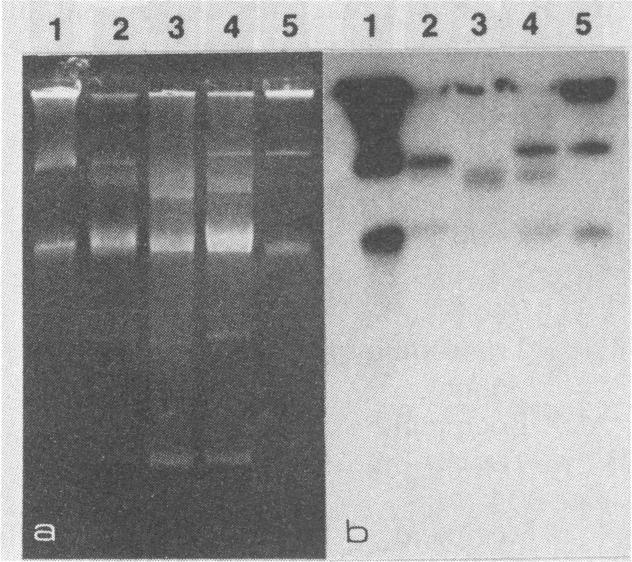
Plasmid pAJ1106 and its deletion derivative, plasmid pAJ2074, conferred lactose-fermenting ability (Lac) and bacteriophage resistance (Hsp) at 30 degrees C to Lac proteinase (Prt)-negative Lactococcus lactis subsp. lactis and L. lactis subsp. lactis var. diacetylactis recipient strains. An additional plasmid, pAJ331, isolated from the original source strain of pAJ1106, retained Hsp and conjugative ability without Lac. pAJ331 was conjugally transferred to two L. lactis subsp. lactis and one L. lactis subsp. cremoris starter strains. The transconjugants from such crosses acquired resistance to the phages which propagated on the parent recipient strains. Of 10 transconjugant strains carrying pAJ1106 or one of the related plasmids, 8 remained insensitive to phages through five activity test cycles in which cultures were exposed to a large number of industrial phages at incubation temperatures used in lactic casein manufacture. Three of ten strains remained phage insensitive through five cycles of a cheesemaking activity test in which cultures were exposed to approximately 80 different phages through cheesemaking temperatures. Three phages which propagated on transconjugant strains during cheesemaking activity tests were studied in detail. Two were similar (prolate) in morphology and by DNA homology to phages which were shown to be sensitive to the plasmid-encoded phage resistance mechanism. The third phage was a long-tailed, small isometric phage of a type rarely found in New Zealand cheese wheys. The phage resistance mechanism was partially inactivated in most strains at 37 degrees C.
质粒 pAJ1106 及其缺失衍生物质粒 pAJ2074,赋予了 Prt-阴性乳球菌乳亚种和乳球菌乳亚种丁二酮变种的乳糖发酵能力 (Lac) 和噬菌体抗性 (Hsp),在 30°C 下。来自原始 pAJ1106 来源菌株的另外一个质粒 pAJ331,保留了 Hsp 和可共轭性,而没有 Lac。pAJ331 通过共轭转移到两个乳球菌乳亚种和一个乳球菌乳亚种 cremoris 起始菌株。来自这些杂交的转导子获得了对在亲本受体菌株上繁殖的噬菌体的抗性。在携带 pAJ1106 或其相关质粒之一的 10 个转导子菌株中,有 8 个在 5 个活性测试循环中仍然对噬菌体不敏感,在该循环中,培养物在用于制造乳酸酪蛋白的孵育温度下暴露于大量工业噬菌体。在奶酪制造活性测试中,有 10 个菌株中的 3 个通过 5 个循环仍然对噬菌体不敏感,在该循环中,培养物通过奶酪制造温度暴露于大约 80 种不同的噬菌体。在奶酪制造活性测试中,对在转导子菌株上繁殖的 3 种噬菌体进行了详细研究。两种在形态上相似(长形),并且与 DNA 同源性表明它们对质粒编码的噬菌体抗性机制敏感。第三种噬菌体是一种长尾、小等轴的噬菌体,在新西兰奶酪乳清中很少发现这种类型。在大多数菌株中,噬菌体抗性机制在 37°C 下部分失活。