Baum Jake, Maier Alexander G, Good Robert T, Simpson Ken M, Cowman Alan F
Division of Infection and Immunity, The Walter and Eliza Hall Institute of Medical Research, Parkville, Victoria, Australia.
PLoS Pathog. 2005 Dec;1(4):e37. doi: 10.1371/journal.ppat.0010037. Epub 2005 Dec 16.
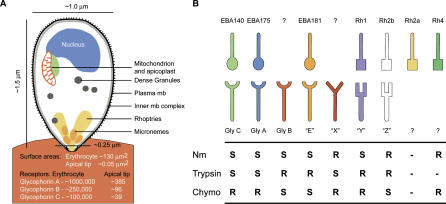
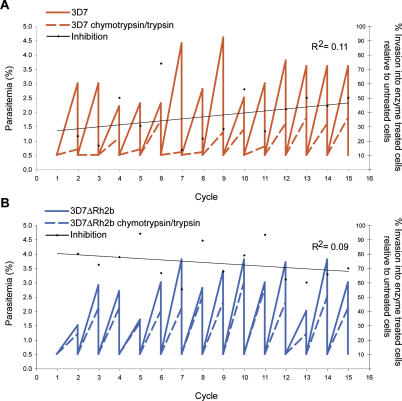
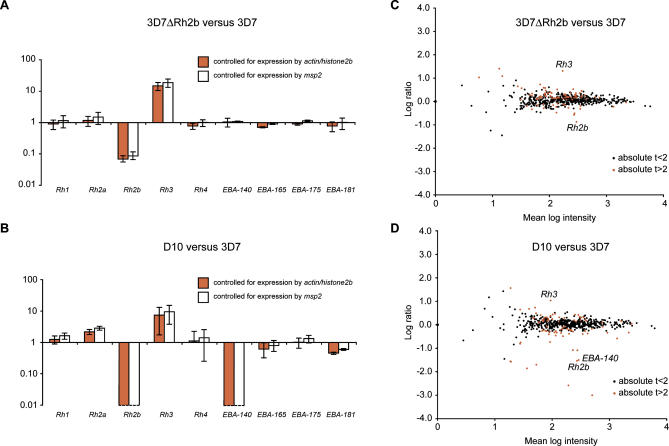
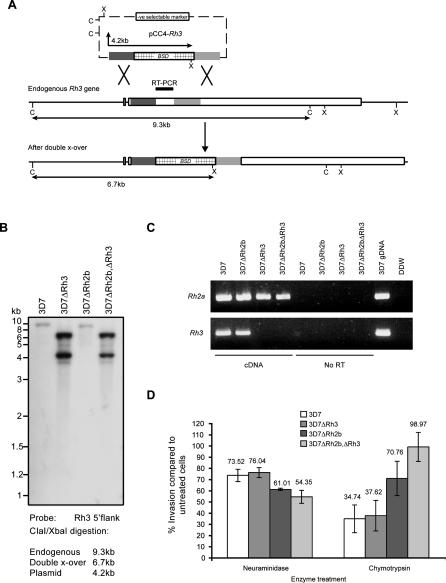
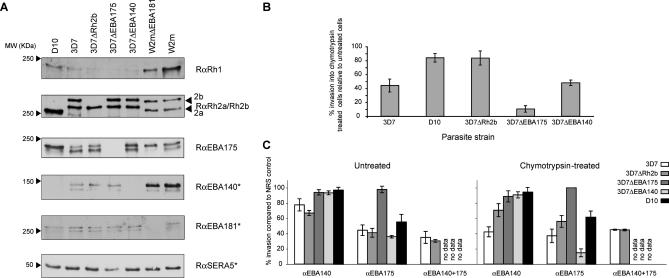
Central to the pathology of malaria disease are the repeated cycles of parasite invasion and destruction of human erythrocytes. In Plasmodium falciparum, the most virulent species causing malaria, erythrocyte invasion involves several specific receptor-ligand interactions that direct the pathway used to invade the host cell, with parasites varying in their dependency on these different pathways. Gene disruption of a key invasion ligand in the 3D7 parasite strain, the P. falciparum reticulocyte binding-like homolog 2b (PfRh2b), resulted in the parasite invading via a novel pathway. Here, we show results that suggest the molecular basis for this novel pathway is not due to a molecular switch but is instead mediated by the redeployment of machinery already present in the parent parasite but masked by the dominant role of PfRh2b. This would suggest that interactions directing invasion are organized hierarchically, where silencing of dominant invasion ligands reveal underlying alternative pathways. This provides wild parasites with the ability to adapt to immune-mediated selection or polymorphism in erythrocyte receptors and has implications for the use of invasion-related molecules in candidate vaccines.
疟疾病理的核心是疟原虫反复入侵和破坏人类红细胞的循环过程。在引起疟疾的最具毒性的物种——恶性疟原虫中,红细胞入侵涉及几种特定的受体-配体相互作用,这些相互作用决定了入侵宿主细胞所使用的途径,不同的疟原虫对这些不同途径的依赖性各不相同。在3D7疟原虫株中,一种关键入侵配体——恶性疟原虫网织红细胞结合样同源物2b(PfRh2b)的基因破坏,导致疟原虫通过一种新途径入侵。在这里,我们展示的结果表明,这条新途径的分子基础不是由于分子开关,而是由亲本疟原虫中已存在但被PfRh2b的主导作用所掩盖的机制重新部署介导的。这表明指导入侵的相互作用是分层组织的,其中主导入侵配体的沉默揭示了潜在的替代途径。这使野生疟原虫能够适应免疫介导的选择或红细胞受体的多态性,并对候选疫苗中入侵相关分子的使用具有启示意义。