Muller Jay F, Mascagni Franco, McDonald Alexander J
Department of Pharmacology, Physiology and Neuroscience, University of South Carolina School of Medicine, Columbia, South Carolina 29208, USA.
J Comp Neurol. 2006 Feb 1;494(4):635-50. doi: 10.1002/cne.20832.
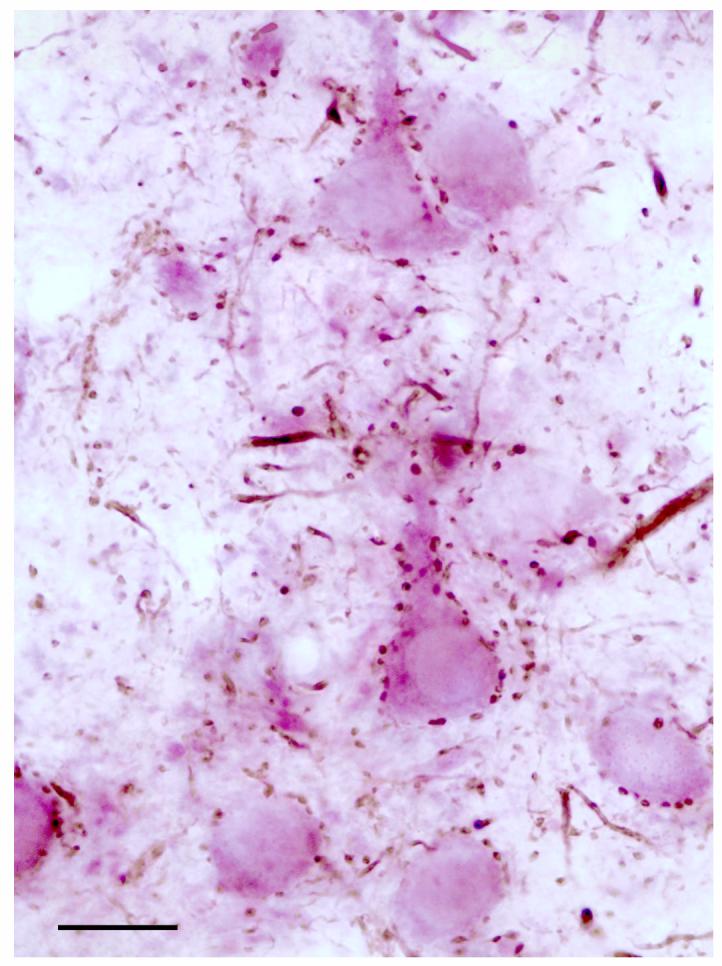
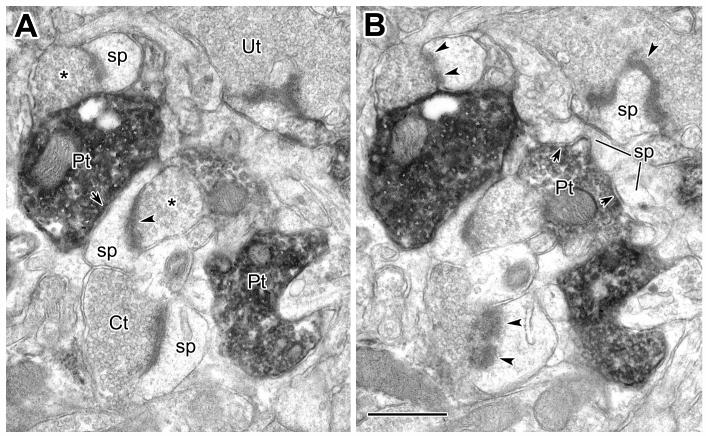
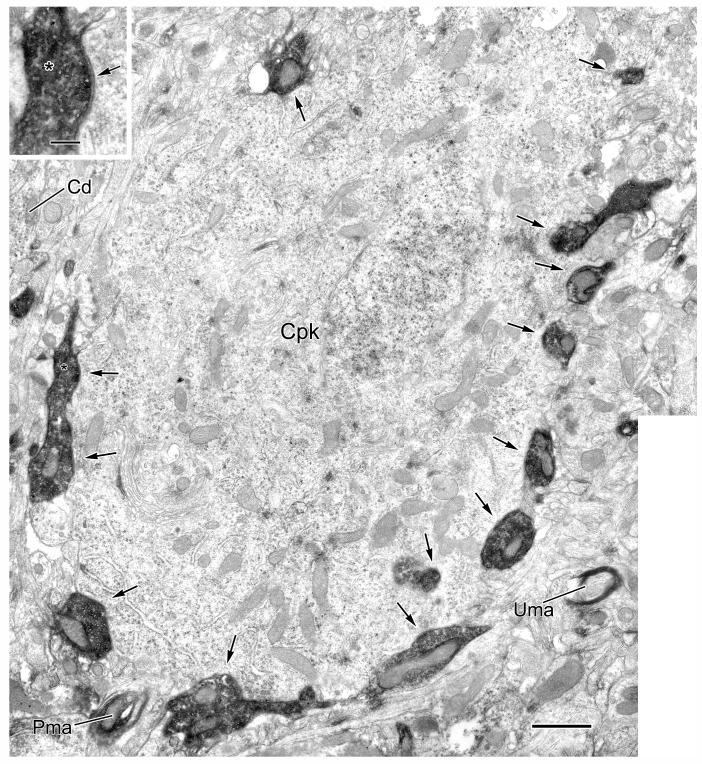
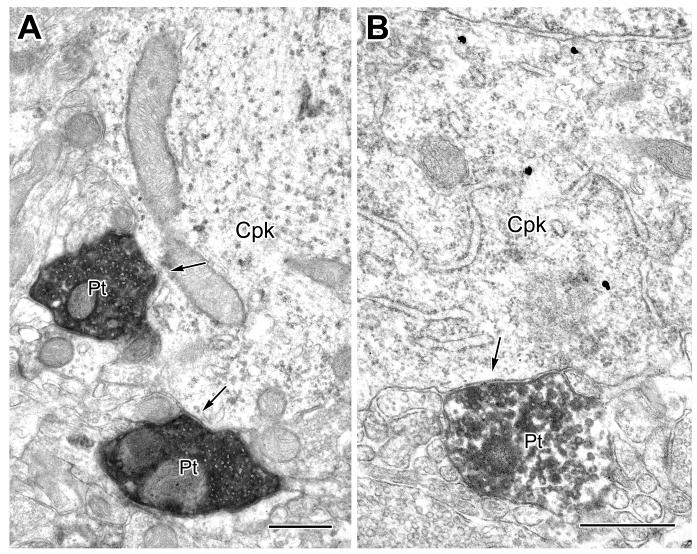
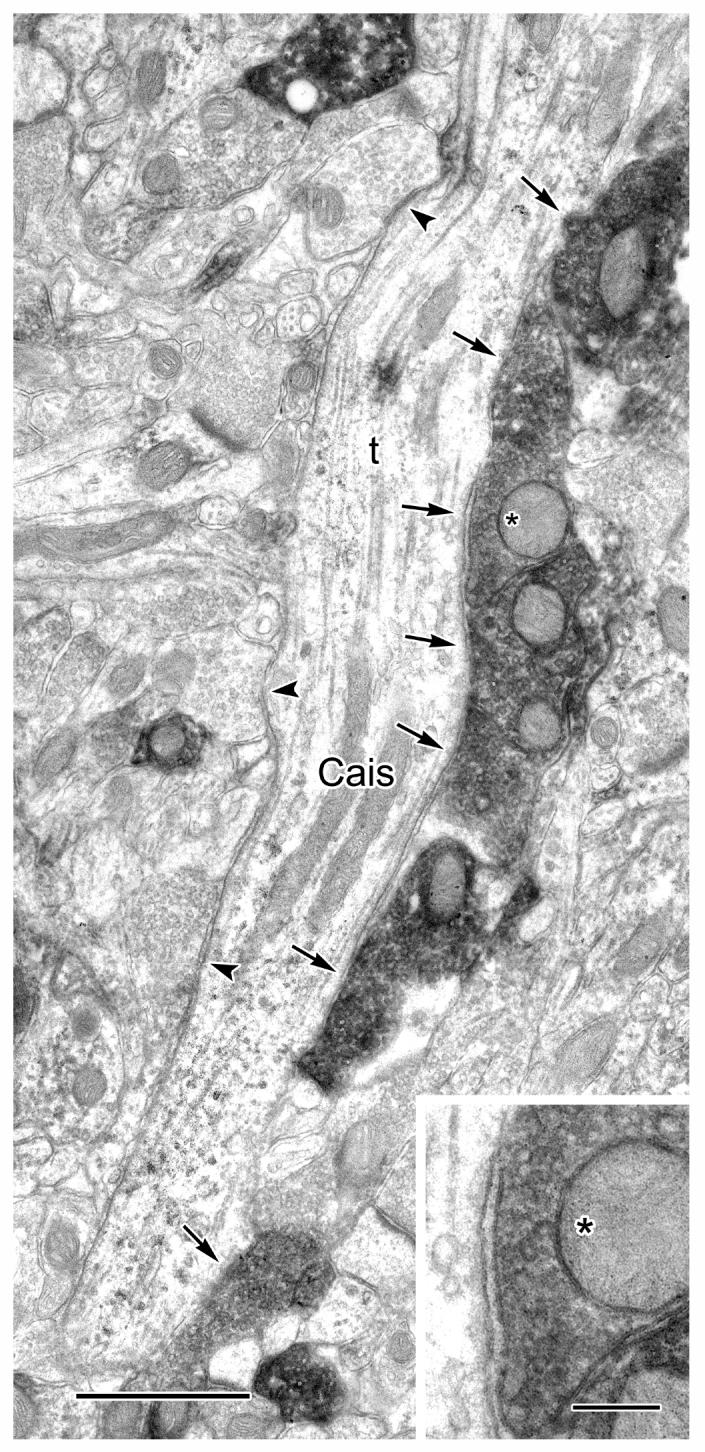
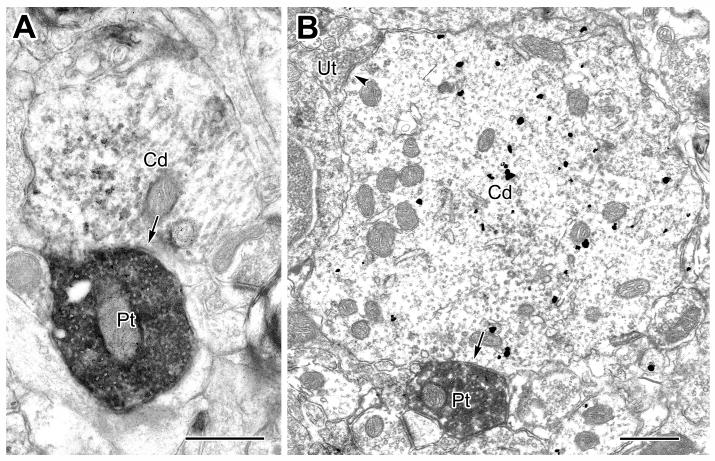
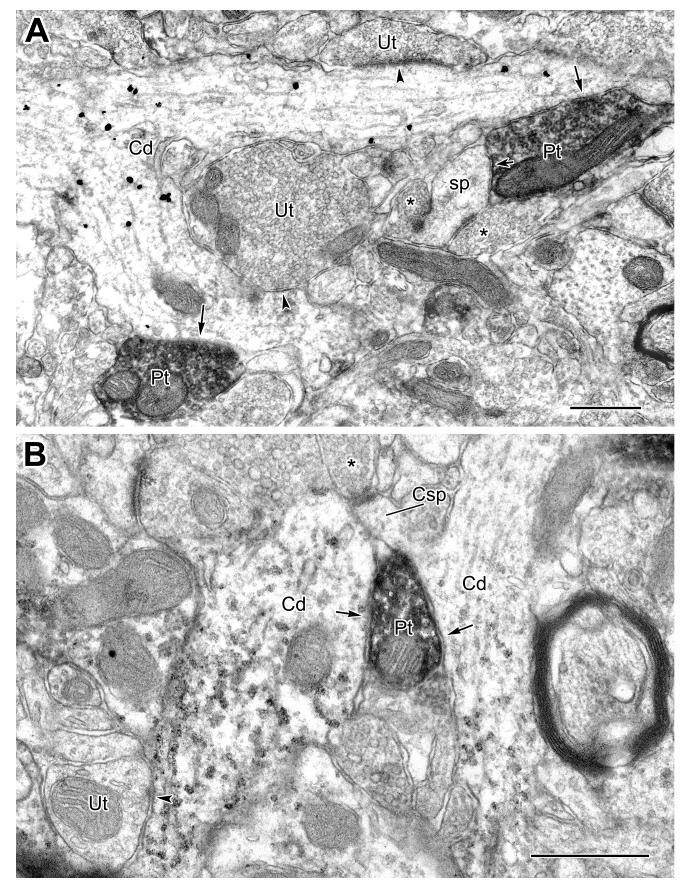
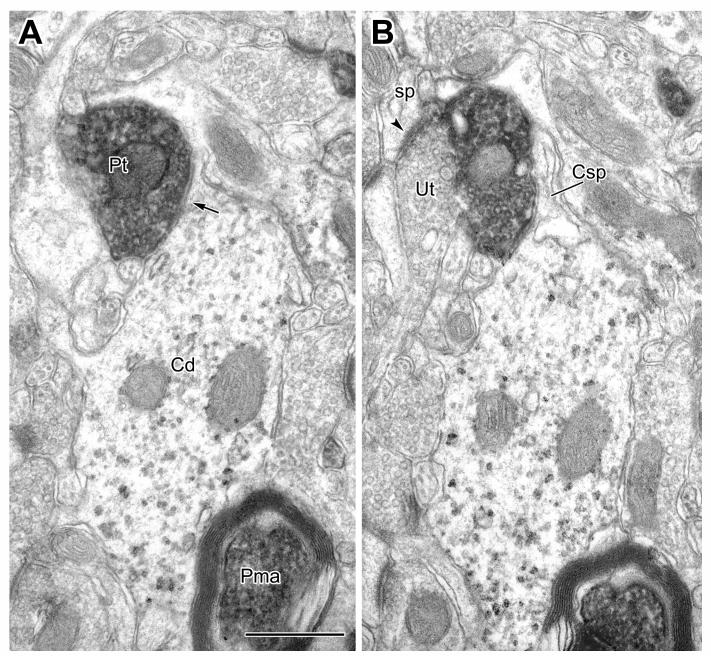
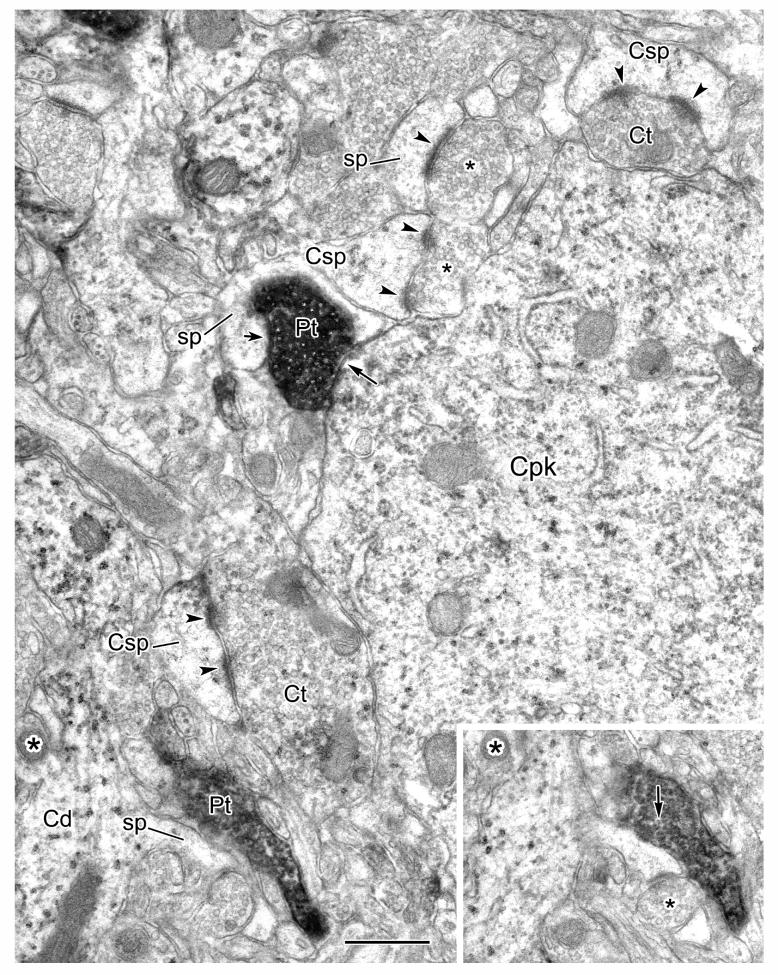
The generation of emotional responses by the basolateral amygdala is determined largely by the balance of excitatory and inhibitory inputs to its principal neurons, the pyramidal cells. The activity of these neurons is tightly controlled by gamma-aminobutyric acid (GABA)-ergic interneurons, especially a parvalbumin-positive (PV(+)) subpopulation that constitutes almost half of all interneurons in the basolateral amygdala. In the present semiquantitative investigation, we studied the incidence of synaptic inputs of PV(+) axon terminals onto pyramidal neurons in the rat basolateral nucleus (BLa). Pyramidal cells were identified by using calcium/calmodulin-dependent protein kinase II (CaMK) immunoreactivity as a marker. To appreciate the relative abundance of PV(+) inputs compared with excitatory inputs and other non-PV(+) inhibitory inputs, we also analyzed the proportions of asymmetrical (presumed excitatory) synapses and symmetrical (presumed inhibitory) synapses formed by unlabeled axon terminals targeting pyramidal neurons. The results indicate that the perisomatic region of pyramidal cells is innervated almost entirely by symmetrical synapses, whereas the density of asymmetrical synapses increases as one proceeds from thicker proximal dendritic shafts to thinner distal dendritic shafts. The great majority of synapses with dendritic spines are asymmetrical. PV(+) axon terminals form mainly symmetrical synapses. These PV(+) synapses constitute slightly more than half of the symmetrical synapses formed with each postsynaptic compartment of BLa pyramidal cells. These data indicate that the synaptology of basolateral amygdalar pyramidal cells is remarkably similar to that of cortical pyramidal cells and that PV(+) interneurons provide a robust inhibition of both the perisomatic and the distal dendritic domains of these principal neurons.
基底外侧杏仁核产生情绪反应很大程度上取决于其主要神经元(锥体细胞)兴奋性和抑制性输入的平衡。这些神经元的活动受到γ-氨基丁酸(GABA)能中间神经元的严格控制,尤其是小白蛋白阳性(PV(+))亚群,该亚群几乎占基底外侧杏仁核所有中间神经元的一半。在本半定量研究中,我们研究了PV(+)轴突终末与大鼠基底外侧核(BLa)锥体细胞之间突触输入的发生率。通过使用钙/钙调蛋白依赖性蛋白激酶II(CaMK)免疫反应性作为标志物来识别锥体细胞。为了了解与兴奋性输入和其他非PV(+)抑制性输入相比PV(+)输入的相对丰度,我们还分析了未标记的靶向锥体细胞的轴突终末形成的不对称(推测为兴奋性)突触和对称(推测为抑制性)突触的比例。结果表明,锥体细胞的胞体周围区域几乎完全由对称突触支配,而不对称突触的密度从较粗的近端树突干向较细的远端树突干逐渐增加。绝大多数与树突棘形成的突触是不对称的。PV(+)轴突终末主要形成对称突触。这些PV(+)突触占与BLa锥体细胞每个突触后区室形成的对称突触的略多于一半。这些数据表明,基底外侧杏仁核锥体细胞的突触学与皮质锥体细胞的突触学非常相似,并且PV(+)中间神经元对这些主要神经元的胞体周围和远端树突区域都提供了强大的抑制作用。