Coates P J, d'Ardenne A J, Khan G, Kangro H O, Slavin G
Department of Histopathology, St Bartholomew's Hospital, West Smithfield, London.
J Clin Pathol. 1991 Feb;44(2):115-8. doi: 10.1136/jcp.44.2.115.
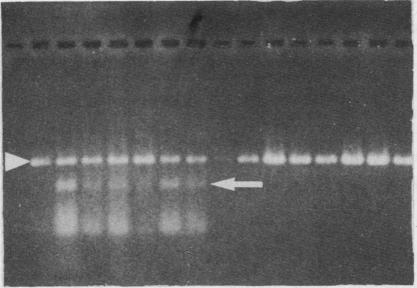
The polymerase chain reaction was applied to the analysis of DNA contained in archival paraffin wax embedded material. DNA suitable for the reaction was obtained from these tissues by simple extraction methods, without previous dewaxing of tissue sections. When compared with unfixed material, the reaction efficiency was compromised, so that an increased number of amplification cycles were required to produce equivalent amounts of amplified product. This in turn led to an increase in amplification artefacts, which can be minimised by a simple modification of the standard reaction. Amplification of relatively large DNA fragments was not always successful, and it seems prudent to bear this in mind when designing oligonucleotide primers which are to be used for the amplification of archival material. The efficiency of the procedure can be improved by dividing the amplification cycles into two parts: this reduces the amount of reagent needed, is relatively simple and inexpensive, and can be performed in one working day.
聚合酶链反应被应用于分析存档石蜡包埋材料中所含的DNA。通过简单的提取方法从这些组织中获得了适合该反应的DNA,而无需事先对组织切片进行脱蜡处理。与未固定的材料相比,反应效率受到影响,因此需要增加扩增循环次数以产生等量的扩增产物。这反过来又导致扩增假象增加,通过对标准反应进行简单修改可以将其降至最低。相对较大的DNA片段的扩增并不总是成功的,在设计用于扩增存档材料的寡核苷酸引物时牢记这一点似乎是谨慎的做法。通过将扩增循环分为两部分可以提高该方法的效率:这减少了所需的试剂量,相对简单且成本低廉,并且可以在一个工作日内完成。