Sheets Rebecca L, Stein Judith, Manetz T Scott, Duffy Chris, Nason Martha, Andrews Charla, Kong Wing-Pui, Nabel Gary J, Gomez Phillip L
U.S. Public Health Service, Vaccine Production Program, NIH/NIAID/Vaccine Research Center, Bethesda, Maryland 20892-7628, USA.
Toxicol Sci. 2006 Jun;91(2):610-9. doi: 10.1093/toxsci/kfj169. Epub 2006 Mar 28.
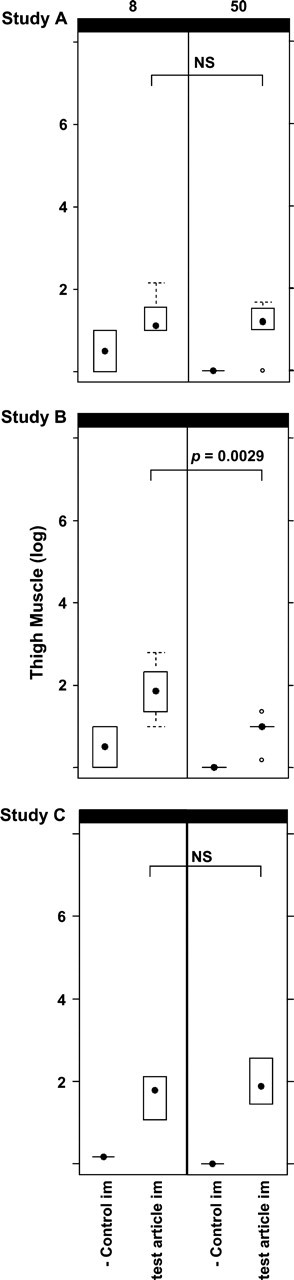
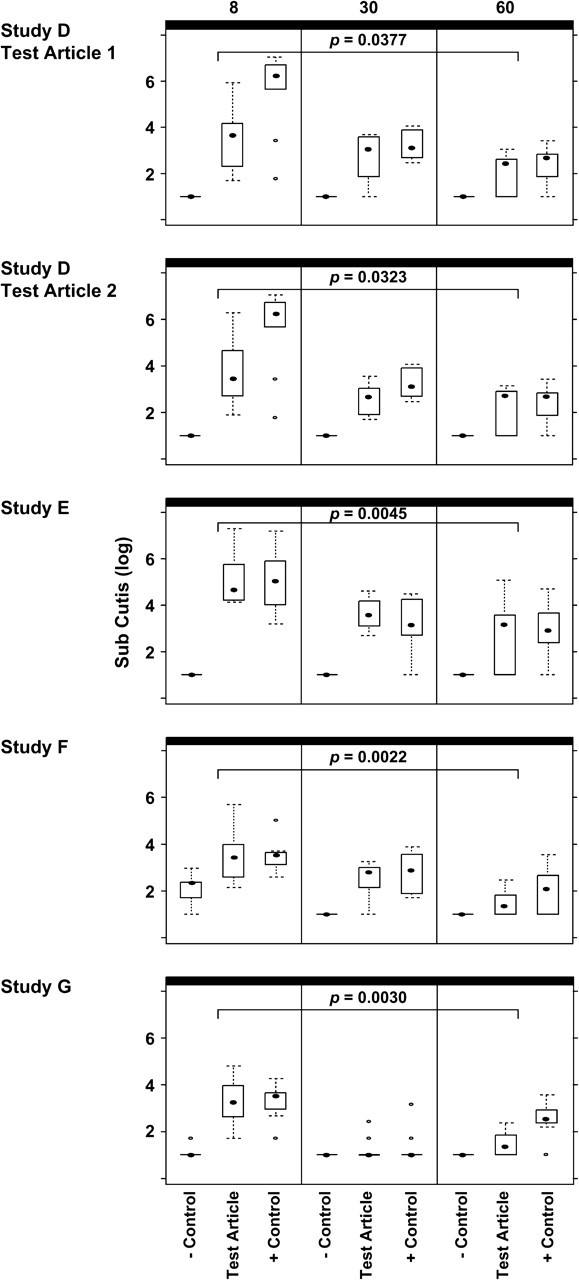
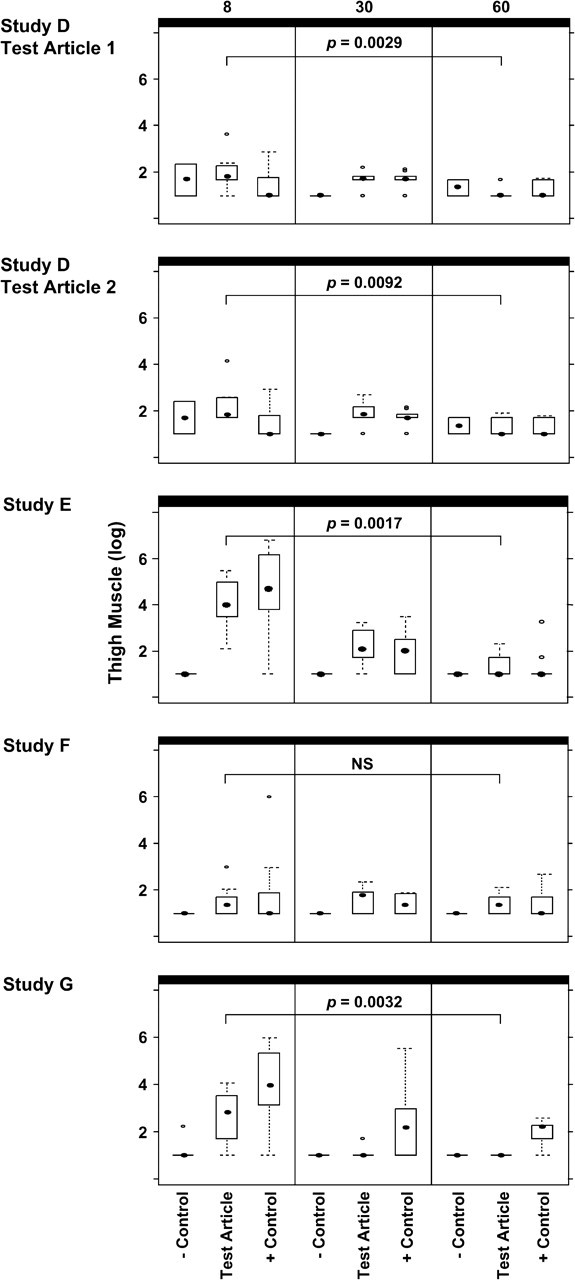
The Vaccine Research Center has developed a number of vaccine candidates for different diseases/infectious agents (HIV-1, Severe Acute Respiratory Syndrome virus, West Nile virus, and Ebola virus, plus a plasmid cytokine adjuvant-IL-2/Ig) based on a DNA plasmid vaccine platform. To support the clinical development of each of these vaccine candidates, preclinical studies have been performed in mice or rabbits to determine where in the body these plasmid vaccines would biodistribute and how rapidly they would clear. In the course of these studies, it has been observed that regardless of the gene insert (expressing the vaccine immunogen or cytokine adjuvant) and regardless of the promoter used to drive expression of the gene insert in the plasmid backbone, the plasmid vaccines do not biodistribute widely and remain essentially in the site of injection, in the muscle and overlying subcutis. Even though approximately 10(14) molecules are inoculated in the studies in rabbits, by day 8 or 9 ( approximately 1 week postinoculation), already all but on the order of 10(4)-10(6) molecules per microgram of DNA extracted from tissue have been cleared at the injection site. Over the course of 2 months, the plasmid clears from the site of injection with only a small percentage of animals (generally 10-20%) retaining a small number of copies (generally around 100 copies) in the muscle at the injection site. This pattern of biodistribution (confined to the injection site) and clearance (within 2 months) is consistent regardless of differences in the promoter in the plasmid backbone or differences in the gene insert being expressed by the plasmid vaccine. In addition, integration has not been observed with plasmid vaccine candidates inoculated i.m. by Biojector 2000 or by needle and syringe. These data build on the repeated-dose toxicology studies performed (see companion article, Sheets et al., 2006) to demonstrate the safety and suitability for investigational human use of DNA plasmid vaccine candidates for a variety of infectious disease prevention indications.
疫苗研究中心基于DNA质粒疫苗平台,针对不同疾病/感染因子(HIV-1、严重急性呼吸综合征病毒、西尼罗河病毒和埃博拉病毒,外加一种质粒细胞因子佐剂——IL-2/Ig)研发了多种候选疫苗。为支持每种候选疫苗的临床开发,已在小鼠或兔子身上开展临床前研究,以确定这些质粒疫苗在体内的生物分布位置以及清除速度。在这些研究过程中,已观察到,无论基因插入片段(表达疫苗免疫原或细胞因子佐剂)如何,也无论用于驱动质粒骨架中基因插入片段表达的启动子如何,质粒疫苗都不会广泛地进行生物分布,基本上仍留在注射部位,即肌肉和覆盖其上的皮下组织中。尽管在兔子研究中接种了约10¹⁴个分子,但到第8天或第9天(接种后约1周),从组织中提取的每微克DNA中,除了约10⁴ - 10⁶个分子外,注射部位的其他分子都已被清除。在2个月的时间里,质粒从注射部位清除,只有一小部分动物(通常为10 - 20%)在注射部位的肌肉中保留少量拷贝(通常约为100个拷贝)。这种生物分布模式(局限于注射部位)和清除模式(在2个月内)是一致的,无论质粒骨架中启动子的差异或质粒疫苗所表达的基因插入片段的差异如何。此外,通过Biojector 2000或针头注射器进行肌肉注射接种的候选质粒疫苗未观察到整合现象。这些数据基于已开展的重复剂量毒理学研究(见配套文章,Sheets等人,2006年),以证明用于多种传染病预防适应症的DNA质粒候选疫苗在人体研究中的安全性和适用性。