Kumar Renu B, Maher Diane M, Herzberg Mark C, Southern Peter J
Department of Microbiology, University of Minnesota, Minneapolis, MN 55455, USA.
Virol J. 2006 Apr 6;3:25. doi: 10.1186/1743-422X-3-25.
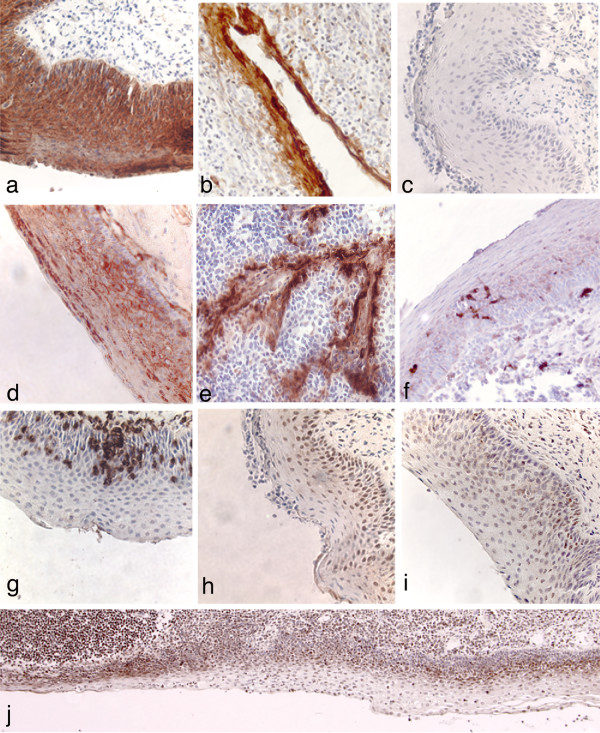
Primary HIV infection can develop from exposure to HIV in the oral cavity. In previous studies, we have documented rapid and extensive binding of HIV virions in seminal plasma to intact mucosal surfaces of the palatine tonsil and also found that virions readily penetrated beneath the tissue surfaces. As one approach to understand the molecular interactions that support HIV virion binding to human mucosal surfaces, we have examined the distribution of the primary HIV receptor CD4, the alternate HIV receptors heparan sulfate proteoglycan (HS) and galactosyl ceramide (GalCer) and the co-receptors CXCR4 and CCR5 in palatine tonsil.
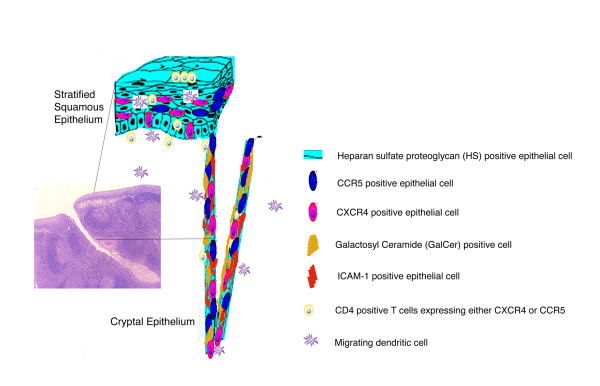
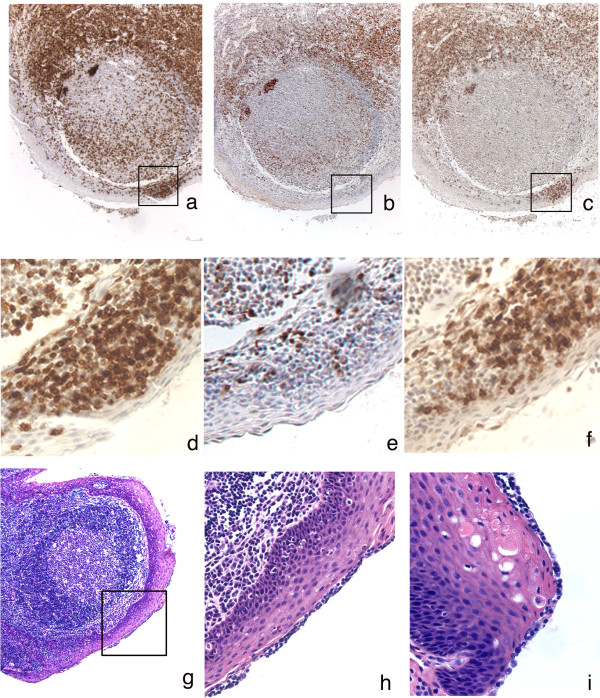
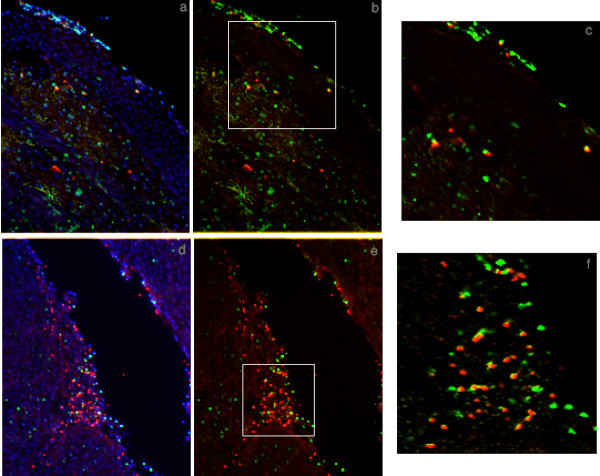
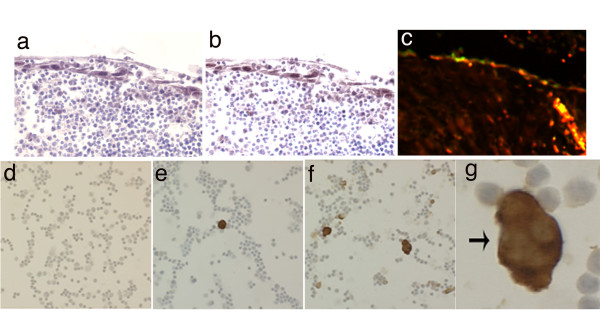
Only HS was widely expressed on the surface of stratified squamous epithelium. In contrast, HS, GalCer, CXCR4 and CCR5 were all expressed on the reticulated epithelium lining the tonsillar crypts. We have observed extensive variability, both across tissue sections from any tonsil and between tonsils, in the distribution of epithelial cells expressing either CXCR4 or CCR5 in the basal and suprabasal layers of stratified epithelium. The general expression patterns of CXCR4, CCR5 and HS were similar in palatine tonsil from children and adults (age range 3-20). We have also noted the presence of small clusters of lymphocytes, including CD4+ T cells within stratified epithelium and located precisely at the mucosal surfaces. CD4+ T cells in these locations would be immediately accessible to HIV virions.
In total, the likelihood of oral HIV transmission will be determined by macro and micro tissue architecture, cell surface expression patterns of key molecules that may bind HIV and the specific properties of the infectious inoculum.
原发性HIV感染可因口腔接触HIV而发生。在先前的研究中,我们已记录到精液中的HIV病毒粒子与腭扁桃体完整的黏膜表面快速且广泛地结合,还发现病毒粒子能轻易穿透至组织表面下方。作为了解支持HIV病毒粒子与人黏膜表面结合的分子相互作用的一种方法,我们研究了原发性HIV受体CD4、替代HIV受体硫酸乙酰肝素蛋白聚糖(HS)和半乳糖神经酰胺(GalCer)以及共受体CXCR4和CCR5在腭扁桃体中的分布。
只有HS在复层鳞状上皮表面广泛表达。相比之下,HS、GalCer、CXCR4和CCR5均在扁桃体隐窝内衬的网状上皮上表达。我们观察到,在任何扁桃体的组织切片之间以及不同扁桃体之间,复层上皮基底层和基底上层中表达CXCR4或CCR5的上皮细胞分布存在广泛差异。儿童和成人(年龄范围3至20岁)腭扁桃体中CXCR4、CCR5和HS的总体表达模式相似。我们还注意到在复层上皮内存在小簇淋巴细胞,包括CD4 + T细胞,且它们恰好位于黏膜表面。这些位置的CD4 + T细胞会直接接触HIV病毒粒子。
总体而言,口腔HIV传播的可能性将由宏观和微观组织结构、可能结合HIV的关键分子的细胞表面表达模式以及感染接种物的特定特性决定。