Habashi Jennifer P, Judge Daniel P, Holm Tammy M, Cohn Ronald D, Loeys Bart L, Cooper Timothy K, Myers Loretha, Klein Erin C, Liu Guosheng, Calvi Carla, Podowski Megan, Neptune Enid R, Halushka Marc K, Bedja Djahida, Gabrielson Kathleen, Rifkin Daniel B, Carta Luca, Ramirez Francesco, Huso David L, Dietz Harry C
Howard Hughes Medical Institute and Department of Pediatrics, Johns Hopkins University School of Medicine, Baltimore, MD 21205, USA.
Science. 2006 Apr 7;312(5770):117-21. doi: 10.1126/science.1124287.
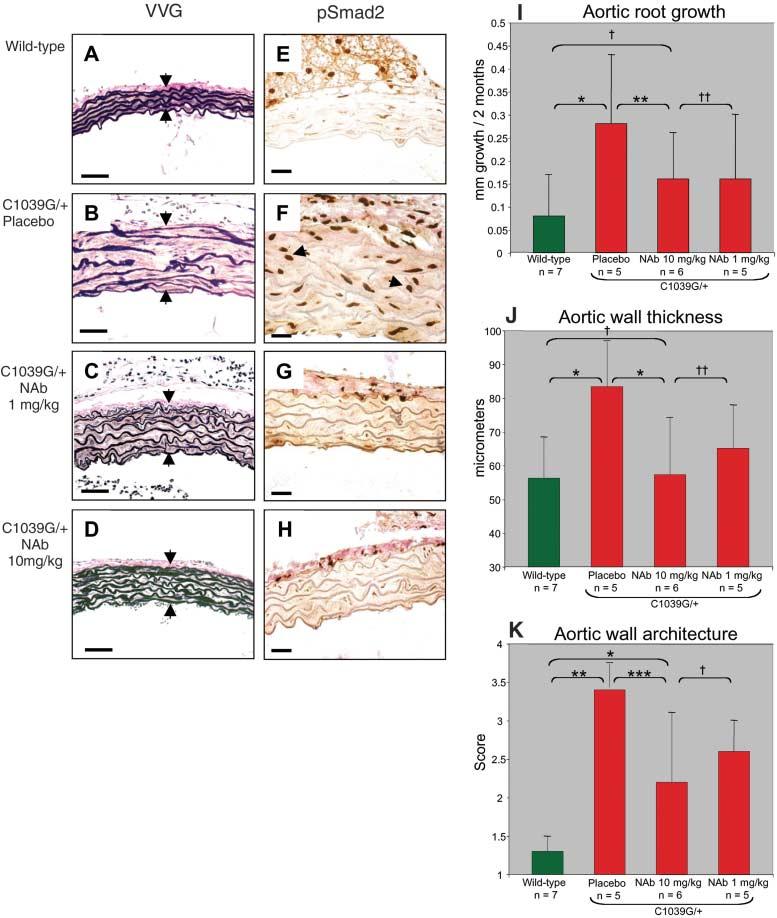
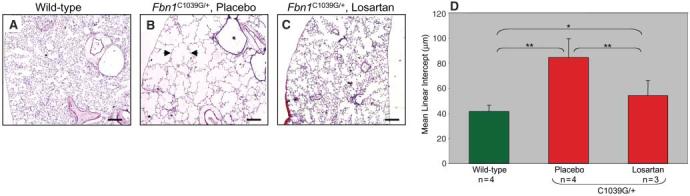
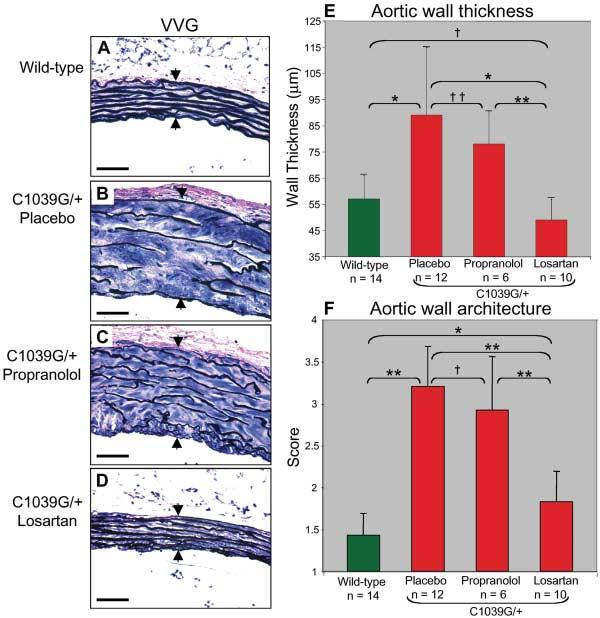
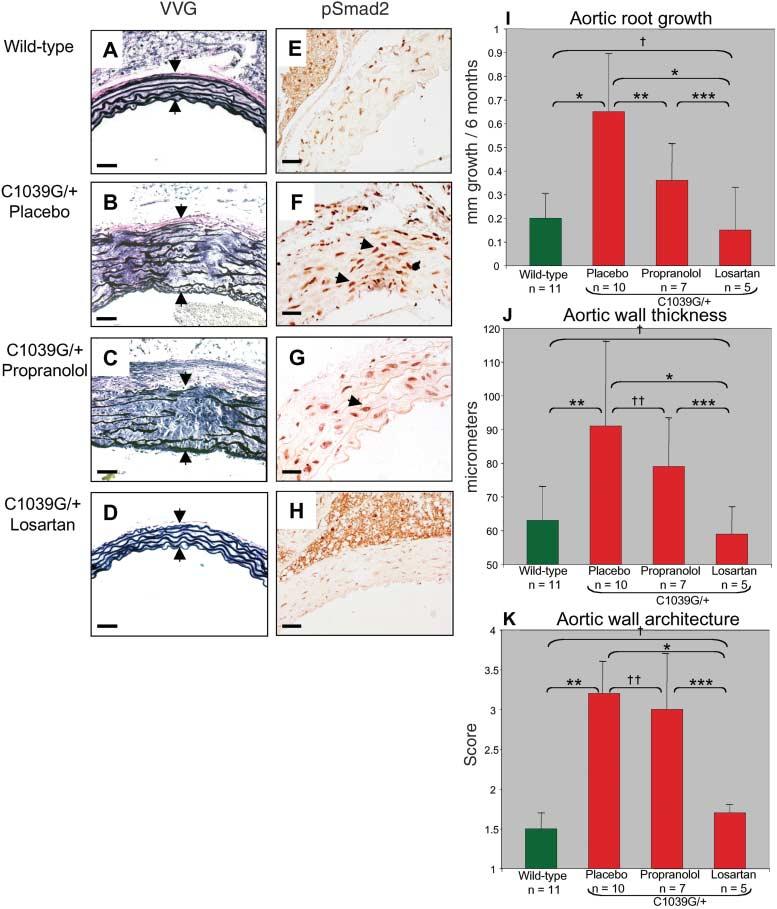
Aortic aneurysm and dissection are manifestations of Marfan syndrome (MFS), a disorder caused by mutations in the gene that encodes fibrillin-1. Selected manifestations of MFS reflect excessive signaling by the transforming growth factor-beta (TGF-beta) family of cytokines. We show that aortic aneurysm in a mouse model of MFS is associated with increased TGF-beta signaling and can be prevented by TGF-beta antagonists such as TGF-beta-neutralizing antibody or the angiotensin II type 1 receptor (AT1) blocker, losartan. AT1 antagonism also partially reversed noncardiovascular manifestations of MFS, including impaired alveolar septation. These data suggest that losartan, a drug already in clinical use for hypertension, merits investigation as a therapeutic strategy for patients with MFS and has the potential to prevent the major life-threatening manifestation of this disorder.
主动脉瘤和主动脉夹层是马方综合征(MFS)的表现,MFS是一种由编码原纤维蛋白-1的基因突变引起的疾病。MFS的某些表现反映了转化生长因子-β(TGF-β)细胞因子家族的过度信号传导。我们发现,MFS小鼠模型中的主动脉瘤与TGF-β信号传导增加有关,并且可以通过TGF-β拮抗剂(如TGF-β中和抗体或血管紧张素II 1型受体(AT1)阻滞剂氯沙坦)来预防。AT1拮抗作用还部分逆转了MFS的非心血管表现,包括肺泡间隔形成受损。这些数据表明,氯沙坦这种已在临床上用于治疗高血压的药物,值得作为MFS患者的治疗策略进行研究,并且有可能预防该疾病的主要危及生命的表现。