Abascal Federico, Posada David, Knight Robin D, Zardoya Rafael
Departamento de Bioquímica, Genética, e Inmunología, Universidad de Vigo, Vigo, Spain.
PLoS Biol. 2006 May;4(5):e127. doi: 10.1371/journal.pbio.0040127. Epub 2006 Apr 25.
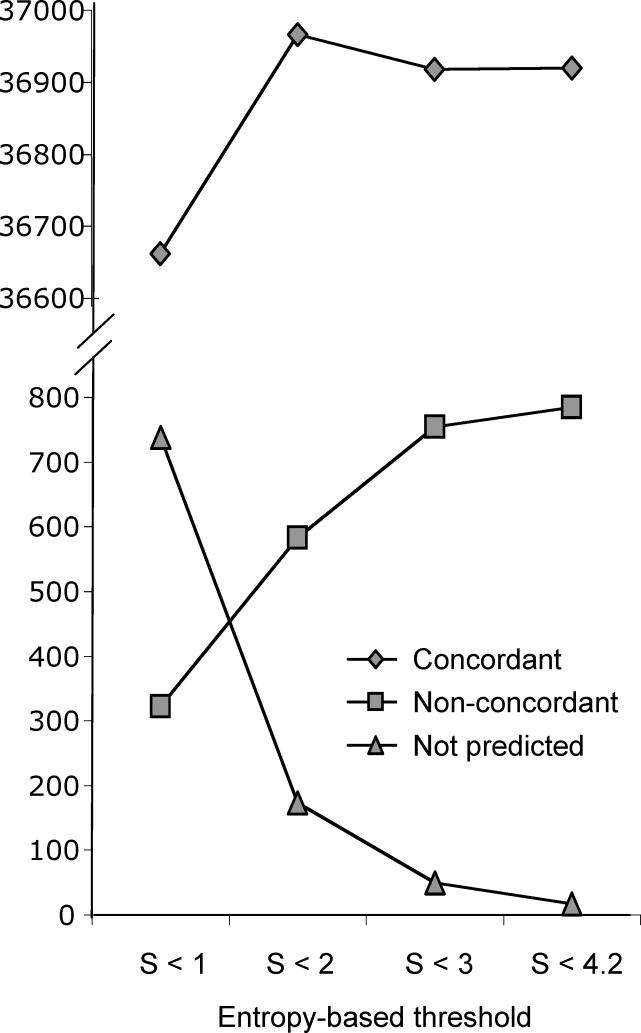
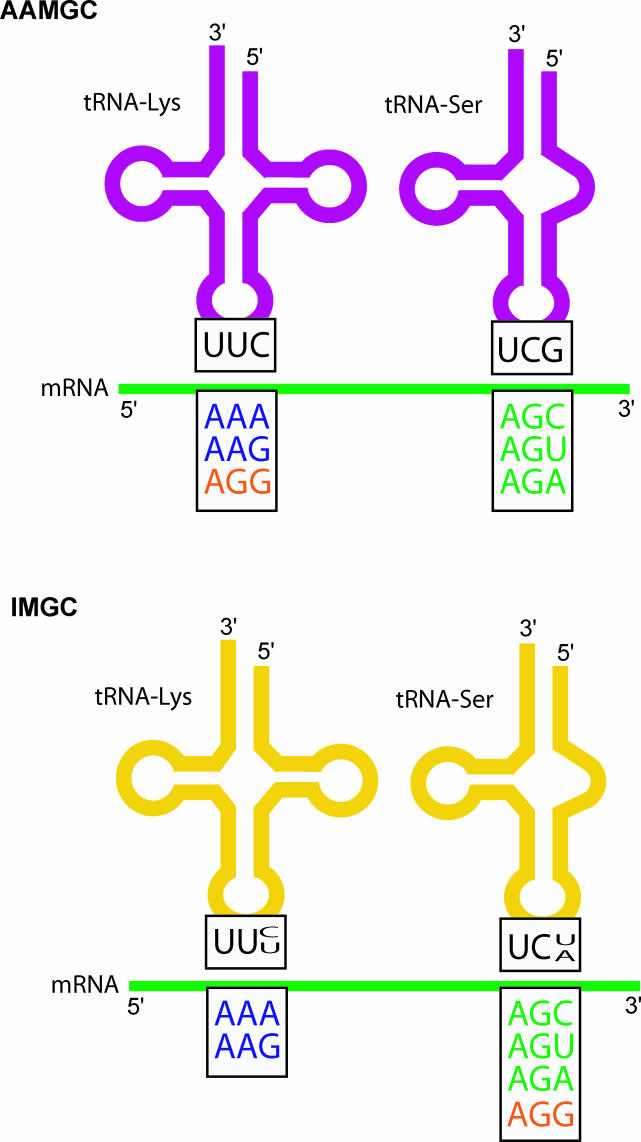
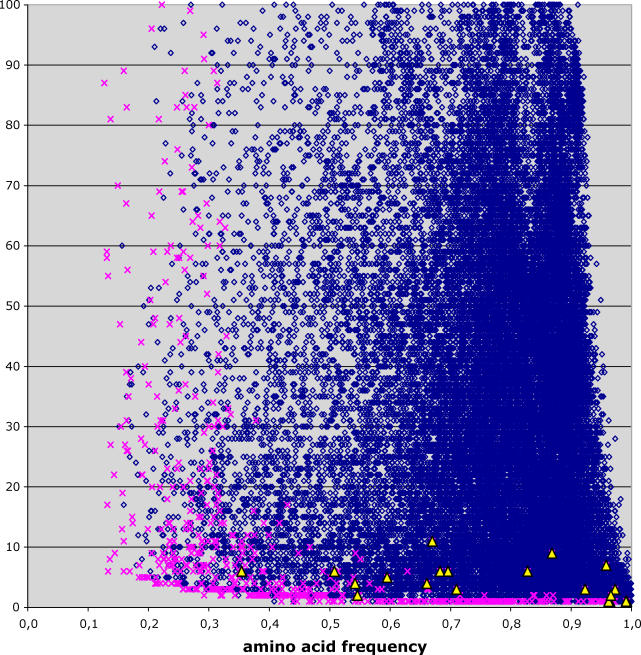
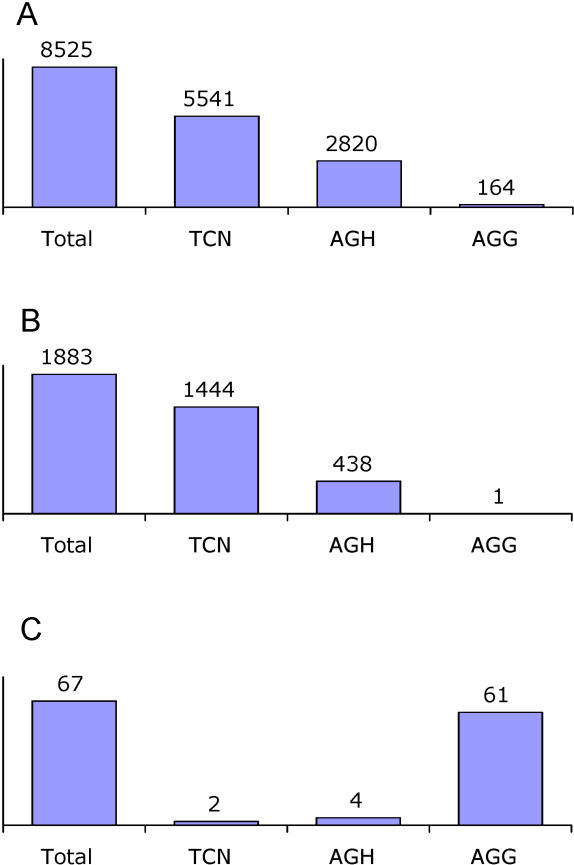
The genetic code provides the translation table necessary to transform the information contained in DNA into the language of proteins. In this table, a correspondence between each codon and each amino acid is established: tRNA is the main adaptor that links the two. Although the genetic code is nearly universal, several variants of this code have been described in a wide range of nuclear and organellar systems, especially in metazoan mitochondria. These variants are generally found by searching for conserved positions that consistently code for a specific alternative amino acid in a new species. We have devised an accurate computational method to automate these comparisons, and have tested it with 626 metazoan mitochondrial genomes. Our results indicate that several arthropods have a new genetic code and translate the codon AGG as lysine instead of serine (as in the invertebrate mitochondrial genetic code) or arginine (as in the standard genetic code). We have investigated the evolution of the genetic code in the arthropods and found several events of parallel evolution in which the AGG codon was reassigned between serine and lysine. Our analyses also revealed correlated evolution between the arthropod genetic codes and the tRNA-Lys/-Ser, which show specific point mutations at the anticodons. These rather simple mutations, together with a low usage of the AGG codon, might explain the recurrence of the AGG reassignments.
遗传密码提供了将DNA中包含的信息转化为蛋白质语言所需的翻译表。在这个表中,每个密码子与每个氨基酸之间建立了对应关系:tRNA是连接两者的主要适配器。尽管遗传密码几乎是通用的,但在广泛的核和细胞器系统中,特别是在后生动物线粒体中,已经描述了这种密码的几种变体。这些变体通常是通过寻找在新物种中始终编码特定替代氨基酸的保守位置而发现的。我们设计了一种精确的计算方法来自动进行这些比较,并用626个后生动物线粒体基因组对其进行了测试。我们的结果表明,几种节肢动物具有一种新的遗传密码,将密码子AGG翻译为赖氨酸,而不是丝氨酸(如在无脊椎动物线粒体遗传密码中)或精氨酸(如在标准遗传密码中)。我们研究了节肢动物中遗传密码的进化,发现了几个平行进化事件,其中AGG密码子在丝氨酸和赖氨酸之间重新分配。我们的分析还揭示了节肢动物遗传密码与tRNA-Lys/-Ser之间的相关进化,它们在反密码子处显示出特定的点突变。这些相当简单的突变,加上AGG密码子的低使用率,可能解释了AGG重新分配的反复出现。