Central Institute of Genetics and Crop Plant Research, Academy of Sciences of the German Democratic Republic, 4325 Gatersleben, GDR.
Plant Physiol. 1986 May;81(1):192-9. doi: 10.1104/pp.81.1.192.
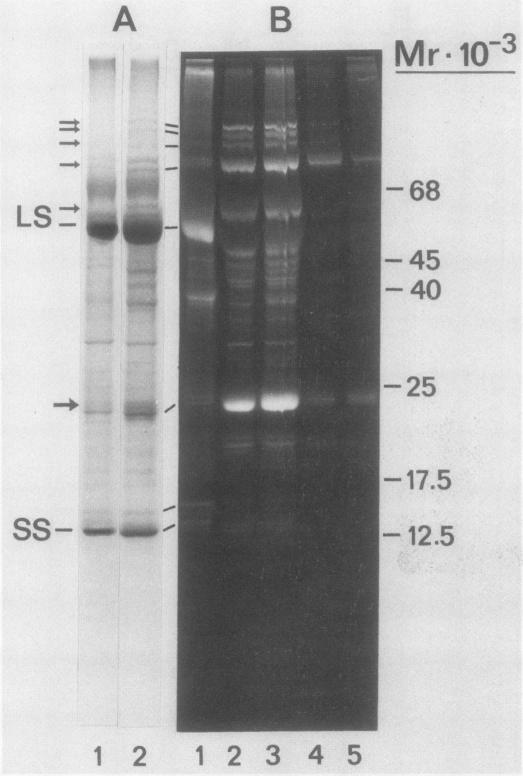
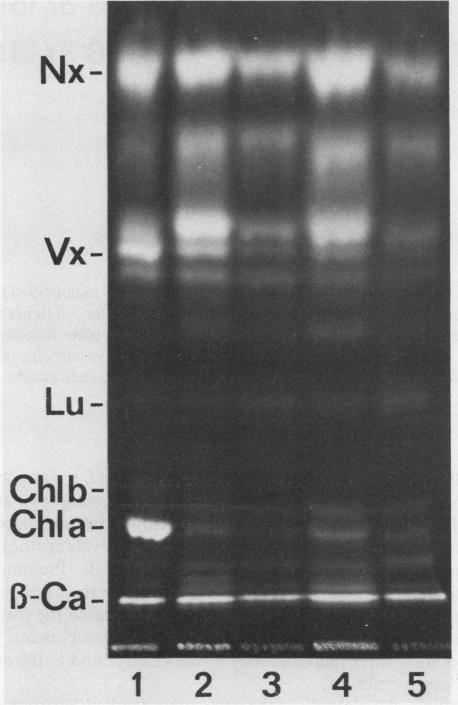
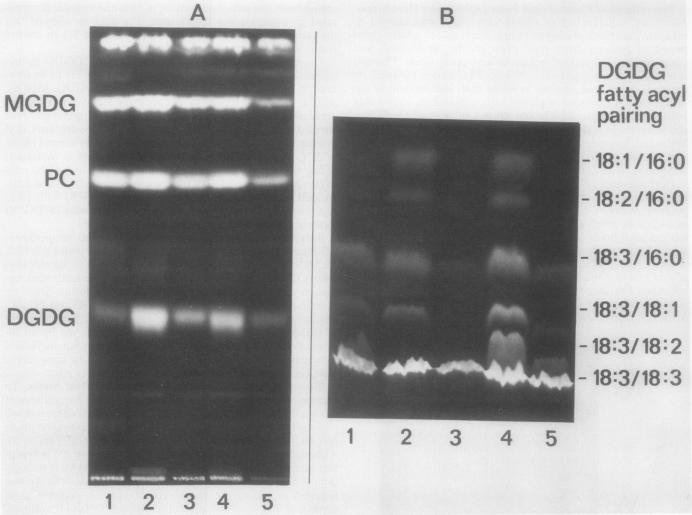
Thermotolerance of photosynthetic light reactions in vivo is correlated with a decrease in the ratio of monogalactosyl diacylglycerol to digalactosyl diacylglycerol and an increased incorporation into thylakoid membranes of saturated digalactosyl diacylglycerol species. Although electron transport remains virtually intact in thermotolerant chloroplasts, thylakoid protein phosphorylation is strongly inhibited. The opposite is shown for thermosensitive chloroplasts in vivo. Heat stress causes reversible and irreversible inactivation of chloroplast protein synthesis in heat-adapted and nonadapted plants, respectively, but doe not greatly affect formation of rapidly turned-over 32 kilodalton proteins of photosystem II. The formation on cytoplasmic ribosomes and import by chloroplasts of thylakoid and stroma proteins remain preserved, although decreased in rate, at supraoptimal temperatures. Thermotolerant chloroplasts accumulate heat shock proteins in the stroma among which 22 kilodalton polypeptides predominate. We suggest that interactions of heat shock proteins with the outer chloroplast envelope membrane might enhance formation of digalactosyl diacylglycerol species. Furthermore, a heat-induced recompartmentalization of the chloroplast matrix that ensures effective transport of ATP from thylakoid membranes towards those sites inside the chloroplast and the cytoplasm where photosynthetically indispensable components and heat shock proteins are being formed is proposed as a metabolic strategy of plant cells to survive and recover from heat stress.
体内光合作用光反应的热耐受性与单半乳糖二酰甘油与双半乳糖二酰甘油的比例降低以及饱和双半乳糖二酰甘油物种更多地掺入类囊体膜相关。虽然电子传递在耐热叶绿体中几乎保持完整,但类囊体蛋白磷酸化受到强烈抑制。在体内热敏叶绿体中则表现出相反的情况。热应激分别导致耐热和非耐热植物中叶绿体蛋白合成的可逆和不可逆失活,但对光合作用系统 II 的快速周转 32 千道尔顿蛋白的形成影响不大。在超适温下,质体核糖体上细胞质核糖体的形成和叶绿体的导入以及类囊体和基质蛋白的形成仍然保持,但速率降低。耐热叶绿体在基质中积累热激蛋白,其中 22 千道尔顿多肽占优势。我们认为,热激蛋白与叶绿体外膜的相互作用可能增强了双半乳糖二酰甘油物种的形成。此外,还提出了一种叶绿体基质的热诱导再区室化策略,以确保从类囊体膜向叶绿体内部和细胞质中光合作用不可缺少的成分和热激蛋白形成的部位有效转运 ATP,这是植物细胞在热应激下生存和恢复的代谢策略。