U.S. Department of Agriculture, Agricultural Research Service, Appalachian Fruit Research Station, Kearneysville, West Virginia 25430.
Plant Physiol. 1991 Jan;95(1):269-73. doi: 10.1104/pp.95.1.269.
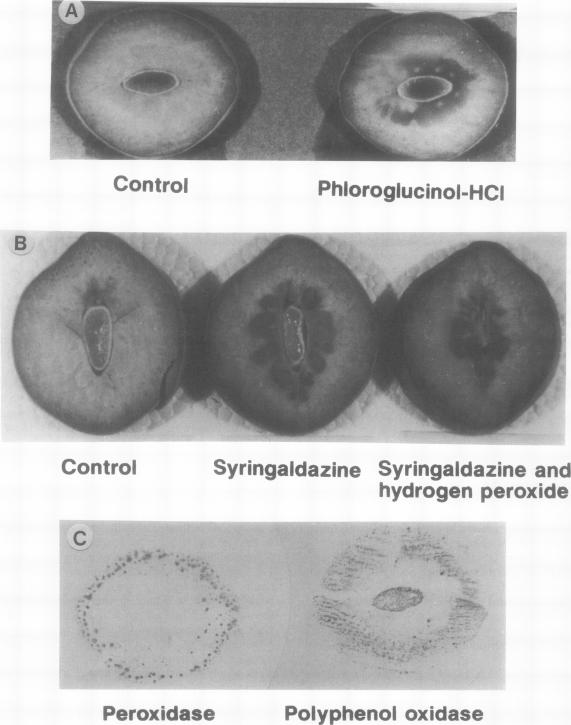
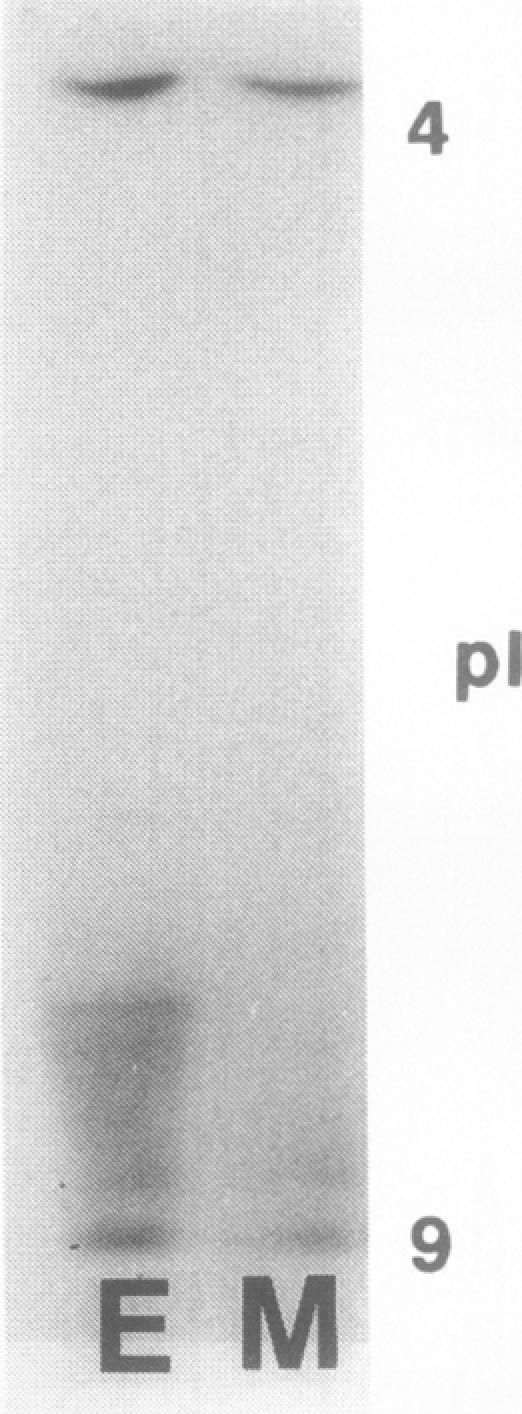
Developing peach (Prunus persica L. Batsch ;Redskin') fruit were used to characterize the role of peroxidases in lignification. During development, the endocarp of these drupes becomes lignified while the mesocarp remains parenchymatous. Acidic peroxidase from lignifying endocarp were similar to those of the fleshy mesocarp. The endocarp had a larger amount and number of basic peroxidases than the mesocarp. Cultured peach leaf cells are thought to be lignified because their walls give a positive reaction with phloroglucinol-HCI. These cells also secreted a basic peroxidase. Peroxidases were difficult to extract from endocarp tissue as they lignified. This was also demonstrated by tissue printing on nitrocellulose. Flesh, but not endocarp peroxidase was evident in tissue prints. This suggests that tissue printing may fail to reveal the presence of enzymes which are firmly attached to the cell.
采用发育中的桃果实(Prunus persica L. Batsch;Redskin’)来阐明过氧化物酶在木质化过程中的作用。在发育过程中,这些核果的内果皮木质化,而中果皮保持为薄壁组织。木质化内果皮中的酸性过氧化物酶与肉质中果皮中的相似。内果皮的碱性过氧化物酶含量和数量均大于中果皮。由于细胞壁与间苯三酚-HCI 反应呈阳性,培养的桃叶细胞被认为是木质化的。这些细胞还分泌碱性过氧化物酶。由于内果皮组织木质化,过氧化物酶难以从其中提取。这一点也通过硝酸纤维素上的组织印迹得到证实。组织印迹中仅出现果肉过氧化物酶,而无内果皮过氧化物酶。这表明组织印迹可能无法揭示与细胞紧密结合的酶的存在。