Fitzgerald Kevin, Tertyshnikova Svetlana, Moore Lisa, Bjerke Lynn, Burley Ben, Cao Jian, Carroll Pamela, Choy Robert, Doberstein Steve, Dubaquie Yves, Franke Yvonne, Kopczynski Jenny, Korswagen Hendrik, Krystek Stanley R, Lodge Nicholas J, Plasterk Ronald, Starrett John, Stouch Terry, Thalody George, Wayne Honey, van der Linden Alexander, Zhang Yongmei, Walker Stephen G, Cockett Mark, Wardwell-Swanson Judi, Ross-Macdonald Petra, Kindt Rachel M
Bristol-Myers Squibb Pharmaceutical Research Institute, Pennington, New Jersey, United States of America.
PLoS Genet. 2006 Apr;2(4):e57. doi: 10.1371/journal.pgen.0020057. Epub 2006 Apr 21.
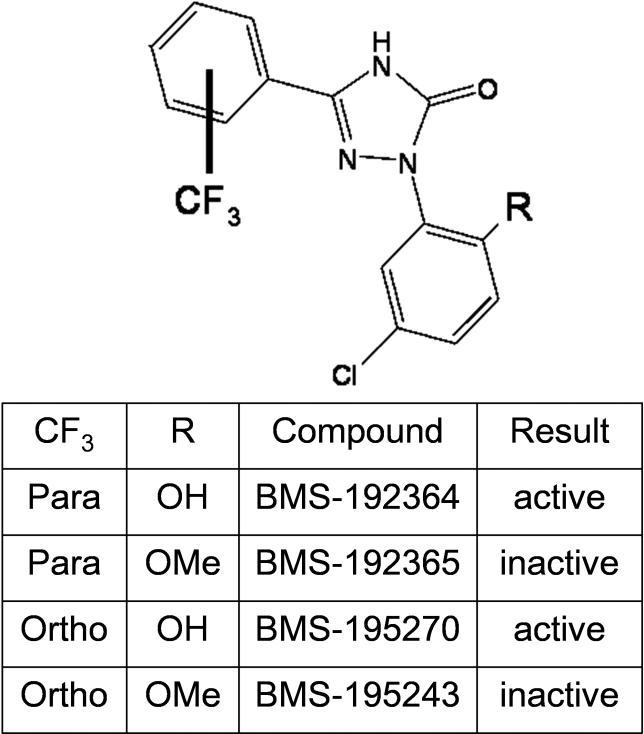
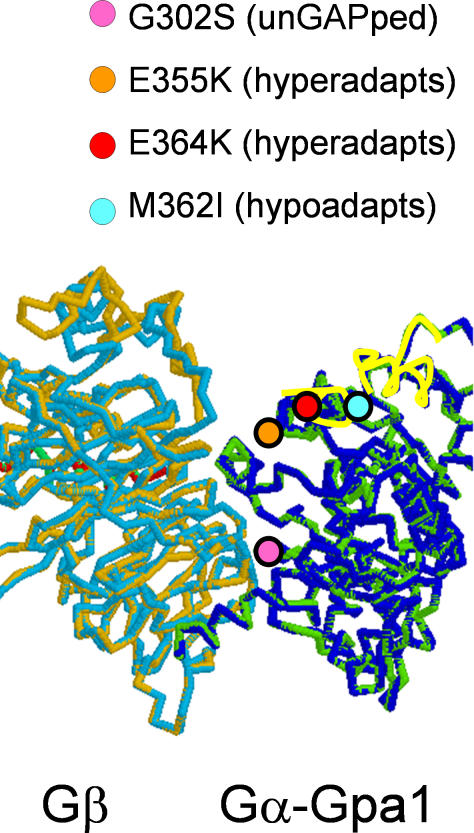
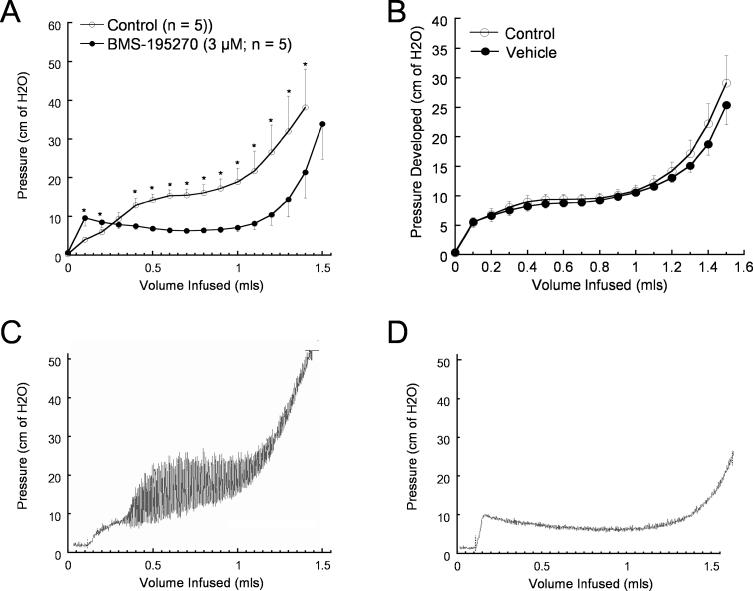
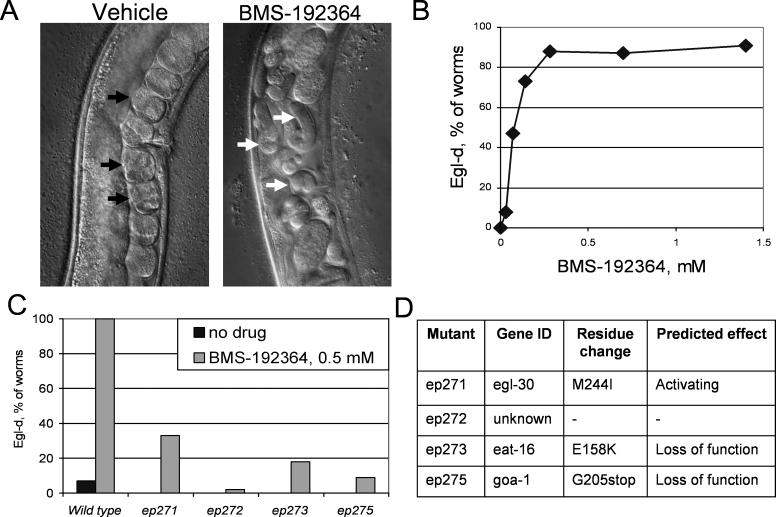
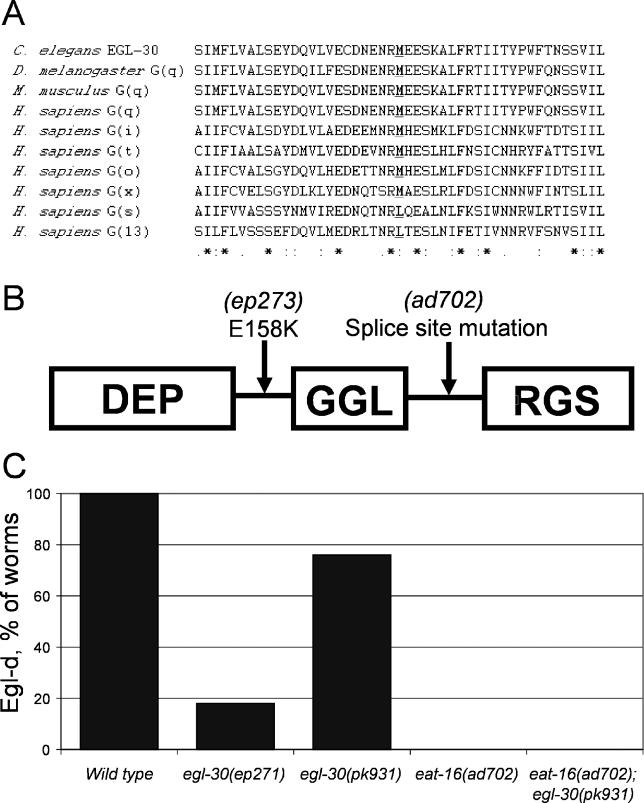
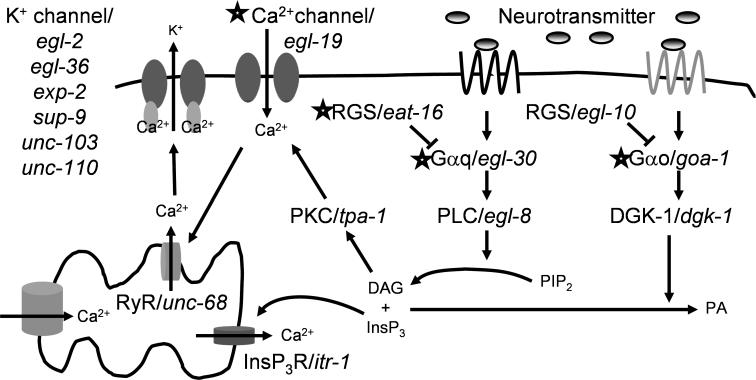
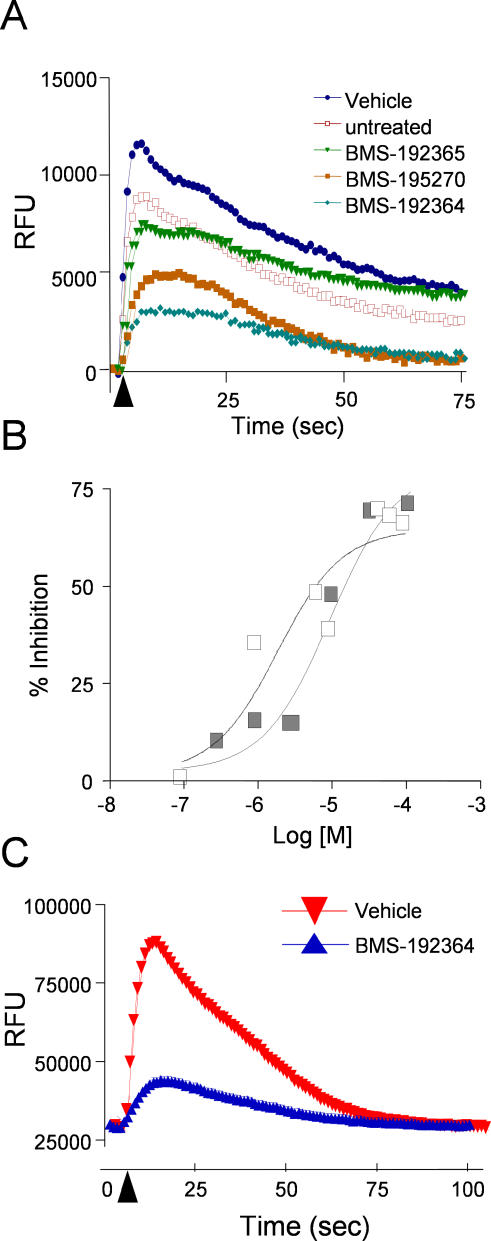
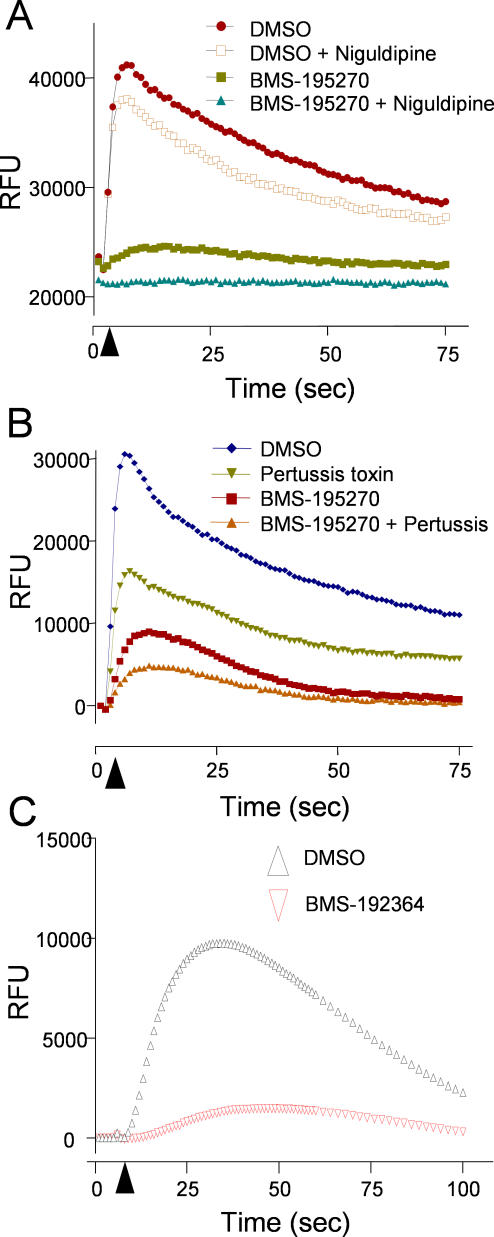
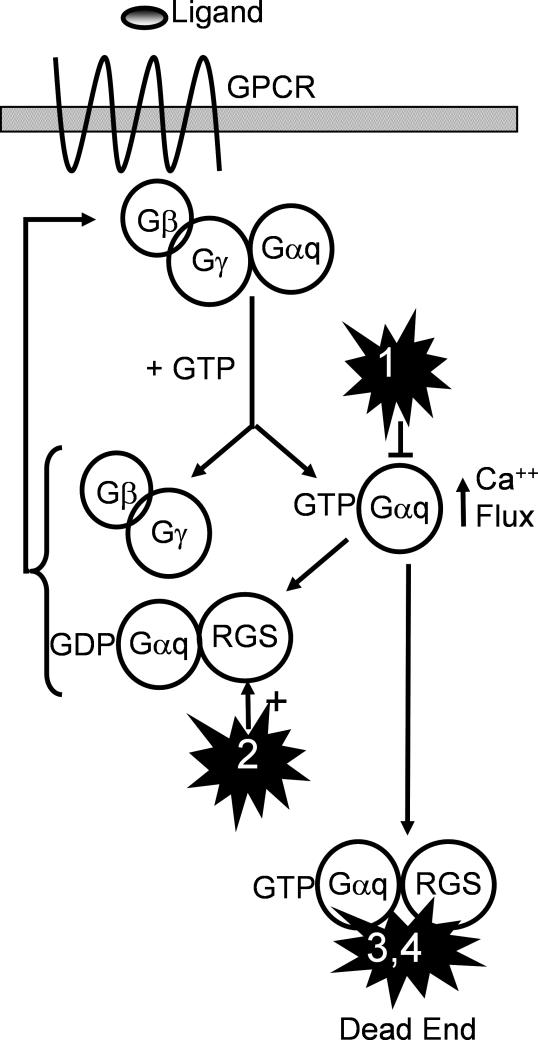
We report here on a chemical genetic screen designed to address the mechanism of action of a small molecule. Small molecules that were active in models of urinary incontinence were tested on the nematode Caenorhabditis elegans, and the resulting phenotypes were used as readouts in a genetic screen to identify possible molecular targets. The mutations giving resistance to compound were found to affect members of the RGS protein/G-protein complex. Studies in mammalian systems confirmed that the small molecules inhibit muscarinic G-protein coupled receptor (GPCR) signaling involving G-alphaq (G-protein alpha subunit). Our studies suggest that the small molecules act at the level of the RGS/G-alphaq signaling complex, and define new mutations in both RGS and G-alphaq, including a unique hypo-adapation allele of G-alphaq. These findings suggest that therapeutics targeted to downstream components of GPCR signaling may be effective for treatment of diseases involving inappropriate receptor activation.
我们在此报告一项化学遗传学筛选,旨在探究一种小分子的作用机制。在尿失禁模型中具有活性的小分子在秀丽隐杆线虫上进行了测试,所产生的表型被用作遗传筛选中的读数,以识别可能的分子靶点。发现对化合物具有抗性的突变会影响RGS蛋白/G蛋白复合物的成员。在哺乳动物系统中的研究证实,这些小分子抑制涉及Gαq(G蛋白α亚基)的毒蕈碱型G蛋白偶联受体(GPCR)信号传导。我们的研究表明,这些小分子作用于RGS/Gαq信号复合物水平,并确定了RGS和Gαq中的新突变,包括Gαq的一个独特的低适应性等位基因。这些发现表明,靶向GPCR信号下游成分的疗法可能对治疗涉及不适当受体激活的疾病有效。