Femling Jon K, Cherny Vladimir V, Morgan Deri, Rada Balázs, Davis A Paige, Czirják Gabor, Enyedi Peter, England Sarah K, Moreland Jessica G, Ligeti Erzsébet, Nauseef William M, DeCoursey Thomas E
Inflammation Program, Roy J. and Luille A. Carver College of Medicine, University of Iowa, Coralville, 52241, USA.
J Gen Physiol. 2006 Jun;127(6):659-72. doi: 10.1085/jgp.200609504. Epub 2006 May 15.
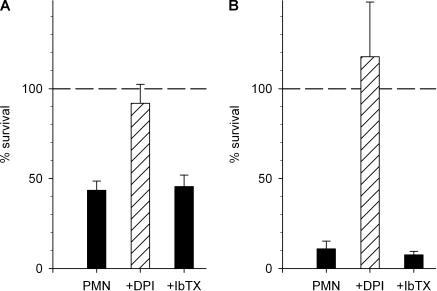
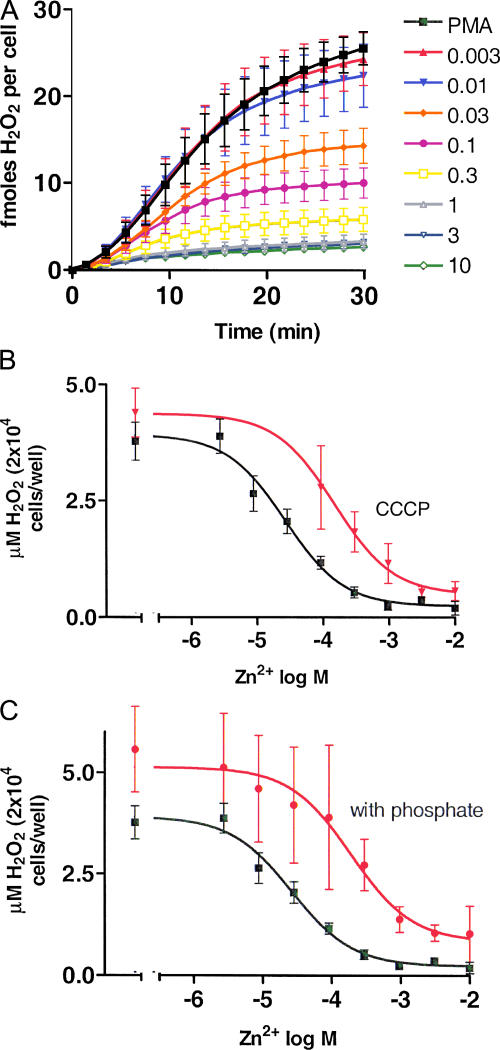
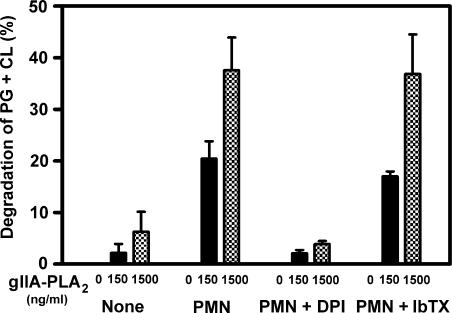
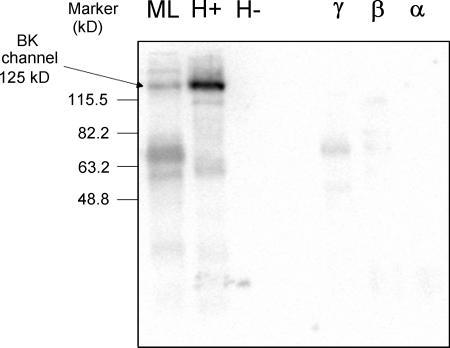
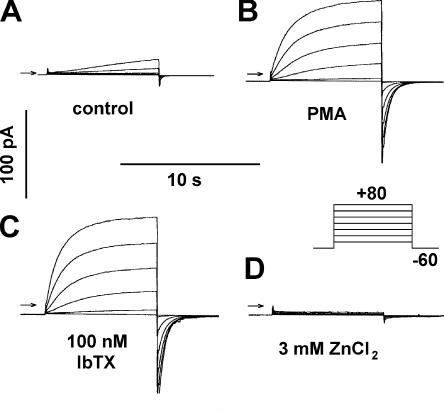
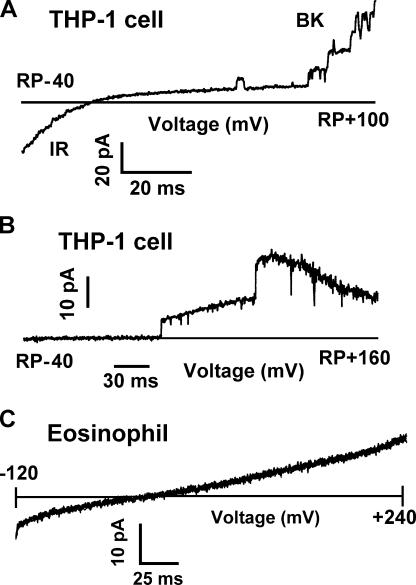
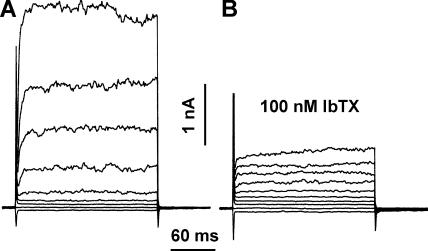
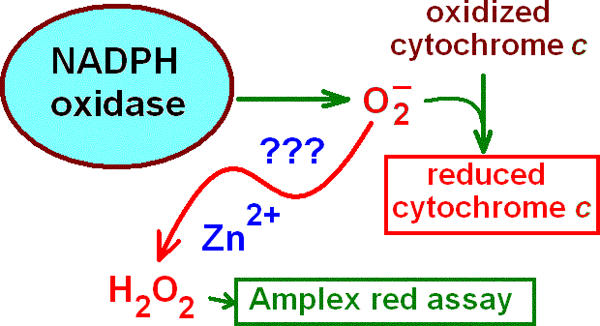
Electrophysiological events are of central importance during the phagocyte respiratory burst, because NADPH oxidase is electrogenic and voltage sensitive. We investigated the recent suggestion that large-conductance, calcium-activated K(+) (BK) channels, rather than proton channels, play an essential role in innate immunity (Ahluwalia, J., A. Tinker, L.H. Clapp, M.R. Duchen, A.Y. Abramov, S. Page, M. Nobles, and A.W. Segal. 2004. Nature. 427:853-858). In PMA-stimulated human neutrophils or eosinophils, we did not detect BK currents, and neither of the BK channel inhibitors iberiotoxin or paxilline nor DPI inhibited any component of outward current. BK inhibitors did not inhibit the killing of bacteria, nor did they affect NADPH oxidase-dependent degradation of bacterial phospholipids by extracellular gIIA-PLA(2) or the production of superoxide anion (O(2*)(-)). Moreover, an antibody against the BK channel did not detect immunoreactive protein in human neutrophils. A required role for voltage-gated proton channels is demonstrated by Zn(2+) inhibition of NADPH oxidase activity assessed by H(2)O(2) production, thus validating previous studies showing that Zn(2+) inhibited O(2*)(-) production when assessed by cytochrome c reduction. In conclusion, BK channels were not detected in human neutrophils or eosinophils, and BK inhibitors did not impair antimicrobial activity. In contrast, we present additional evidence that voltage-gated proton channels serve the essential role of charge compensation during the respiratory burst.
在吞噬细胞呼吸爆发过程中,电生理事件至关重要,因为NADPH氧化酶具有电活性且对电压敏感。我们研究了最近的一种观点,即大电导钙激活钾(BK)通道而非质子通道在先天免疫中起关键作用(阿卢瓦利亚,J.,A.廷克,L.H.克拉普,M.R.杜申,A.Y.阿布拉莫夫,S.佩奇,M.诺布尔斯,和A.W.西格尔。2004年。《自然》。427:853 - 858)。在佛波酯刺激的人中性粒细胞或嗜酸性粒细胞中,我们未检测到BK电流,BK通道抑制剂iberiotoxin或paxilline以及二苯基碘(DPI)均未抑制外向电流的任何成分。BK抑制剂既不抑制细菌杀伤,也不影响细胞外gIIA - PLA(2)对细菌磷脂的NADPH氧化酶依赖性降解或超氧阴离子(O(2* - ))的产生。此外,抗BK通道抗体在人中性粒细胞中未检测到免疫反应性蛋白。通过锌离子(Zn(2 + ))对基于过氧化氢(H(2)O(2))产生评估的NADPH氧化酶活性的抑制,证明了电压门控质子通道的必要作用,从而验证了先前的研究,即当通过细胞色素c还原评估时,Zn(2 + )抑制O(2* - )的产生。总之,在人中性粒细胞或嗜酸性粒细胞中未检测到BK通道,BK抑制剂也不损害抗菌活性。相比之下,我们提供了额外的证据表明电压门控质子通道在呼吸爆发过程中起到电荷补偿的关键作用。