Balcells Maria Elvira, Thomas Sara L, Godfrey-Faussett Peter, Grant Alison D
Clinical Research Unit, Department of Infectious and Tropical Diseases, London School of Hygiene and Tropical Medicine, Keppel Street, London, United Kingdom.
Emerg Infect Dis. 2006 May;12(5):744-51. doi: 10.3201/eid1205.050681.
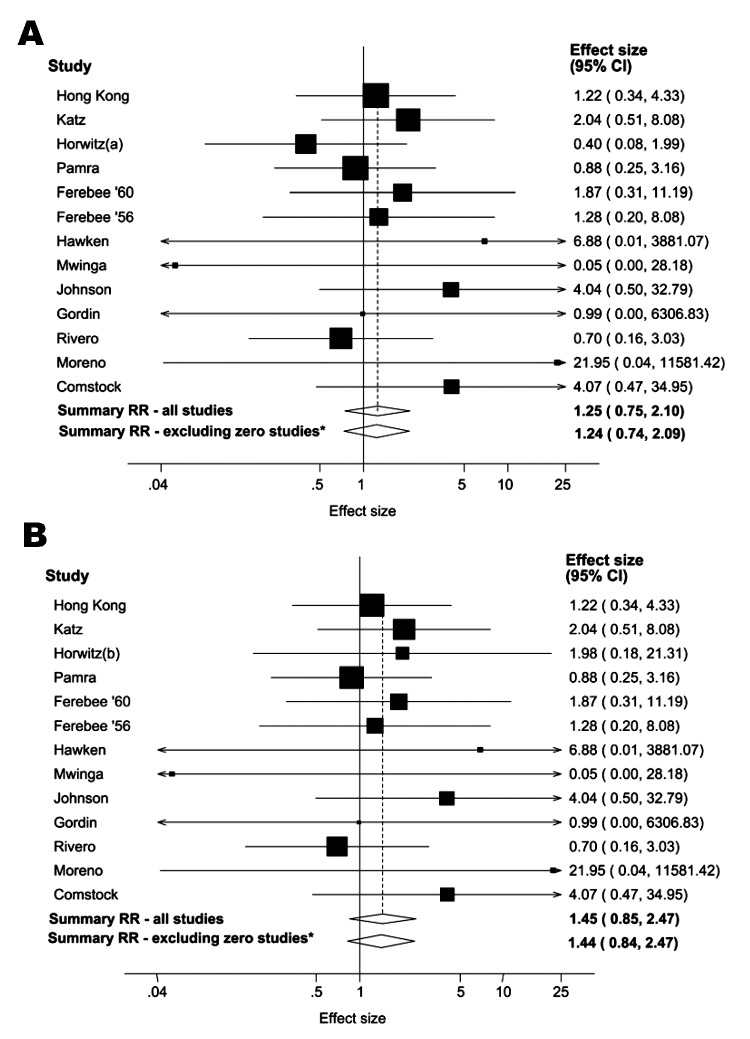
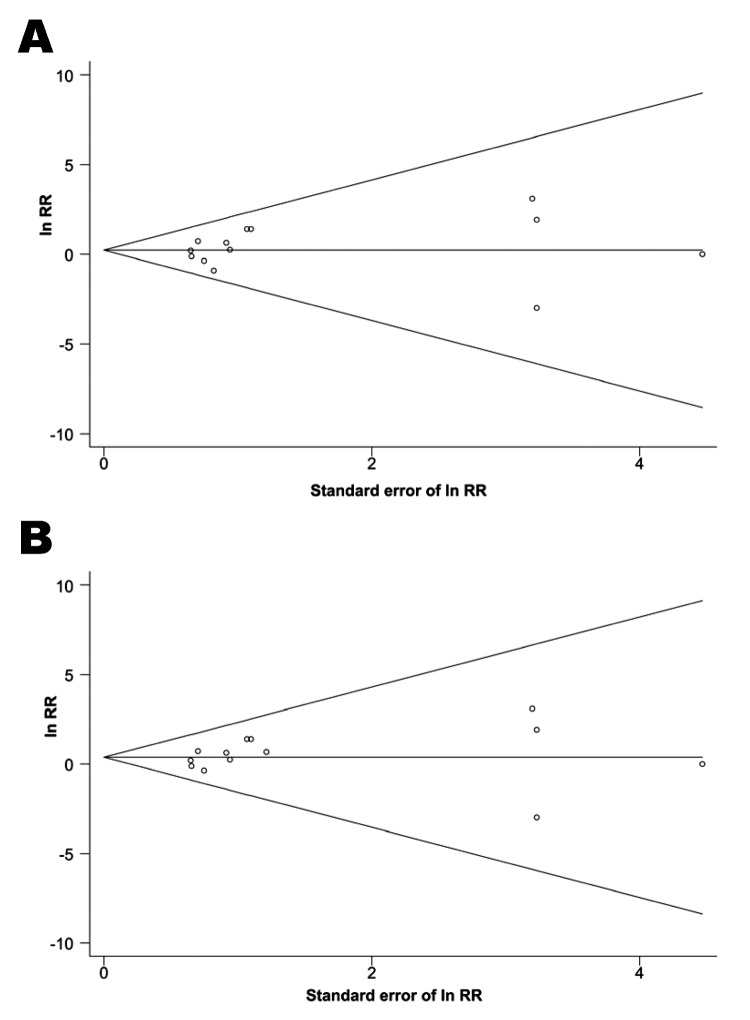
In the context of tuberculosis (TB) resurgence, isoniazid preventive therapy (IPT) is increasingly promoted, but concerns about the risk for development of isoniazid-resistant tuberculosis may hinder its widespread implementation. We conducted a systematic review of data published since 1951 to assess the effect of primary IPT on the risk for isoniazid-resistant TB. Different definitions of isoniazid resistance were used, which affected summary effect estimates; we report the most consistent results. When all 13 studies (N = 18,095 persons in isoniazid groups and N = 17,985 persons in control groups) were combined, the summary relative risk for resistance was 1.45 (95% confidence interval 0.85-2.47). Results were similar when studies of HIV-uninfected and HIV-infected persons were considered separately. Analyses were limited by small numbers and incomplete testing of isolates, but findings do not exclude an increased risk for isoniazid-resistant TB after IPT. The diagnosis of active TB should be excluded before IPT. Continued surveillance for isoniazid resistance is essential.
在结核病(TB)卷土重来的背景下,异烟肼预防性治疗(IPT)得到了越来越多的推广,但对异烟肼耐药结核病发生风险的担忧可能会阻碍其广泛应用。我们对1951年以来发表的数据进行了系统评价,以评估原发性IPT对异烟肼耐药结核病风险的影响。使用了不同的异烟肼耐药定义,这影响了汇总效应估计值;我们报告了最一致的结果。当将所有13项研究(异烟肼组18,095人,对照组17,985人)合并时,耐药的汇总相对风险为1.45(95%置信区间0.85 - 2.47)。分别考虑未感染HIV和感染HIV者的研究时,结果相似。分析受到病例数少和分离株检测不完整的限制,但研究结果不排除IPT后异烟肼耐药结核病风险增加的可能性。在进行IPT之前应排除活动性结核病的诊断。持续监测异烟肼耐药情况至关重要。