May Olivia L, Hill David L
Department of Psychology, University of Virginia, Charlottesville, Virginia 22904-4400, USA.
J Comp Neurol. 2006 Aug 1;497(4):658-69. doi: 10.1002/cne.21023.
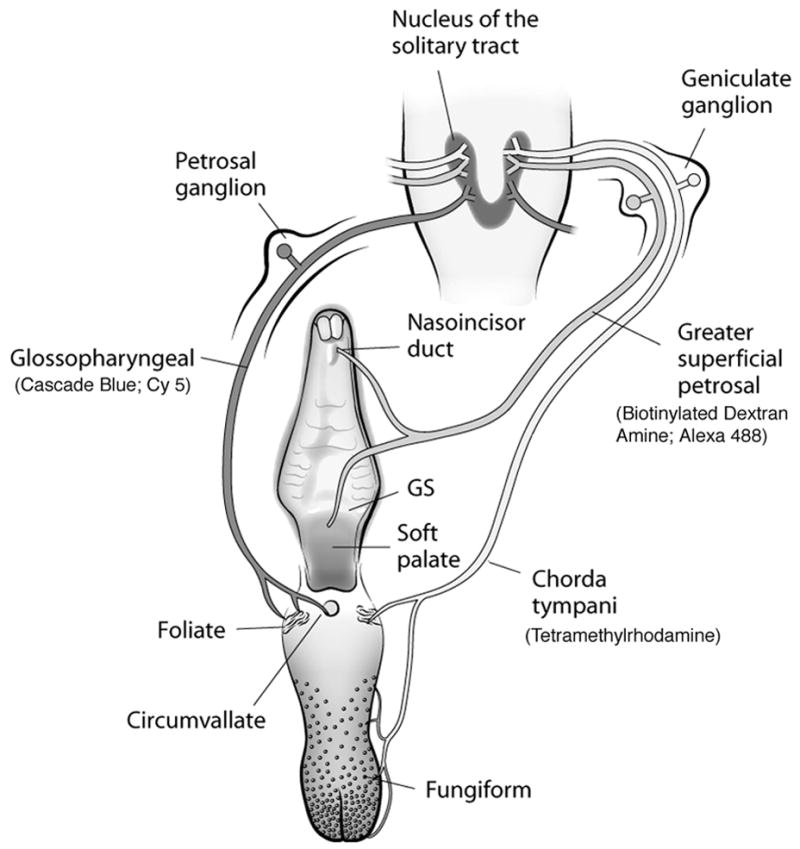
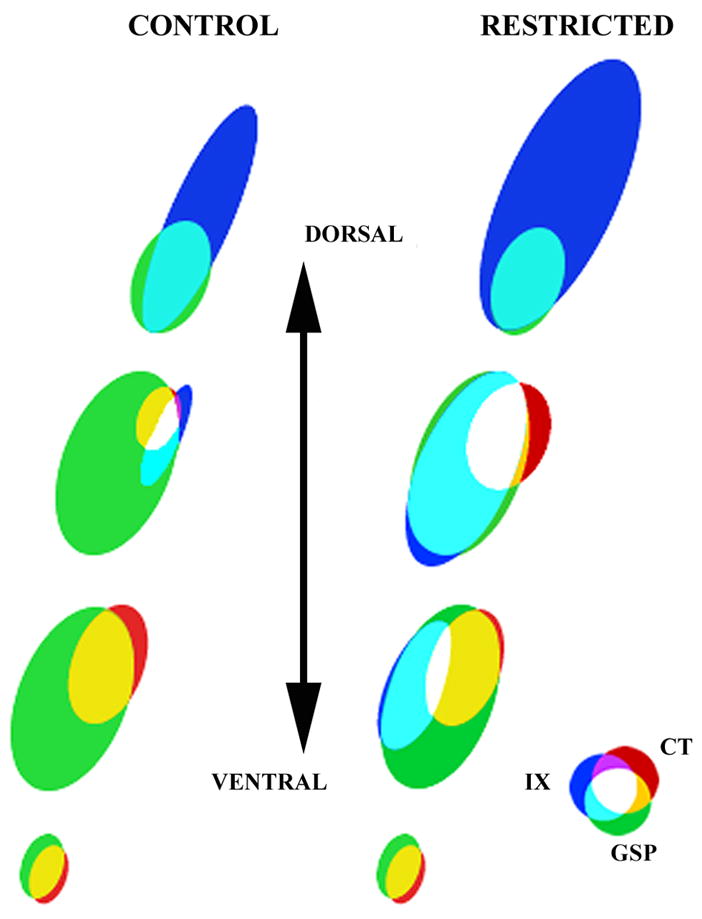
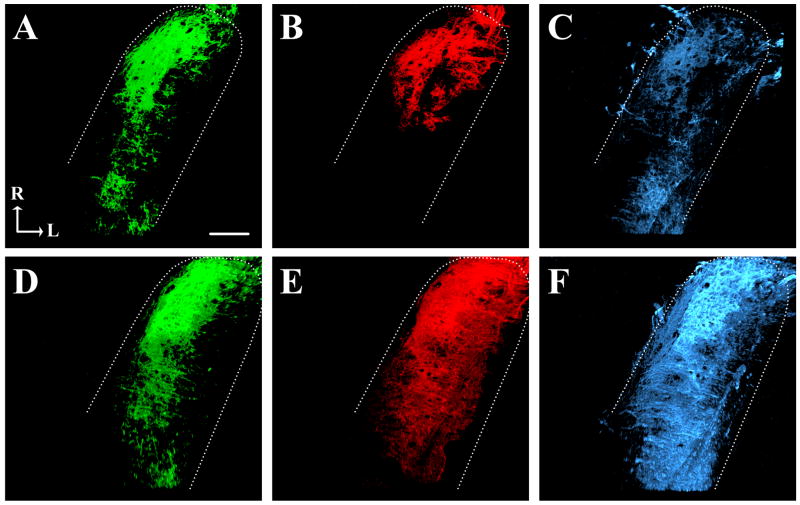
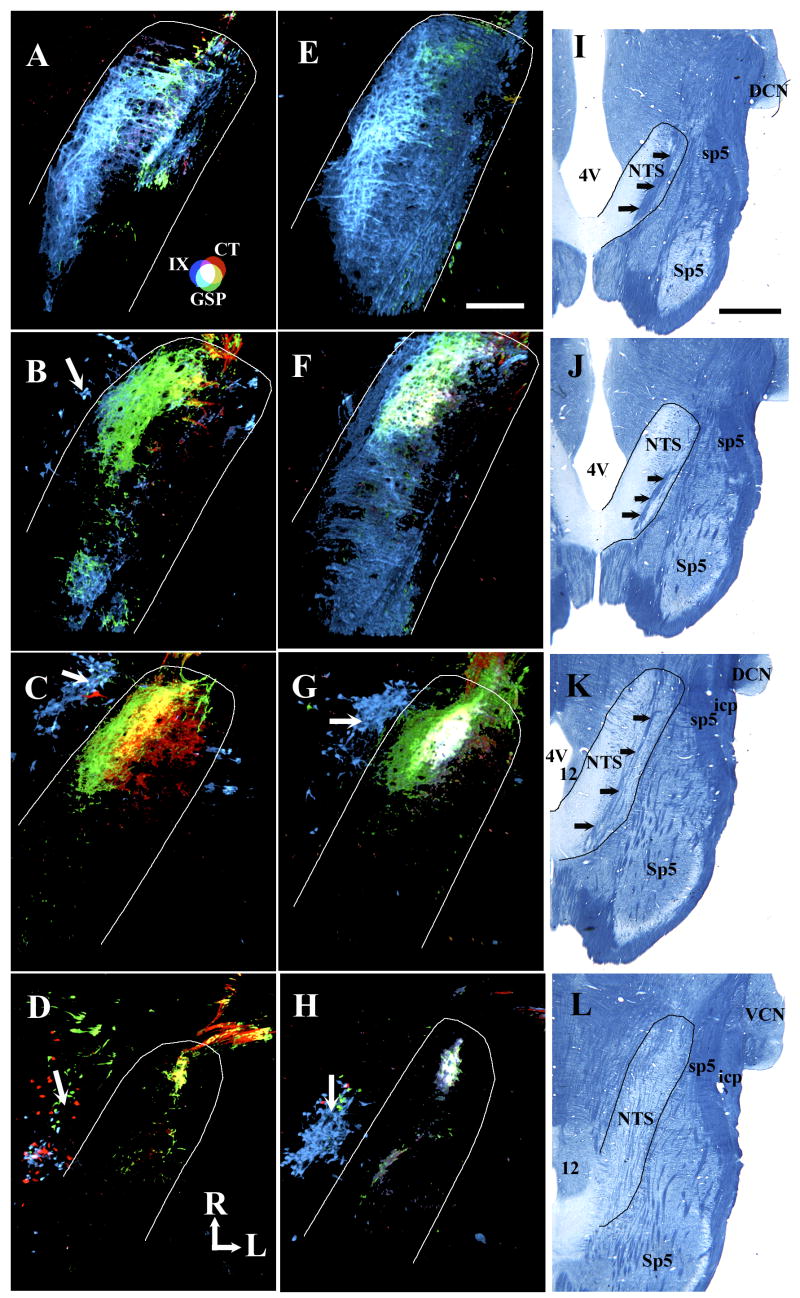
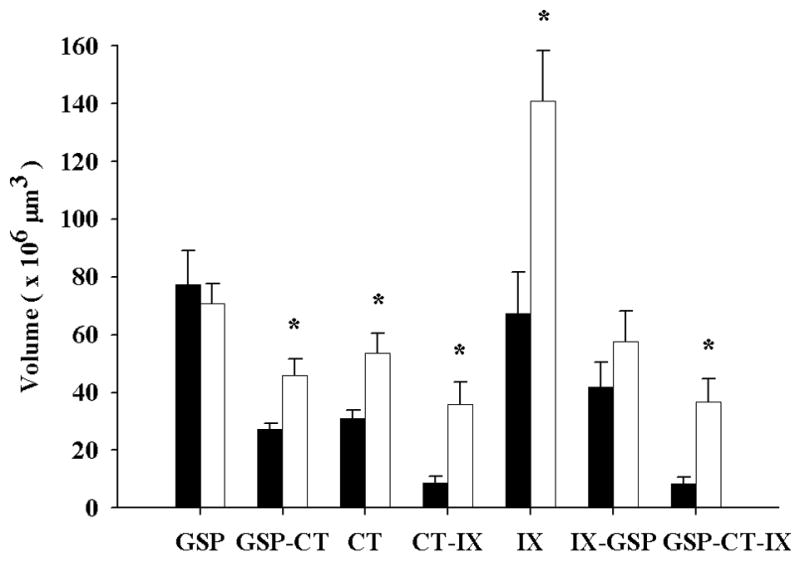
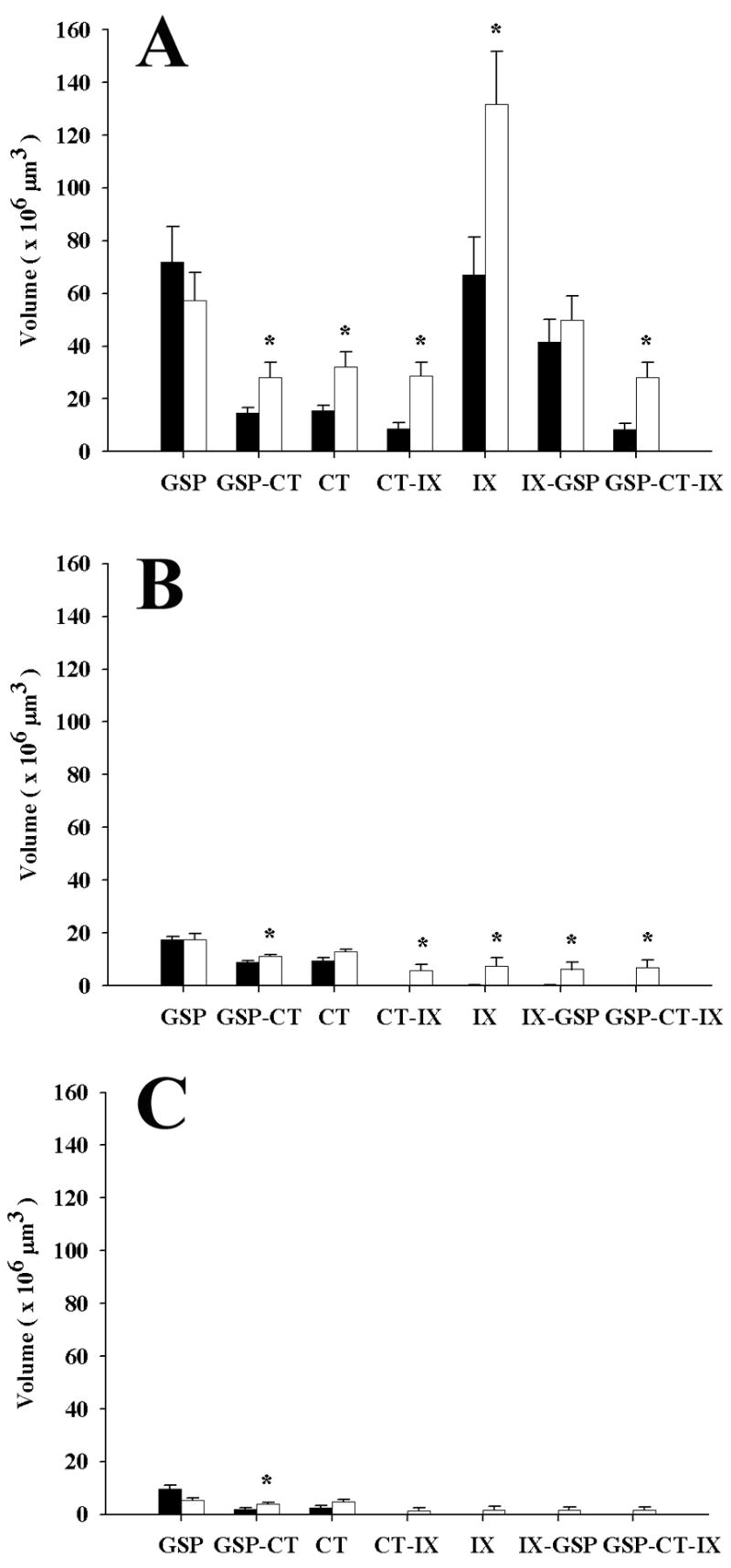
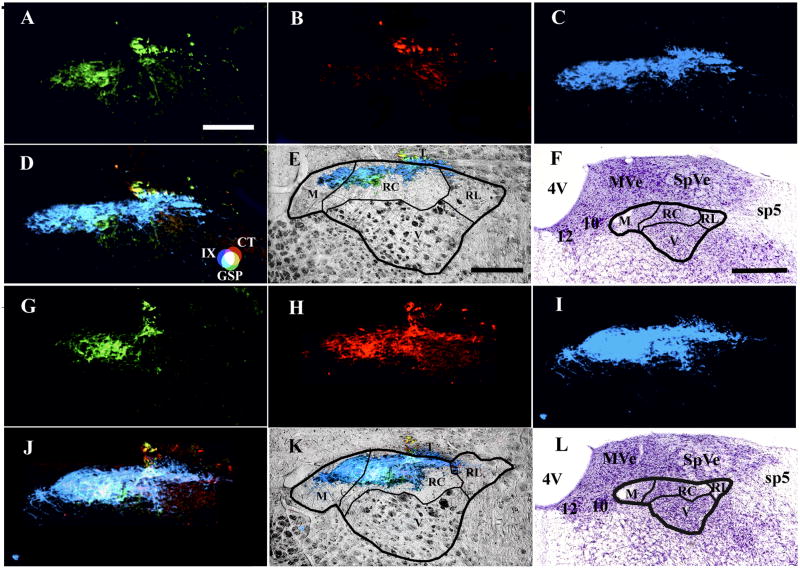
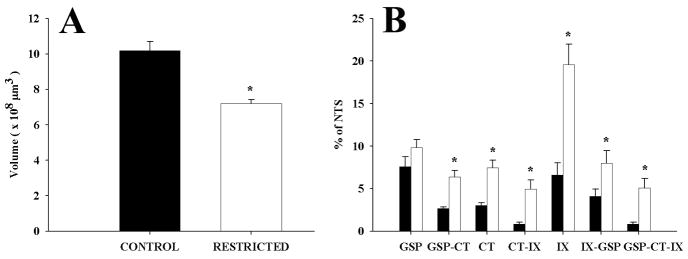
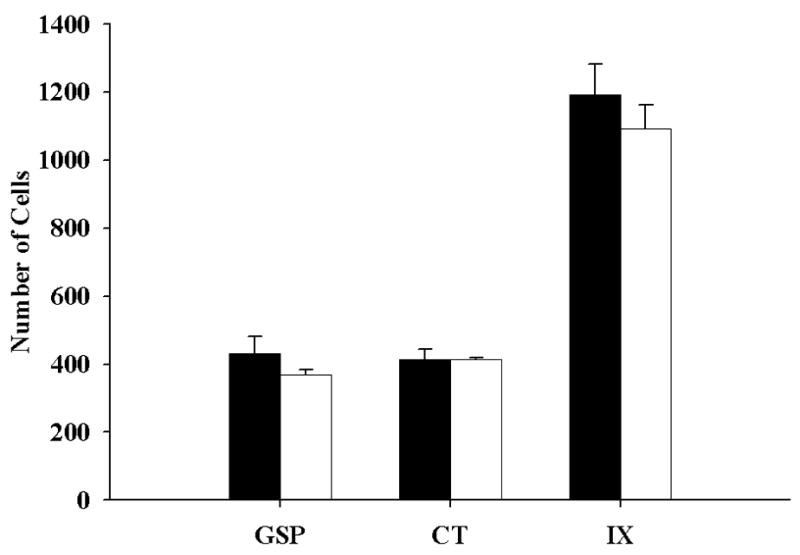
Early dietary sodium restriction has profound influences on the organization of the gustatory brainstem. However, the anatomical relationships among multiple gustatory nerve inputs have not been examined. Through the use of triple-fluorescence labeling and confocal laser microscopy, terminal fields of the greater superficial petrosal (GSP), chorda tympani (CT), and glossopharyngeal (IX) nerves were visualized concurrently in the nucleus of the solitary tract (NTS) of developmentally sodium-restricted and control rats. Dietary sodium restriction during pre- and postnatal development resulted in a twofold increase in the volume of both the CT and the IX nerve terminal fields but did not affect the volume of the GSP terminal field. In controls, these nerve terminal fields overlapped considerably. The dietary manipulation significantly increased the overlapping zones among terminal fields, resulting in an extension of CT and IX fields past their normal boundaries. The differences in terminal field volumes were exaggerated when expressed relative to the respective NTS volumes. Furthermore, increased terminal field volumes could not be attributed to an increase in the number of afferents because ganglion cell counts did not differ between groups. Taken together, selective increases in terminal field volume and ensuing overlap among terminal fields suggest an increased convergence of these gustatory nerve terminals onto neurons in the NTS. The genesis of such convergence is likely related to disruption of cellular and molecular mechanisms during the development of individual terminal fields, the consequences of which have implications for corresponding functional and behavioral alterations.
早期饮食中钠的限制对味觉脑干的组织结构有深远影响。然而,多种味觉神经输入之间的解剖关系尚未得到研究。通过使用三重荧光标记和共聚焦激光显微镜,在发育过程中钠限制和对照大鼠的孤束核(NTS)中同时观察到岩大浅神经(GSP)、鼓索神经(CT)和舌咽神经(IX)的终末场。产前和产后发育期间的饮食钠限制导致CT和IX神经终末场的体积增加了两倍,但不影响GSP终末场的体积。在对照组中,这些神经终末场有相当大的重叠。饮食干预显著增加了终末场之间的重叠区域,导致CT和IX场延伸到其正常边界之外。当相对于各自的NTS体积表示时,终末场体积的差异被放大。此外,终末场体积的增加不能归因于传入神经数量的增加,因为两组之间的神经节细胞计数没有差异。综上所述,终末场体积的选择性增加以及终末场之间随之而来的重叠表明这些味觉神经终末在NTS中与神经元的汇聚增加。这种汇聚的发生可能与各个终末场发育过程中细胞和分子机制的破坏有关,其后果对相应的功能和行为改变有影响。