Slack Cathy, Somers W Gregory, Sousa-Nunes Rita, Chia William, Overton Paul M
Temasek Lifesciences Laboratory, The National University of Singapore, 117604, Singapore.
BMC Genet. 2006 Jun 2;7:33. doi: 10.1186/1471-2156-7-33.
The asymmetric segregation of determinants during cell division is a fundamental mechanism for generating cell fate diversity during development. In Drosophila, neural precursors (neuroblasts) divide in a stem cell-like manner generating a larger apical neuroblast and a smaller basal ganglion mother cell. The cell fate determinant Prospero and its adapter protein Miranda are asymmetrically localized to the basal cortex of the dividing neuroblast and segregated into the GMC upon cytokinesis. Previous screens to identify components of the asymmetric division machinery have concentrated on embryonic phenotypes. However, such screens are reaching saturation and are limited in that the maternal contribution of many genes can mask the effects of zygotic loss of function, and other approaches will be necessary to identify further genes involved in neuroblast asymmetric division.
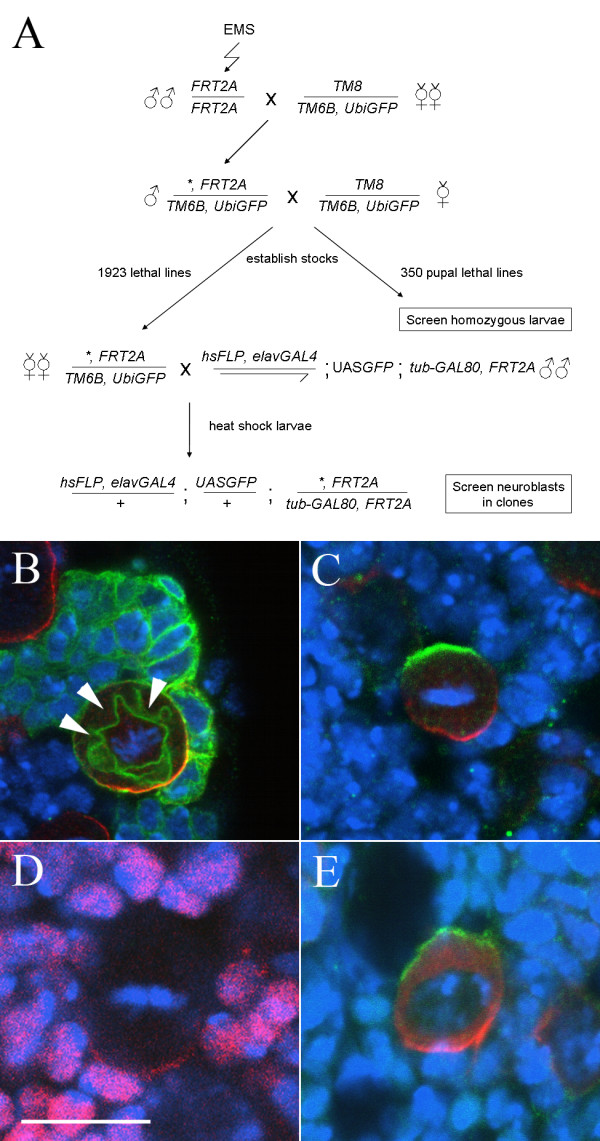
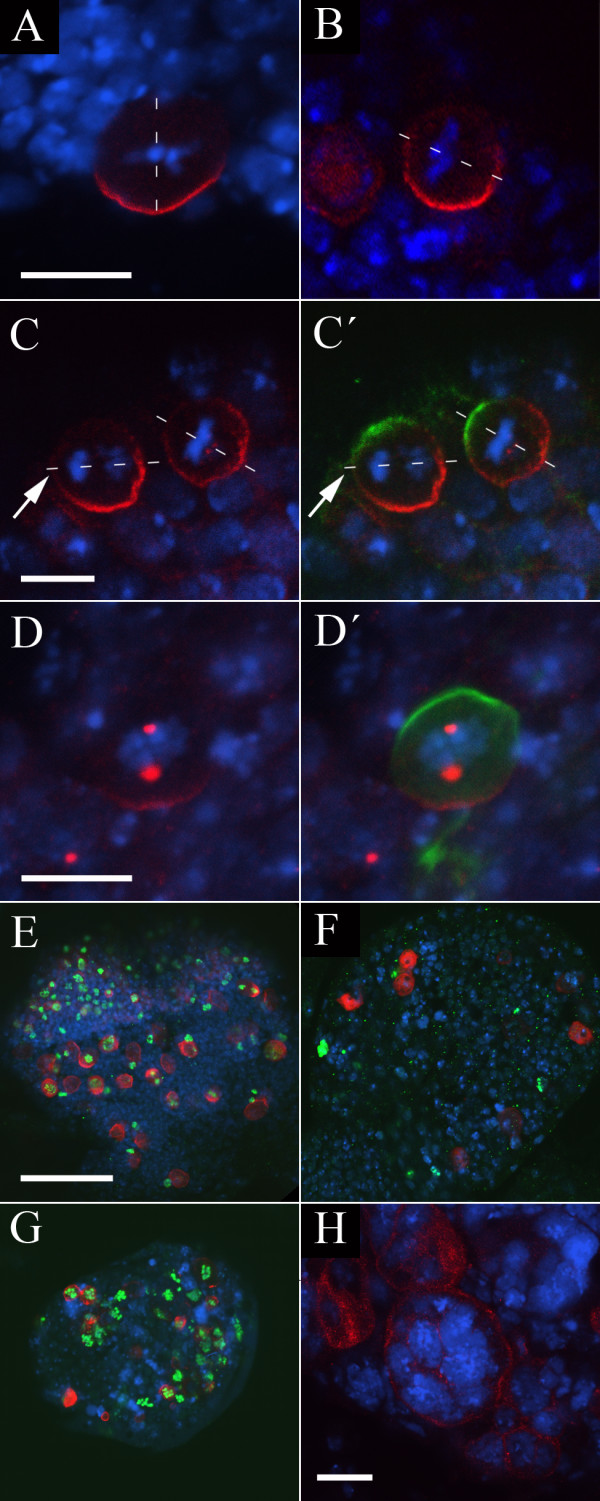
We have performed a genetic screen in the third instar larval brain using the basal localization of Miranda as a marker for neuroblast asymmetry. In addition to the examination of pupal lethal mutations, we have employed the MARCM (Mosaic Analysis with a Repressible Cell Marker) system to generate postembryonic clones of mutations with an early lethal phase. We have screened a total of 2,300 mutagenized chromosomes and isolated alleles affecting cell fate, the localization of basal determinants or the orientation of the mitotic spindle. We have also identified a number of complementation groups exhibiting defects in cell cycle progression and cytokinesis, including both novel genes and new alleles of known components of these processes.
We have identified four mutations which affect the process of neuroblast asymmetric division. One of these, mapping to the imaginal discs arrested locus, suggests a novel role for the anaphase promoting complex/cyclosome (APC/C) in the targeting of determinants to the basal cortex. The identification and analysis of the remaining mutations will further advance our understanding of the process of asymmetric cell division. We have also isolated a number of mutations affecting cell division which will complement the functional genomics approaches to this process being employed by other laboratories. Taken together, these results demonstrate the value of mosaic screens in the identification of genes involved in neuroblast division.
细胞分裂过程中决定因子的不对称分离是发育过程中产生细胞命运多样性的基本机制。在果蝇中,神经前体细胞(神经母细胞)以干细胞样方式分裂,产生一个较大的顶端神经母细胞和一个较小的基底神经节母细胞。细胞命运决定因子Prospero及其衔接蛋白Miranda不对称地定位于分裂的神经母细胞的基底皮质,并在胞质分裂时被分离到神经节母细胞中。先前用于鉴定不对称分裂机制成分的筛选集中在胚胎表型上。然而,此类筛选已接近饱和,并且存在局限性,因为许多基因的母体贡献可能掩盖合子功能丧失的影响,因此需要其他方法来鉴定更多参与神经母细胞不对称分裂的基因。
我们利用Miranda的基底定位作为神经母细胞不对称性的标记,在三龄幼虫脑中进行了遗传筛选。除了检查蛹期致死突变外,我们还采用了MARCM(可抑制细胞标记的镶嵌分析)系统来产生具有早期致死阶段的胚胎后突变克隆。我们总共筛选了2300条诱变染色体,并分离出影响细胞命运、基底决定因子定位或有丝分裂纺锤体方向的等位基因。我们还鉴定了一些在细胞周期进程和胞质分裂中表现出缺陷的互补群,包括这些过程的新基因和已知成分的新等位基因。
我们鉴定出四个影响神经母细胞不对称分裂过程的突变。其中一个定位于成虫盘停滞位点,提示后期促进复合物/细胞周期体(APC/C)在将决定因子靶向基底皮质方面具有新作用。其余突变的鉴定和分析将进一步推进我们对不对称细胞分裂过程的理解。我们还分离出一些影响细胞分裂的突变,这些突变将补充其他实验室正在采用的针对此过程的功能基因组学方法。综上所述,这些结果证明了镶嵌筛选在鉴定参与神经母细胞分裂基因方面的价值。