Bello Bruno C, Izergina Natalya, Caussinus Emmanuel, Reichert Heinrich
Biozentrum, University of Basel, CH-4056 Basel, Switzerland.
Neural Dev. 2008 Feb 19;3:5. doi: 10.1186/1749-8104-3-5.
In the mammalian brain, neural stem cells divide asymmetrically and often amplify the number of progeny they generate via symmetrically dividing intermediate progenitors. Here we investigate whether specific neural stem cell-like neuroblasts in the brain of Drosophila might also amplify neuronal proliferation by generating symmetrically dividing intermediate progenitors.
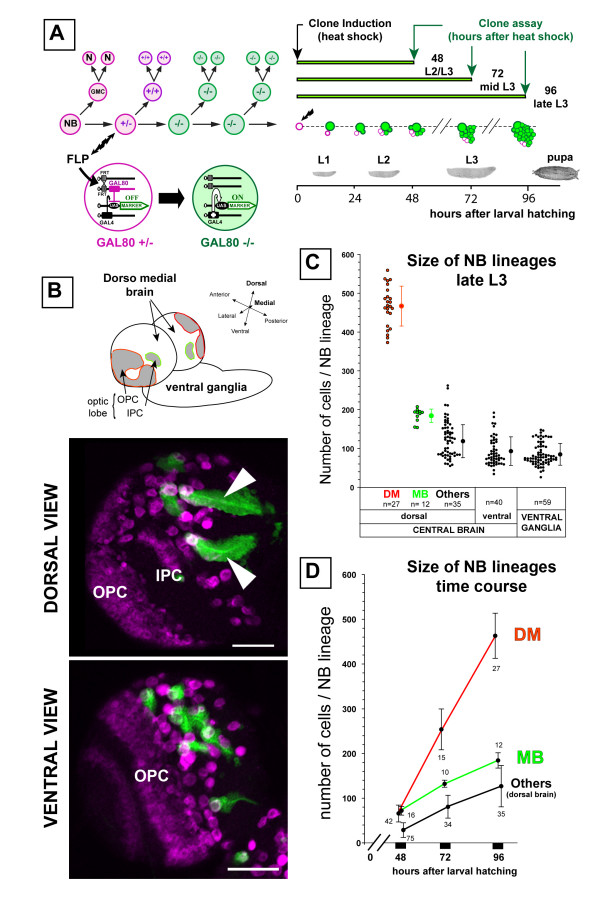
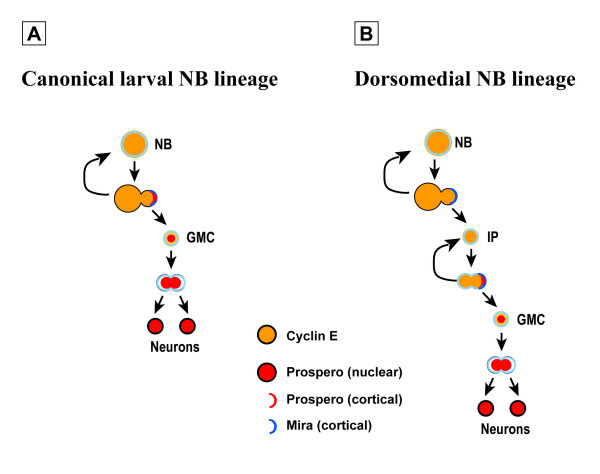
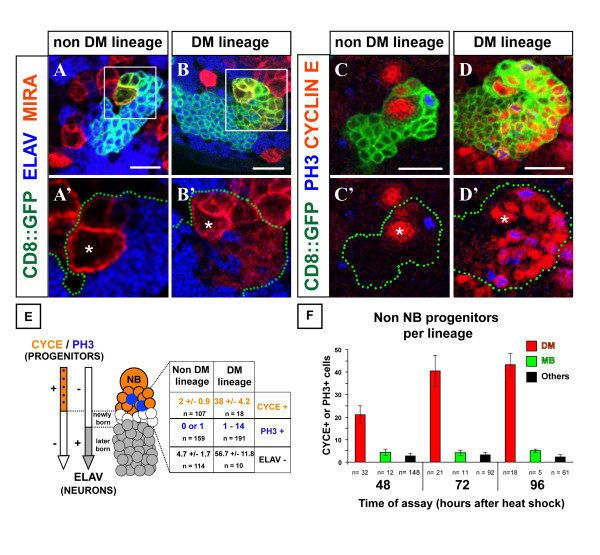
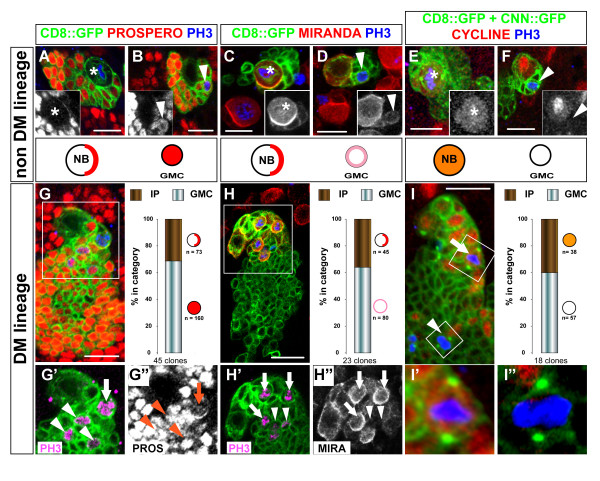
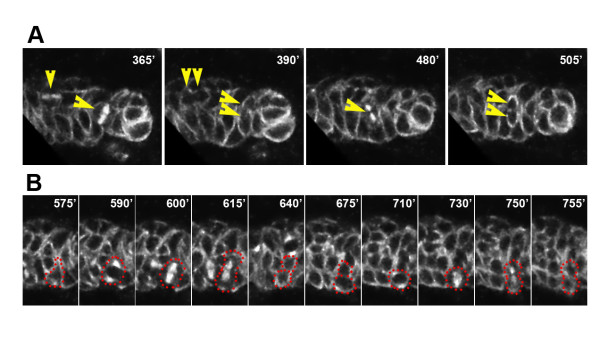
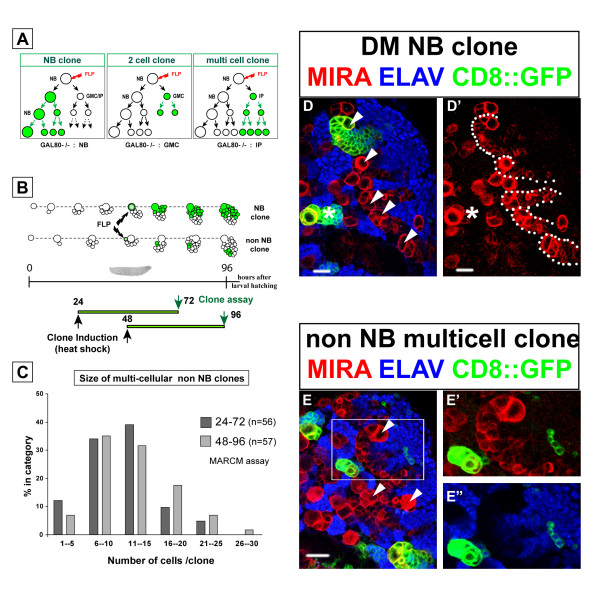
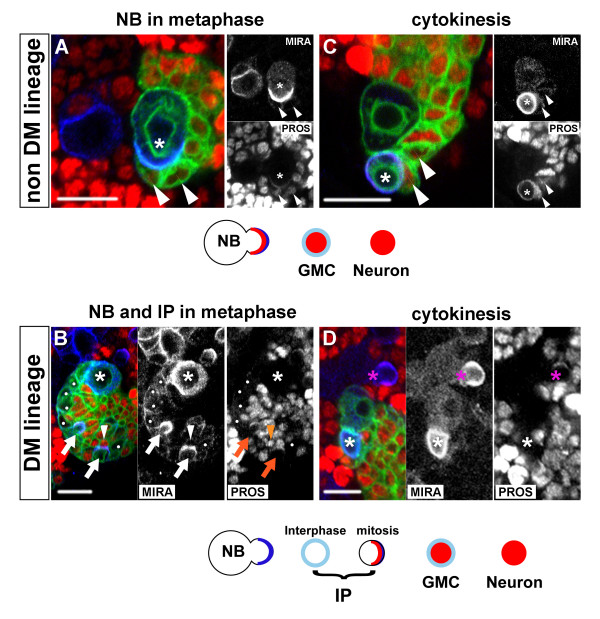
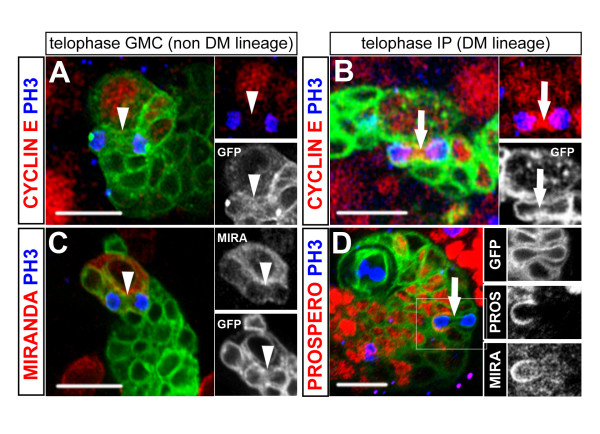
Cell lineage-tracing and genetic marker analysis show that remarkably large neuroblast lineages exist in the dorsomedial larval brain of Drosophila. These lineages are generated by brain neuroblasts that divide asymmetrically to self renew but, unlike other brain neuroblasts, do not segregate the differentiating cell fate determinant Prospero to their smaller daughter cells. These daughter cells continue to express neuroblast-specific molecular markers and divide repeatedly to produce neural progeny, demonstrating that they are proliferating intermediate progenitors. The proliferative divisions of these intermediate progenitors have novel cellular and molecular features; they are morphologically symmetrical, but molecularly asymmetrical in that key differentiating cell fate determinants are segregated into only one of the two daughter cells.
Our findings provide cellular and molecular evidence for a new mode of neurogenesis in the larval brain of Drosophila that involves the amplification of neuroblast proliferation through intermediate progenitors. This type of neurogenesis bears remarkable similarities to neurogenesis in the mammalian brain, where neural stem cells as primary progenitors amplify the number of progeny they generate through generation of secondary progenitors. This suggests that key aspects of neural stem cell biology might be conserved in brain development of insects and mammals.
在哺乳动物大脑中,神经干细胞进行不对称分裂,并且常常通过对称分裂的中间祖细胞来增加其产生的子代数量。在此,我们研究果蝇大脑中特定的神经干细胞样神经母细胞是否也可能通过产生对称分裂的中间祖细胞来扩大神经元增殖。
细胞谱系追踪和遗传标记分析表明,果蝇幼虫脑的背内侧存在非常大的神经母细胞谱系。这些谱系由不对称分裂以自我更新的脑神经元产生,但与其他脑神经元不同的是,它们不会将分化细胞命运决定因子Prospero分配给其较小的子细胞。这些子细胞继续表达神经母细胞特异性分子标记并反复分裂以产生神经后代,表明它们是增殖的中间祖细胞。这些中间祖细胞的增殖分裂具有新的细胞和分子特征;它们在形态上是对称的,但在分子上是不对称的,因为关键的分化细胞命运决定因子仅被分配到两个子细胞中的一个。
我们的研究结果为果蝇幼虫脑中一种新的神经发生模式提供了细胞和分子证据,这种模式涉及通过中间祖细胞扩大神经母细胞增殖。这种神经发生类型与哺乳动物大脑中的神经发生具有显著相似性,在哺乳动物大脑中,作为主要祖细胞的神经干细胞通过产生次级祖细胞来增加其产生的子代数量。这表明神经干细胞生物学的关键方面在昆虫和哺乳动物的大脑发育中可能是保守的。