Pennetier Sophie, Perreau Christine, Uzbekova Svetlana, Thélie Aurore, Delaleu Bernadette, Mermillod Pascal, Dalbiès-Tran Rozenn
Physiologie de la Reproduction et des Comportements, UMR 6175 Institut National de la Recherche Agronomique/Centre National de la Recherche Scientifique/Université François Rabelais de Tours/Haras Nationaux, F-37380 Nouzilly, France.
BMC Dev Biol. 2006 Jun 6;6:26. doi: 10.1186/1471-213X-6-26.
Mater (Maternal Antigen that Embryos Require), also known as Nalp5 (NACHT, leucine rich repeat and PYD containing 5), is an oocyte-specific maternal effect gene required for early embryonic development beyond the two-cell stage in mouse. We previously characterized the bovine orthologue MATER as an oocyte marker gene in cattle, and this gene was recently assigned to a QTL region for reproductive traits.
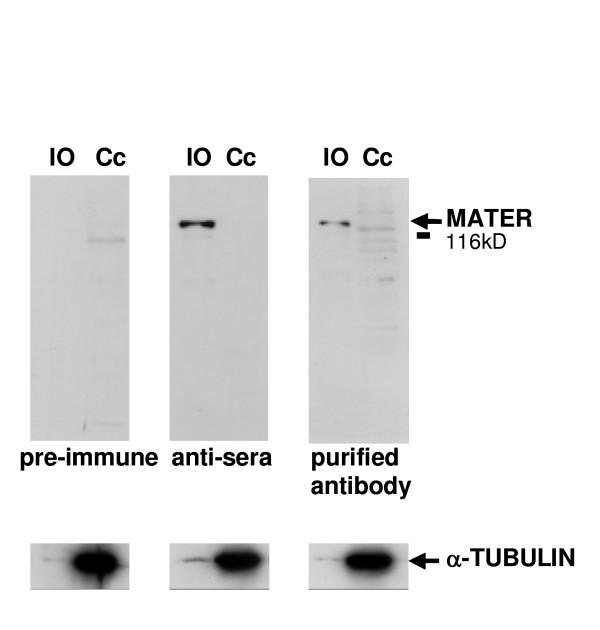
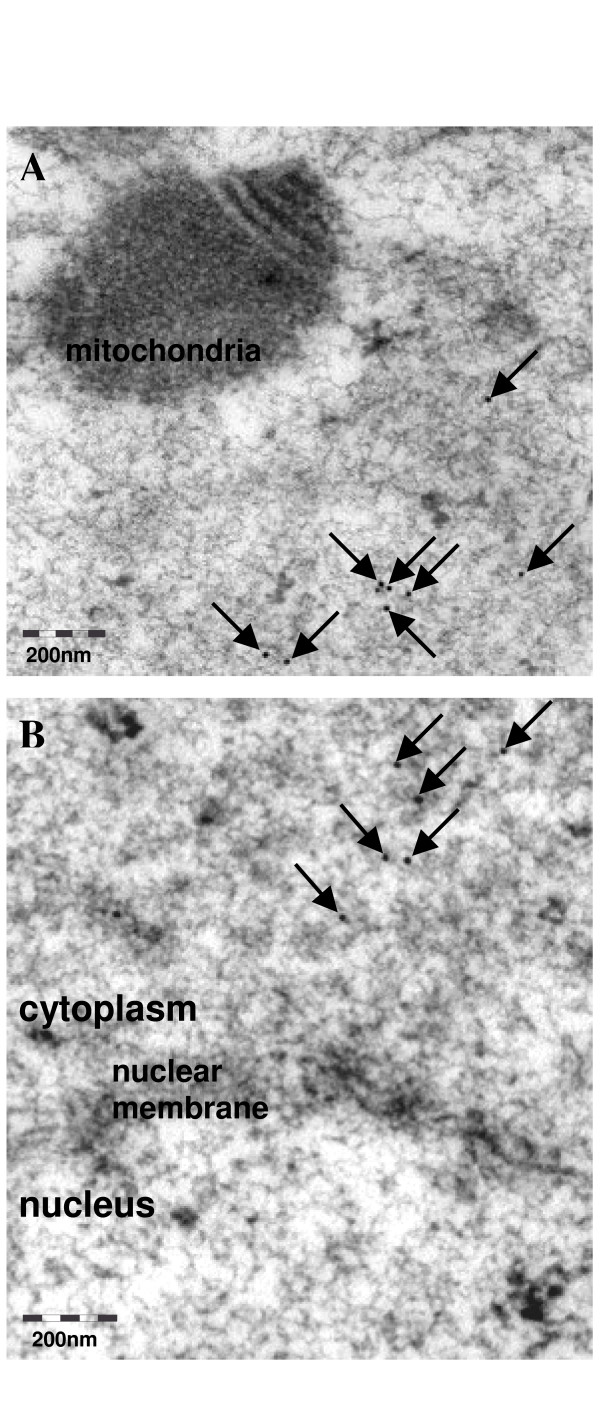
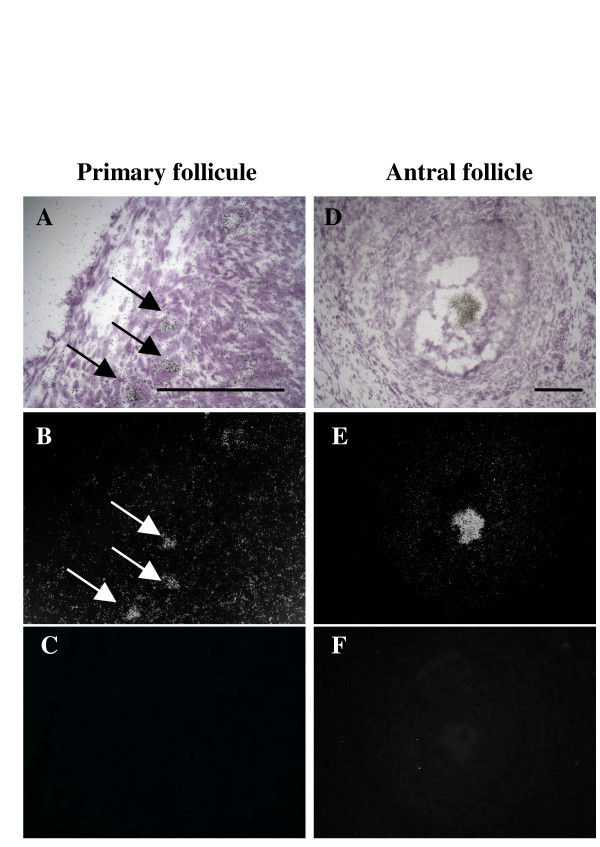
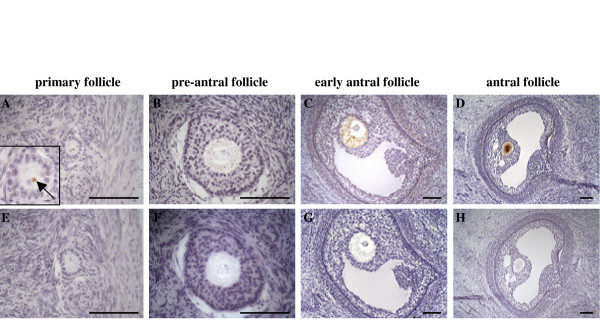
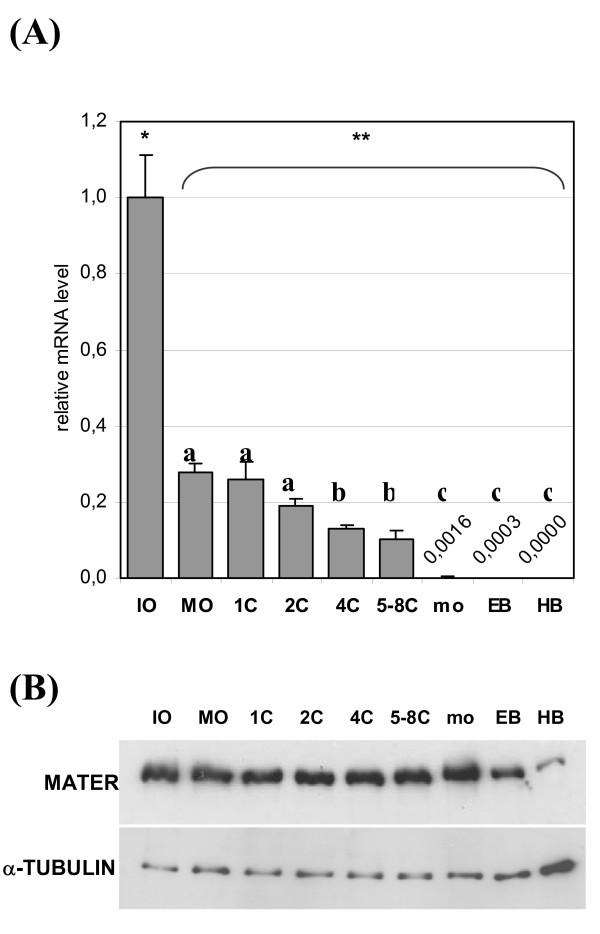
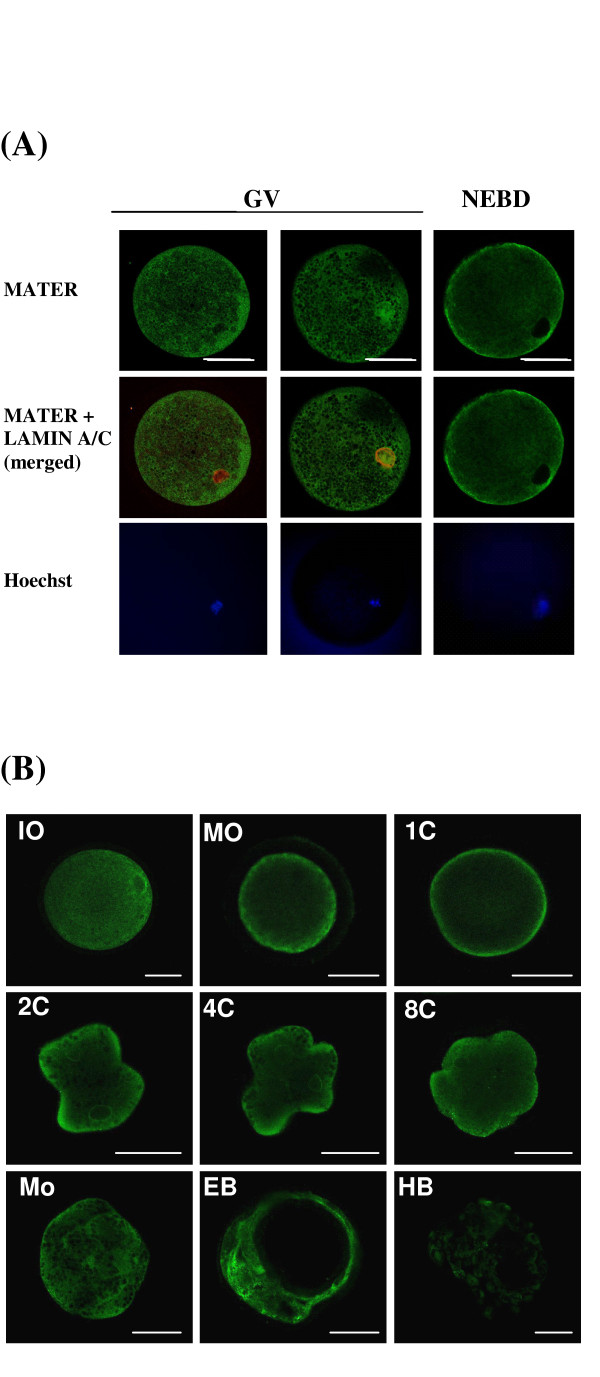
Here we have analyzed gene expression during folliculogenesis and preimplantation embryo development. In situ hybridization and immunohistochemistry on bovine ovarian section revealed that both the transcript and protein are restricted to the oocyte from primary follicles onwards, and accumulate in the oocyte cytoplasm during follicle growth. In immature oocytes, cytoplasmic, and more precisely cytosolic localization of MATER was confirmed by immunohistochemistry coupled with confocal microscopy and immunogold electron microscopy. By real-time PCR, MATER messenger RNA was observed to decrease strongly during maturation, and progressively during the embryo cleavage stages; it was hardly detected in morulae and blastocysts. The protein persisted after fertilization up until the blastocyst stage, and was mostly degraded after hatching. A similar predominantly cytoplasmic localization was observed in blastomeres from embryos up to 8-cells, with an apparent concentration near the nuclear membrane.
Altogether, these expression patterns are consistent with bovine MATER protein being an oocyte specific maternal effect factor as in mouse.
母体胚胎必需抗原(Mater,也称为含NACHT、富含亮氨酸重复序列和PYD结构域5,即Nalp5)是一种卵母细胞特异性母体效应基因,是小鼠两细胞期之后早期胚胎发育所必需的。我们之前将牛的同源物MATER鉴定为牛的卵母细胞标记基因,并且该基因最近被定位到一个生殖性状的QTL区域。
在此,我们分析了卵泡发生和植入前胚胎发育过程中的基因表达。对牛卵巢切片进行原位杂交和免疫组织化学分析显示,从初级卵泡开始,转录本和蛋白质都局限于卵母细胞,并在卵泡生长过程中在卵母细胞细胞质中积累。在未成熟卵母细胞中,通过免疫组织化学结合共聚焦显微镜和免疫金电子显微镜证实了MATER在细胞质中,更确切地说是在胞质溶胶中的定位。通过实时PCR观察到,MATER信使RNA在成熟过程中强烈下降,在胚胎分裂阶段逐渐下降;在桑椹胚和囊胚中几乎检测不到。蛋白质在受精后一直持续到囊胚阶段,孵化后大部分被降解。在8细胞期之前的胚胎卵裂球中观察到类似的主要细胞质定位,在核膜附近有明显的聚集。
总体而言,这些表达模式与牛的MATER蛋白与小鼠一样是卵母细胞特异性母体效应因子一致。