Dreyer Hermann, Steiner Gerhard
Emerging Focus Molecular Biology, Department of Evolutionary Biology, University of Vienna, 1090 Vienna, Austria.
Front Zool. 2006 Sep 1;3:13. doi: 10.1186/1742-9994-3-13.
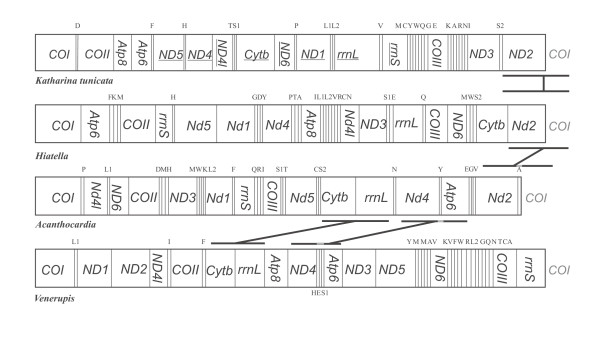
Mitochondrial (mt) gene arrangement is highly variable among molluscs and especially among bivalves. Of the 30 complete molluscan mt-genomes published to date, only one is of a heterodont bivalve, although this is the most diverse taxon in terms of species numbers. We determined the complete sequence of the mitochondrial genomes of Acanthocardia tuberculata and Hiatella arctica, (Mollusca, Bivalvia, Heterodonta) and describe their gene contents and genome organisations to assess the variability of these features among the Bivalvia and their value for phylogenetic inference.
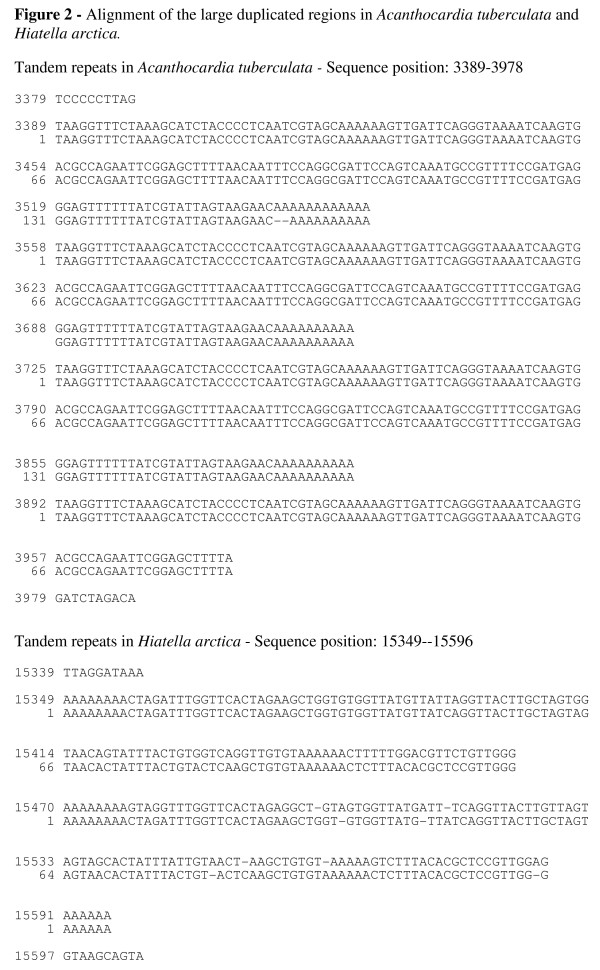
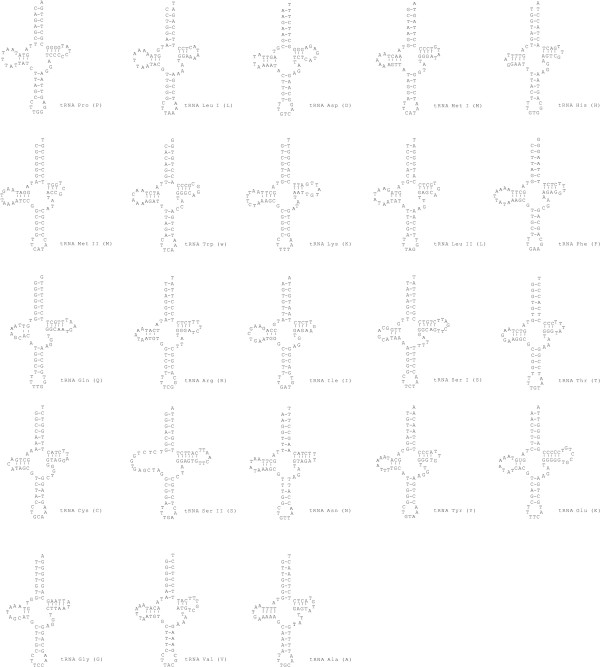
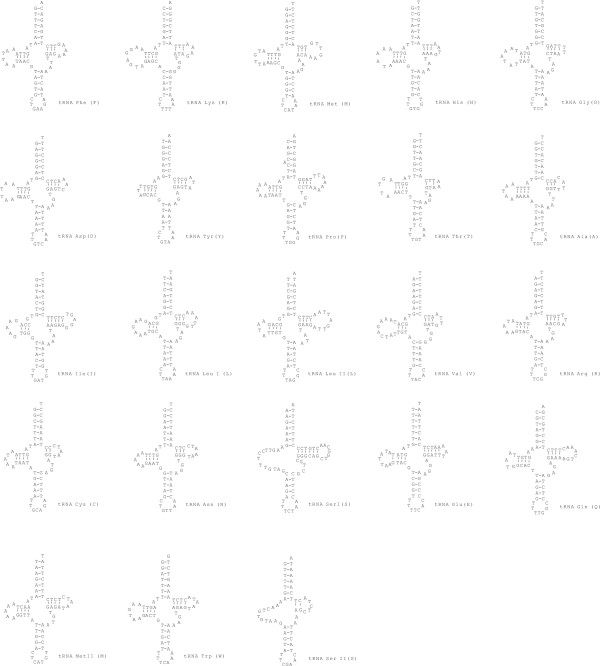
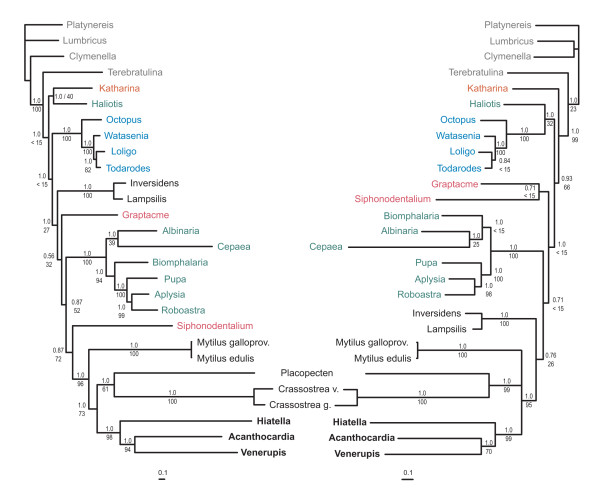
The size of the mt-genome in Acanthocardia tuberculata is 16.104 basepairs (bp), and in Hiatella arctica 18.244 bp. The Acanthocardia mt-genome contains 12 of the typical protein coding genes, lacking the Atpase subunit 8 (atp8) gene, as all published marine bivalves. In contrast, a complete atp8 gene is present in Hiatella arctica. In addition, we found a putative truncated atp8 gene when re-annotating the mt-genome of Venerupis philippinarum. Both mt-genomes reported here encode all genes on the same strand and have an additional trnM. In Acanthocardia several large non-coding regions are present. One of these contains 3.5 nearly identical copies of a 167 bp motive. In Hiatella, the 3' end of the NADH dehydrogenase subunit (nad)6 gene is duplicated together with the adjacent non-coding region. The gene arrangement of Hiatella is markedly different from all other known molluscan mt-genomes, that of Acanthocardia shows few identities with the Venerupis philippinarum. Phylogenetic analyses on amino acid and nucleotide levels robustly support the Heterodonta and the sister group relationship of Acanthocardia and Venerupis. Monophyletic Bivalvia are resolved only by a Bayesian inference of the nucleotide data set. In all other analyses the two unionid species, being to only ones with genes located on both strands, do not group with the remaining bivalves.
The two mt-genomes reported here add to and underline the high variability of gene order and presence of duplications in bivalve and molluscan taxa. Some genomic traits like the loss of the atp8 gene or the encoding of all genes on the same strand are homoplastic among the Bivalvia. These characters, gene order, and the nucleotide sequence data show considerable potential of resolving phylogenetic patterns at lower taxonomic levels.
线粒体(mt)基因排列在软体动物中高度可变,尤其是在双壳贝类中。在迄今为止已发表的30个完整的软体动物线粒体基因组中,只有一个是异齿双壳贝类的,尽管就物种数量而言,这是最多样化的分类群。我们测定了瘤刺棘心蛤和北极海豆芽(软体动物门、双壳纲、异齿亚纲)的线粒体基因组的完整序列,并描述了它们的基因内容和基因组组织,以评估这些特征在双壳贝类中的变异性及其在系统发育推断中的价值。
瘤刺棘心蛤的线粒体基因组大小为16,104个碱基对(bp),北极海豆芽的为18,244 bp。瘤刺棘心蛤的线粒体基因组包含12个典型的蛋白质编码基因,与所有已发表的海洋双壳贝类一样,缺少ATP合酶亚基8(atp8)基因。相比之下,北极海豆芽中存在完整的atp8基因。此外,我们在重新注释菲律宾蛤仔的线粒体基因组时发现了一个推定的截短atp8基因。这里报道的两个线粒体基因组都在同一条链上编码所有基因,并且都有一个额外的trnM。在瘤刺棘心蛤中有几个大的非编码区。其中一个包含3.5个几乎相同的167 bp基序拷贝。在北极海豆芽中,NADH脱氢酶亚基(nad)6基因的3'端与相邻的非编码区一起重复。北极海豆芽的基因排列与所有其他已知的软体动物线粒体基因组明显不同,瘤刺棘心蛤的与菲律宾蛤仔的基因排列几乎没有相同之处。基于氨基酸和核苷酸水平的系统发育分析有力地支持了异齿亚纲以及瘤刺棘心蛤和菲律宾蛤仔的姐妹群关系。只有通过对核苷酸数据集的贝叶斯推断才能解析出双壳贝类的单系性。在所有其他分析中,作为仅有的两个基因位于两条链上的物种,这两个蚌科物种与其余双壳贝类不聚类。
这里报道的两个线粒体基因组增加并强调了双壳贝类和软体动物类群中基因顺序的高度变异性和重复的存在。一些基因组特征,如atp8基因的缺失或所有基因在同一条链上的编码,在双壳贝类中是同塑性的。这些特征、基因顺序和核苷酸序列数据显示出在较低分类水平上解析系统发育模式的巨大潜力。