Lubośny Marek, Przyłucka Aleksandra, Śmietanka Beata, Breton Sophie, Burzyński Artur
Department of Genetics and Marine Biotechnology, Institute of Oceanology Polish Academy of Sciences, Sopot, Poland.
Department of Biological Sciences, Université de Montréal, Montréal, Québec, Canada.
PeerJ. 2018 Jun 8;6:e4897. doi: 10.7717/peerj.4897. eCollection 2018.
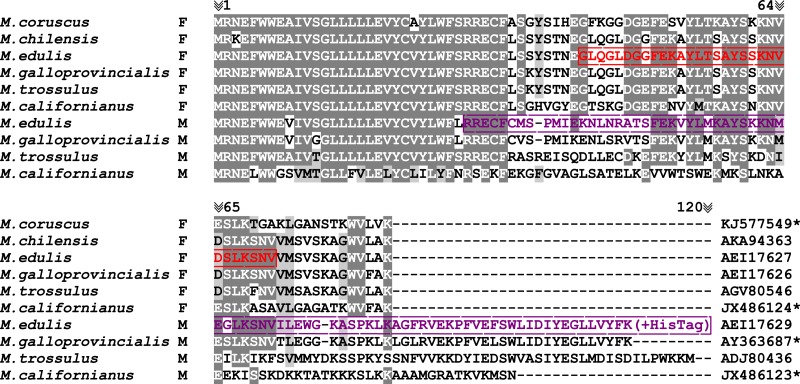
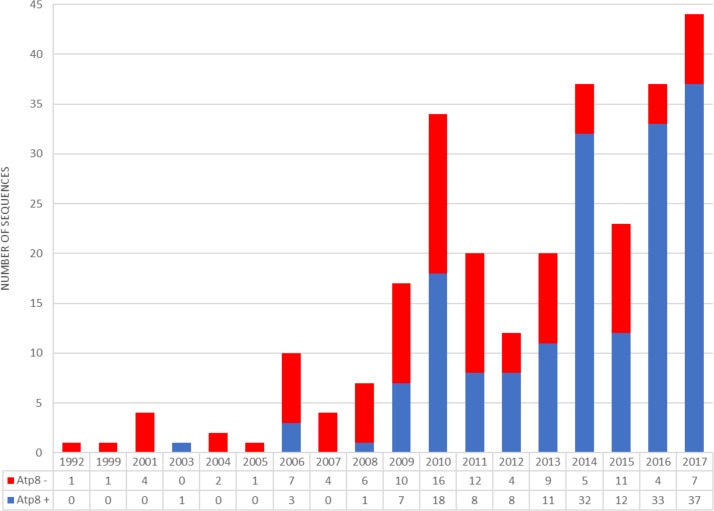
Animal mitochondrial genomes typically encode 37 genes: 13 proteins, 22 tRNAs and two rRNAs. However, many species represent exceptions to that rule. Bivalvia along with Nematoda and Platyhelminthes are often suspected to fully or partially lack the ATP synthase subunit 8 () gene. This raises the question as to whether they are really lacking this gene or is this maybe an annotation problem? Among bivalves, has been inferred to lack an ATP8 gene since the characterization of its mitochondrial genome in 1992 Even though recent bioinformatic analyses suggested that is present in spp., due to high divergence in predicted amino acid sequences, the existence of a functional gene in this group remains controversial.
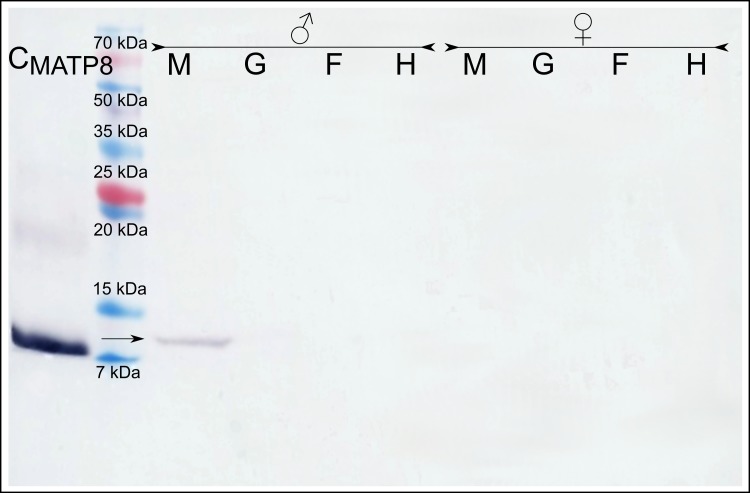
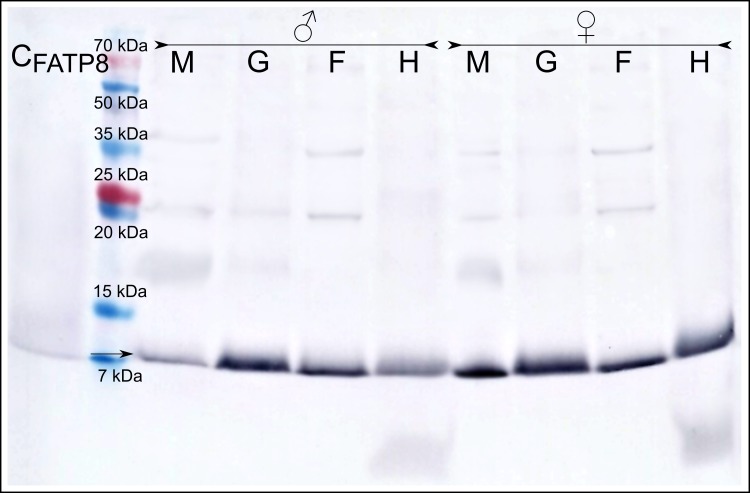
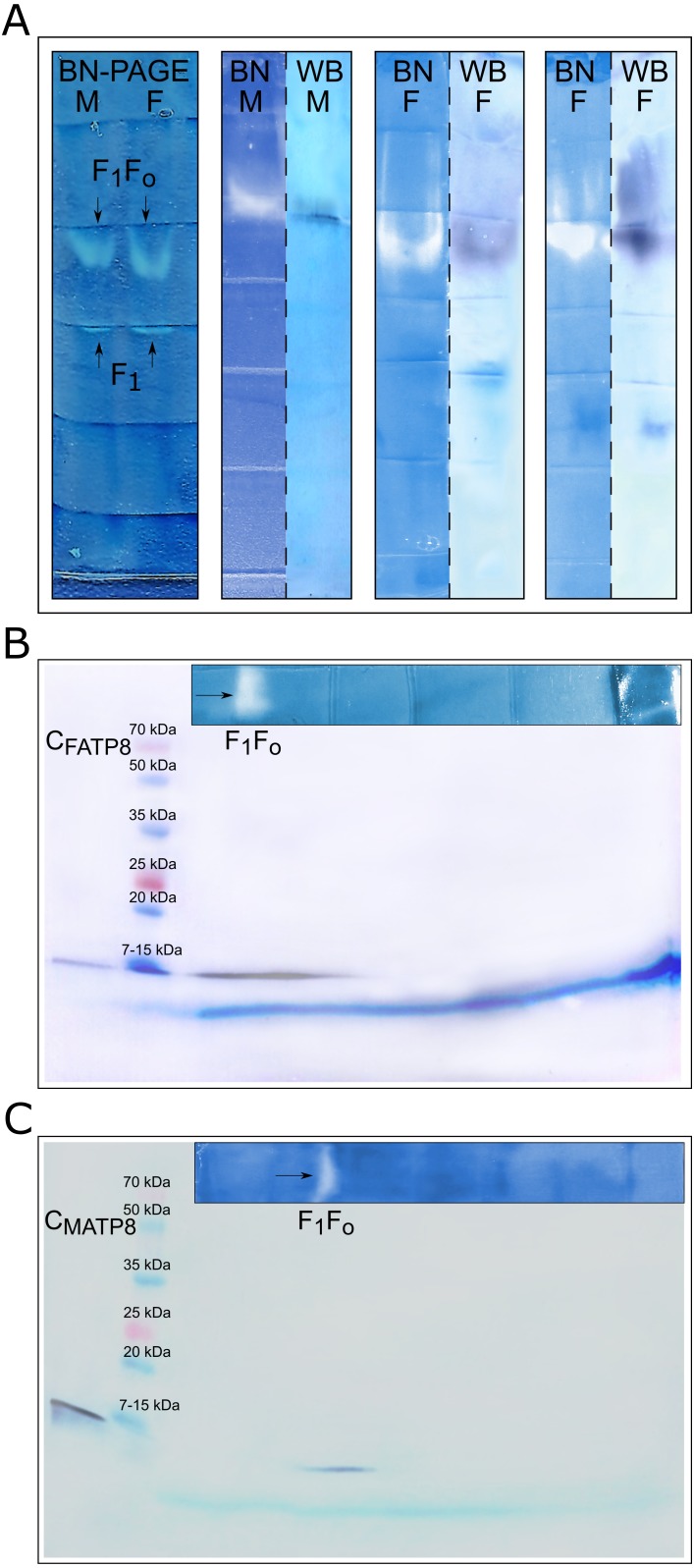
Here we demonstrate that mitochondrial open reading frames suggested to be (in male and female mtDNAs) are actively translated proteins We also provide evidence that both proteins are an integral part of the ATP synthase complex based on in-gel detection of ATP synthase activity and two-dimensional Blue-Native and SDS polyacrylamide electrophoresis.
Many organisms (e.g., Bivalvia along with Nematoda and Platyhelminthes) are considered to be lacking certain mitochondrial genes often only based on poor similarity between protein coding gene sequences in genetically closed species. In some situations, this may lead to the inference that the ATP8 gene is absent, when it is in fact present, but highly divergent. This shows how important complementary role protein-based approaches, such as those in the present study, can provide to bioinformatic, genomic studies (i.e., ability to confirm the presence of a gene).
动物线粒体基因组通常编码37个基因:13种蛋白质、22种tRNA和两种rRNA。然而,许多物种是该规则的例外。双壳纲以及线虫纲和扁形动物门常被怀疑完全或部分缺失ATP合酶亚基8(ATP8)基因。这就引发了一个问题,即它们是否真的缺失该基因,还是这可能是一个注释问题?在双壳纲中,自1992年其线粒体基因组被表征以来,一直被推断缺乏ATP8基因。尽管最近的生物信息学分析表明在某些物种中存在ATP8基因,但由于预测的氨基酸序列差异很大,该类群中功能性ATP8基因的存在仍存在争议。
在这里,我们证明了双壳纲线粒体中被认为是ATP8(在雄性和雌性线粒体DNA中)的开放阅读框是可被积极翻译的蛋白质。我们还提供了证据,基于凝胶内ATP合酶活性检测以及二维蓝色温和电泳和SDS聚丙烯酰胺电泳,这两种蛋白质都是ATP合酶复合体的组成部分。
许多生物(如双壳纲以及线虫纲和扁形动物门)通常仅基于亲缘关系较近物种中蛋白质编码基因序列之间的低相似性就被认为缺乏某些线粒体基因。在某些情况下,这可能导致推断ATP8基因不存在,而实际上它是存在的,但差异很大。这表明了基于蛋白质的方法(如本研究中的方法)在生物信息学、基因组研究中(即确认基因存在的能力)可以起到多么重要的补充作用。