Stewart L, Schatz G, Vogt V M
Section of Biochemistry, Molecular and Cell Biology, Cornell University, Ithaca, New York 14853.
J Virol. 1990 Oct;64(10):5076-92. doi: 10.1128/JVI.64.10.5076-5092.1990.
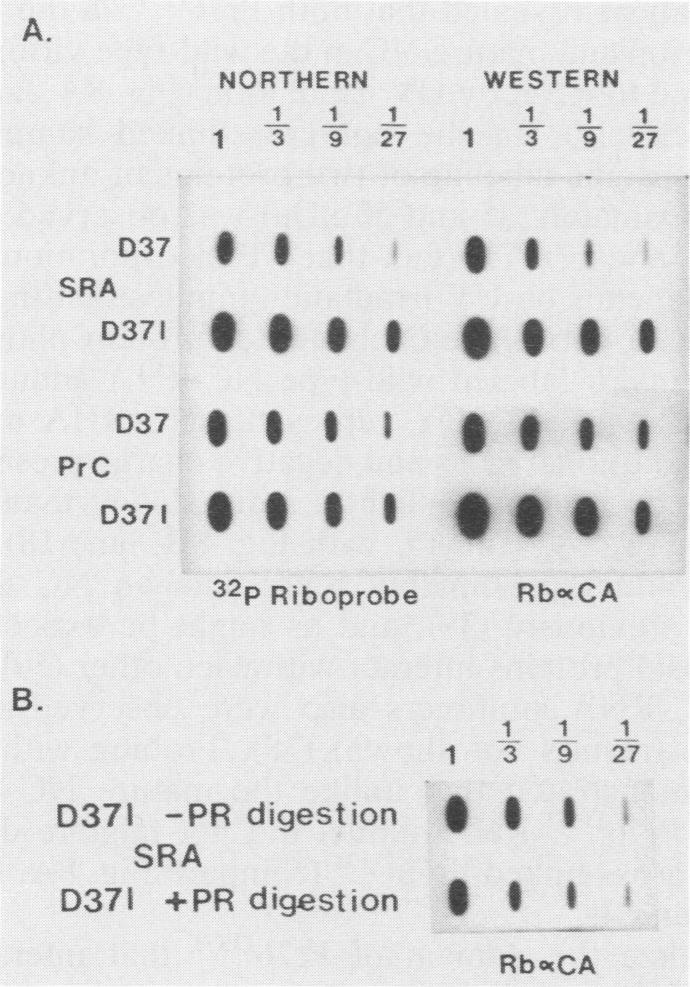
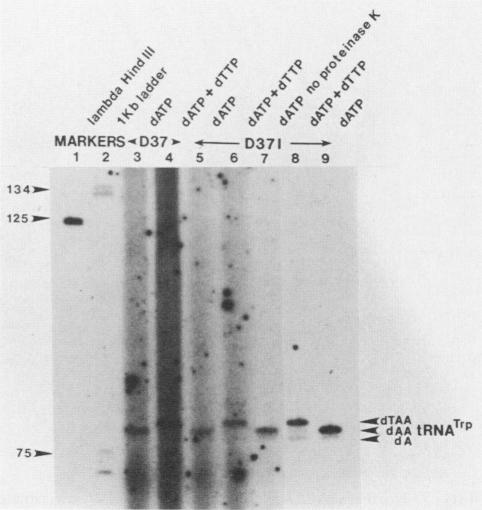
The structural and enzymatic components of retroviral cores are formed by proteolytic cleavage of precursor polypeptides, mediated by the viral protease (PR). We constructed an active-site mutation, D37I, in the PR of avian leukosis virus. The D37I mutation was introduced into an infectious DNA clone, and quail cell lines expressing the mutant virus were established. These cell lines produce normal amounts of virus particles, the major internal protein components of which are the uncleaved gag and gag-pol precursors. As in other retroviral systems, the protease-defective virions are noninfectious and retain the "immature" type A morphology as determined by thin-section transmission electron microscopy. The virion cores are stable at nonionic detergent concentrations that completely disrupt wild-type cores. Digestion of mutant virions with exogenous PR in the presence of detergent leads to complete and correct cleavage of the gag precursor but incomplete cleavage of the gag-pol precursor. The protease-defective virions encapsidate normal amounts of genomic RNA and tRNA(Trp) that is properly annealed to the primer-binding site, but some of the genomic RNA remains monomeric. Results from UV cross-linking experiments show that the gag polyprotein of mutant virions interacts with viral RNA and that this interaction occurs through the nucleocapsid (NC) domain. However, within mutant virions the interaction of the NC domain with RNA differs from that of mature NC with RNA in wild-type virions. Reverse transcriptase (RT) activity associated with mutant virions is diminished but still detectable. Digestion of the virions with PR leads to a fivefold increase in activity, but this PR-mediated activation of RT is incomplete. Since in vitro cleavage of the gag-pol precursor is also incomplete, we hypothesize that amino acid sequences N terminal to the reverse transcriptase domain inhibit RT activity.
逆转录病毒核心的结构和酶成分由前体多肽的蛋白水解切割形成,这一过程由病毒蛋白酶(PR)介导。我们在禽白血病病毒的PR中构建了一个活性位点突变体D37I。将D37I突变引入感染性DNA克隆,并建立了表达突变病毒的鹌鹑细胞系。这些细胞系产生正常数量的病毒颗粒,其主要内部蛋白质成分是未切割的gag和gag-pol前体。与其他逆转录病毒系统一样,蛋白酶缺陷型病毒粒子无感染性,通过超薄切片透射电子显微镜观察确定其保留“不成熟”的A型形态。病毒粒子核心在能完全破坏野生型核心的非离子去污剂浓度下是稳定的。在去污剂存在的情况下,用外源性PR消化突变病毒粒子会导致gag前体完全且正确的切割,但gag-pol前体的切割不完全。蛋白酶缺陷型病毒粒子包裹正常数量的基因组RNA和与引物结合位点正确退火的tRNA(Trp),但一些基因组RNA仍为单体形式。紫外线交联实验结果表明,突变病毒粒子的gag多蛋白与病毒RNA相互作用,且这种相互作用通过核衣壳(NC)结构域发生。然而,在突变病毒粒子中,NC结构域与RNA的相互作用不同于野生型病毒粒子中成熟NC与RNA的相互作用。与突变病毒粒子相关的逆转录酶(RT)活性降低,但仍可检测到。用PR消化病毒粒子会使活性增加五倍,但这种PR介导的RT激活并不完全。由于gag-pol前体的体外切割也不完全,我们推测逆转录酶结构域N端的氨基酸序列会抑制RT活性。