Mak J, Jiang M, Wainberg M A, Hammarskjöld M L, Rekosh D, Kleiman L
Lady Davis Institute for Medical Research, Jewish General Hospital, Montreal, Quebec, Canada.
J Virol. 1994 Apr;68(4):2065-72. doi: 10.1128/JVI.68.4.2065-2072.1994.
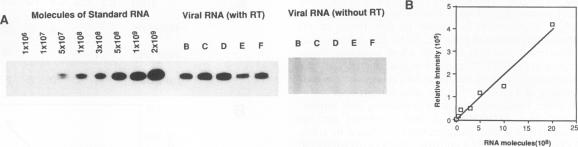
COS-7 cells transfected with human immunodeficiency virus type 1 (HIV-1) proviral DNA produce virus in which three tRNA species are most abundant in the viral tRNA population. These tRNAs have been identified through RNA sequencing techniques as tRNA(3Lys) the primer tRNA in HIV-1, and members of the tRNA(1,2Lys) isoacceptor family. These RNAs represent 60% of the low-molecular-weight RNA isolated from virus particles, while they represent only 6% of the low-molecular-weight RNA isolated from the COS cell cytoplasm. Thus, tRNA(Lys) is selectively incorporated into HIV-1 particles. We have measured the ratio of tRNA(3Lys) molecules to copies of genomic RNA in viral RNA samples and have calculated that HIV-1 contains approximately eight molecules of tRNA(3Lys) per two copies of genomic RNA. We have also obtained evidence that the Pr160gag-pol precursor is involved in primer tRNA(3Lys) incorporation into virus. First, selective tRNA(Lys) incorporation and wild-type amounts of tRNA(3Lys) were maintained in a protease-negative virus unable to process Pr55gag and Pr160gag-pol precursors, indicating that precursor processing was not required for primer tRNA incorporation. Second, viral particles containing only unprocessed Pr55gag protein did not selectively incorporate tRNA(Lys), while virions containing both unprocessed Pr55gag and Pr160gag-pol proteins demonstrated select tRNA(3Lys) packaging. Third, studies with a proviral mutant containing a deletion of most of the reverse transcriptase sequences and approximately one-third of the integrase sequence in the Pr160gag-pol precursor resulted in the loss of selective tRNA incorporation and an eightfold decrease in the amount of tRNA(3Lys) per two copies of genomic RNA. We have also confirmed herein finding of a previous study which indicated that the primer binding site is not required for the selective incorporation of tRNA(Lys).
用1型人类免疫缺陷病毒(HIV-1)前病毒DNA转染的COS-7细胞产生病毒,在该病毒的tRNA群体中,有三种tRNA种类最为丰富。通过RNA测序技术,这些tRNA已被鉴定为HIV-1中的引物tRNA即tRNA3Lys,以及tRNA1,2Lys同功受体家族的成员。这些RNA占从病毒颗粒中分离出的低分子量RNA的60%,而它们仅占从COS细胞质中分离出的低分子量RNA的6%。因此,tRNALys被选择性地整合到HIV-1颗粒中。我们测量了病毒RNA样本中tRNA3Lys分子与基因组RNA拷贝数的比例,并计算出HIV-1每两个基因组RNA拷贝中约含有八个tRNA3Lys分子。我们还获得了证据表明Pr160gag-pol前体参与引物tRNA3Lys整合到病毒中。首先,在无法加工Pr55gag和Pr160gag-pol前体的蛋白酶阴性病毒中,tRNALys的选择性整合和tRNA3Lys的野生型含量得以维持,这表明引物tRNA整合不需要前体加工。其次,仅含有未加工Pr55gag蛋白的病毒颗粒不会选择性地整合tRNALys,而同时含有未加工Pr55gag和Pr160gag-pol蛋白的病毒粒子则表现出tRNA3Lys的选择性包装。第三,对一个前病毒突变体的研究表明,该突变体在Pr160gag-pol前体中缺失了大部分逆转录酶序列和约三分之一的整合酶序列,导致tRNA选择性整合的丧失以及每两个基因组RNA拷贝中tRNA3Lys的量减少了八倍。我们在此还证实了先前一项研究的发现,即引物结合位点对于tRNALys的选择性整合不是必需的。